Migrant Worker Abuses in UAE Linked to COP28 Sites, HRW Reports
Human Rights Watch documents widespread labor abuses against migrant workers at COP28 venues in Dubai, including wage theft and illegal recruitment fees.
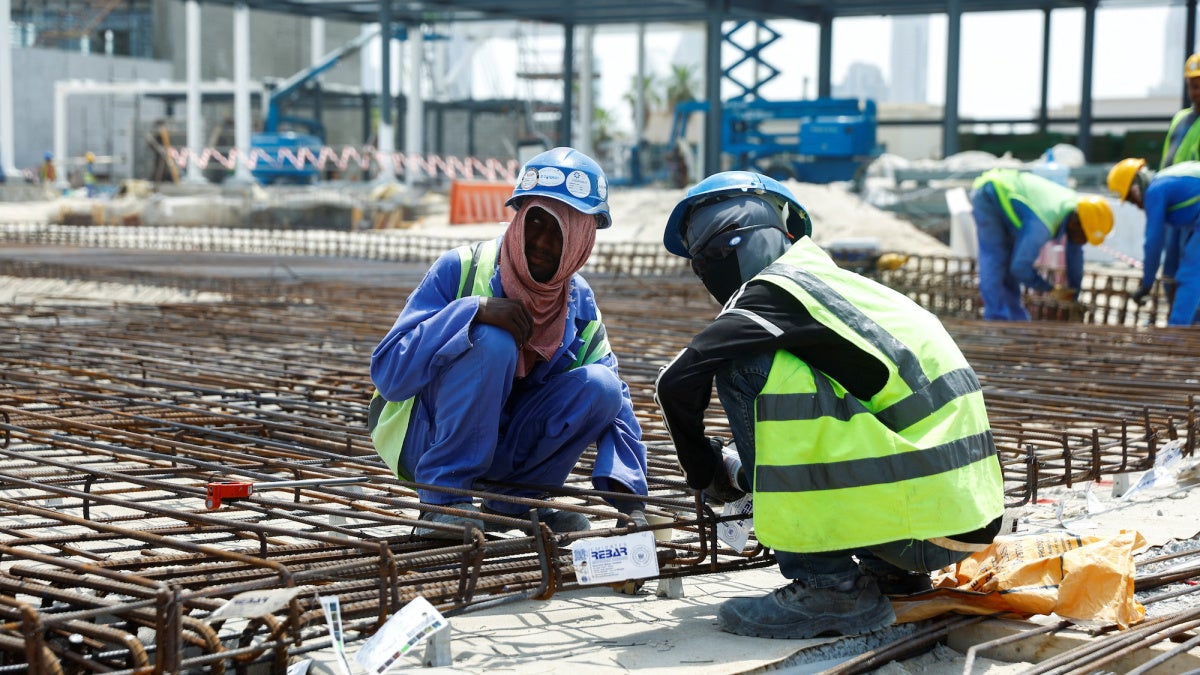
Migrant workers at COP28 sites face documented abuses, HRW finds
Migrant workers who built and staffed the venues hosting the United Nations COP28 climate conference in Dubai have faced serious labor abuses, according to hrw.org, which published a detailed questions-and-answers report on December 3, 2023.
The 28th annual UN Climate Change Conference opened on November 30, 2023, at Expo City Dubai. Human Rights Watch documented that the site was constructed under conditions involving illegal recruitment fees, non-payment of wages, passport confiscation, and discrimination.
Migrant workers make up 88 percent of the UAE's total population. Their labor underpinned both the preparation and the delivery of COP28, yet many have had little legal recourse when abuses occurred.
Kafala system gives employers sweeping control
UAE migrant workers are governed by the kafala, or sponsorship, system — a labor governance framework that grants employers disproportionate control over a worker's immigration and employment status. Human Rights Watch has documented how this system restricts job mobility, enables routine passport confiscation, and exposes workers who leave abusive employers to the risk of deportation and detention.
Wage theft is widespread, as are exorbitant recruitment fees charged before workers even arrive in the country, which erode the financial benefits of emigrating for better earnings. The UAE introduced several waves of labor reform, including in 2021, but Human Rights Watch assessed that current regulations still fall short of established international labor standards, and that enforcement gaps remain severe.
Workers in sectors such as construction, cleaning, agriculture, animal herding, and security face particular exposure to the UAE's extreme heat. The country's principal heat-protection measure is a summer midday work ban, which prohibits outdoor work between 12:30 p.m. and 3:00 p.m. from mid-June to mid-September. Employers at COP28 sites required workers to work during that ban, according to hrw.org.
A study conducted in Kuwait — which shares a similar climate — found an elevated risk of occupational injuries linked to extreme heat even in the presence of such a ban. A separate study in Saudi Arabia found that peak heat intensity for outdoor workers occurred between 9:00 a.m. and 12:00 p.m., outside the hours covered by the prohibition.
Rest periods offer little relief
Beyond working hours, workers' ability to recover from heat exposure is further undermined by inadequate rest conditions. Employers frequently fail to provide cold drinking water or shaded rest areas, and many workers lack air-conditioned transportation during commutes. Crowded living quarters compound the risks, limiting workers' capacity to rehydrate and recover overnight.
Human Rights Watch noted that conditions tend to be worse for migrant workers in industries or with companies that do not attract the same level of international scrutiny as high-profile events like COP28 or Expo 2020.
UAE's fossil fuel expansion draws scrutiny at climate summit
The UAE is one of the world's largest oil producers and among the highest per-capita greenhouse gas emitters globally. Its state-owned Abu Dhabi National Oil Company (ADNOC) recently announced an expansion of its operations and raised production capacity from four million to five million barrels per day — a move that conflicts with the scientific consensus that new fossil fuel development must be halted to meet global climate targets.
The fossil fuel sector generates the majority of UAE government revenue. Human Rights Watch noted that a portion of that revenue funds a domestic surveillance infrastructure used to suppress dissent, and supports what the organization characterized as abusive conflicts abroad.
Heat risk expected to intensify
The Intergovernmental Panel on Climate Change has projected that Gulf states' extreme wet-bulb temperatures — a measure that accounts for air temperature, humidity, sunlight, and wind — are expected to approach or possibly exceed the physiological threshold for human adaptability of 35°C by the end of the century. Those projections point to worsening heat-related illness and death, declining labor productivity, deteriorating mental health, and broader harm to well-being.
Human Rights Watch connected these climate projections directly to the situation of migrant workers, noting that the workers and their home communities contribute least to the climate crisis yet face the greatest exposure to its consequences and the least capacity to manage them.
Civil society participation also at issue
Separately, hrw.org raised concerns about the UAE's restrictions on freedom of expression, assembly, and association, arguing those limits constrain civil society's ability to participate meaningfully in COP28 and to advocate for ambitious climate language. The report cast doubt on the host country's commitment to working with other governments toward a phase-out of fossil fuels.