Canadian Man Pleads Guilty to Running Global ‘Suicide Kit’ Business
Kenneth Law pleaded guilty in an Ontario courtroom to assisting or counselling suicide after shipping deadly substances to buyers in 40 countries.
Canadian Man Pleads Guilty to Running Global ‘Suicide Kit’ Business
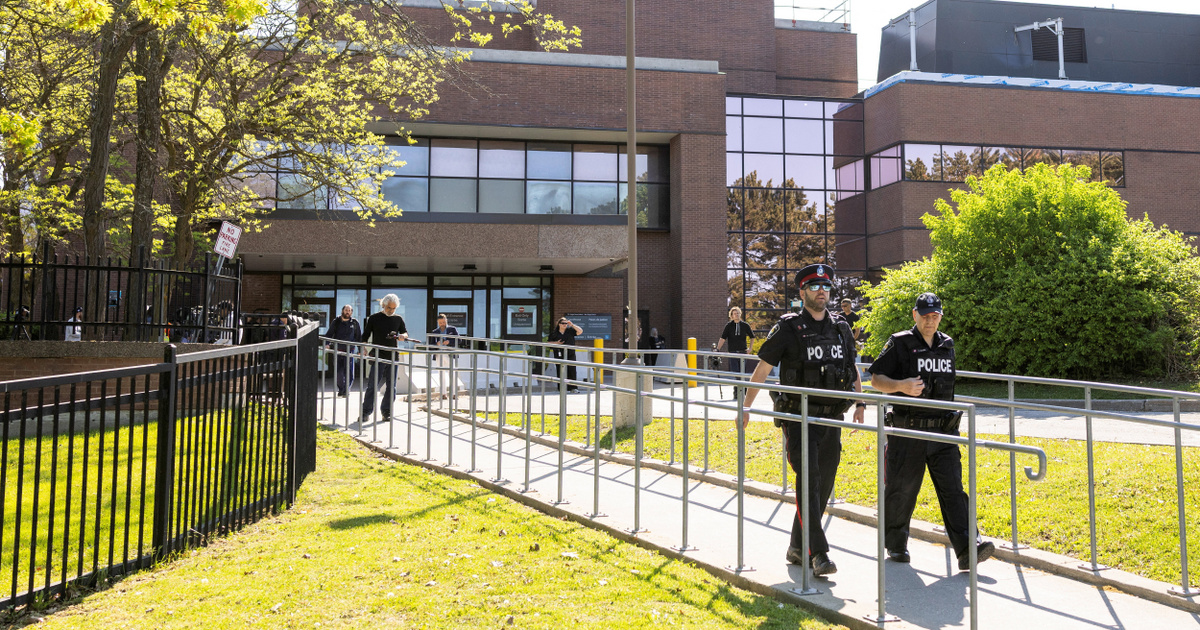
Kenneth Law appeared in a packed courtroom in Newmarket, Ontario, on Friday and pleaded guilty to charges of counselling or assisting suicide. He told Justice Michelle Fuerst that he understood the gravity of his crimes and entered the plea voluntarily, The Guardian reports.
Family members in the gallery wept as the judge read the charges and Law admitted his role in the deaths of 14 young people in Ontario, aged between 16 and 36. He also acknowledged sending the lethal substances that caused another 79 fatalities in the United Kingdom.
Investigators say Law mailed 1,209 packages to 41 countries and territories before his websites were shut down. The majority went to Britain and the United States. The former engineer and Toronto hotel chef operated sites that sold deadly chemicals to vulnerable people. To avoid detection, he listed other products — including hot sauce — to create the impression that he was an industrial food-supply wholesaler.
The silver-coloured packages carried a warning stating that use of the product was solely the buyer’s responsibility. Law also sold other items related to suicide and provided detailed instructions for their use.
At the time of his arrest, he had earned CAD 296,981 (approximately HUF 78 million) through Shopify and PayPal accounts linked to four companies.
Prosecutors filed a statement of facts exceeding 60 pages, which took hours to read in court. The document revealed harrowing details: in most cases, parents discovered their children’s bodies. In one especially agonizing incident, a young man was heard vomiting by his family, then begged his parents for help after ingesting the poison. In another case, a 29-year-old man called emergency services, said he had swallowed poison, and repeated, “Please, I am going to die soon,” before bursting into tears. By the time first responders arrived, he was unresponsive and was pronounced dead at hospital.
A man in his thirties found in a Toronto rental car had even sent a donation to the ambulance service in anticipation of the trauma his body would cause them. A British victim called a helpline operator, said he wanted to end his life, then panicked and said he no longer wanted to die. Paramedics arrived in under 30 minutes and found him face down on his bed, the phone still connected to the operator. They could not revive him. Packages from Law’s companies were often found near the victims.
Outside the courthouse, relatives of Canadian victims condemned the plea deal that reduced the charge from first-degree murder to the lesser offence. “I feel very outraged,” said Leonardo Bedoya, whose daughter Jeshennia took her own life at 18. “After three years of waiting, this is a disgrace — mainly because this man did not face the victims… this is very painful. She was my only daughter, my light, my life… He made money from death from all over the world.” Bedoya appealed to the Canadian government: “Ministers, please shut down these platforms [that encourage suicide] that are still accessible. Shut them down to prevent further deaths, and please help the victims.”
Kim Prosser, whose 19-year-old son Ashtyn died in March 2023, just weeks before Law’s arrest, called the hearing a “hard” day. “Three years have passed. Three years of uncelebrated birthdays.” She remembered her son as someone who “was always happy, always stood up for the little guy, and gave voice to those who couldn’t find their own.”
The United Kingdom’s National Crime Agency determined that 286 British citizens received packages from Law, resulting in 112 deaths. Under a deal announced on Friday, the Canadian judge will also consider Law’s role in the British fatalities when imposing sentence.
British families argue that Law’s years of unchecked operation, and the failure of British authorities to prevent deaths linked to online suicide forums, justify a public inquiry. “The driving force that keeps grieving families going is the fact that others are still losing loved ones,” said Adele Zeynep Walton, who lost her sister Aimee to the poison. “The online forums linked to these deaths are still accessible. If nothing changes, more people will lose their loved ones.”
When prosecutors initially charged Law with first-degree murder, it appeared set to become one of Ontario’s largest homicide cases. However, an earlier ruling by the Ontario Court of Appeal in a separate case held that merely providing a substance used for suicide is not necessarily enough to establish murder or attempted murder. The Crown would have had to prove that Law played a more active and direct causal role, overriding the victims’ free will. Although the Supreme Court of Canada later questioned the rigidity of that distinction, it issued no definitive ruling for cases like Law’s. Prosecutors therefore reduced the charges.
Under the Canadian Criminal Code, counselling or assisting suicide carries a maximum sentence of life imprisonment. Law remains in custody pending sentencing.
Source: Index