Canada Enacts New Legislation Creating Standalone Offence for Domestic Violence
Parliament has passed Bailey's Law, establishing intimate partner violence as a distinct criminal offence and enabling harsher murder charges in cases involving coercive control patterns.
Canada Enacts New Legislation Creating Standalone Offence for Domestic Violence
Parliament has enacted a new statute dedicated to combating violence within intimate relationships, named after a woman killed in British Columbia last summer. The measure received formal approval this week and will take effect within approximately 30 days, according to Global News.
The statute, designated Bill C-225, honours Bailey McCourt, a 32-year-old parent who died following an assault in a Kelowna parking area on July 4, 2025. Her estranged spouse, James Plover, faces a premeditated murder charge and is expected to appear before a court in 2027.
Among its most significant provisions, the statute creates a separate criminal classification for violence occurring between intimate partners. Previously, such incidents were grouped with general assault categories, making it difficult for authorities to analyze trends or allocate resources effectively. The new classification will allow police services and prosecutors to monitor these cases distinctly.
Additionally, the measure permits killings connected to an established history of domineering or manipulative conduct within a romantic relationship to be treated as premeditated murder. This classification carries an automatic life term with no possibility of conditional release for 25 years.
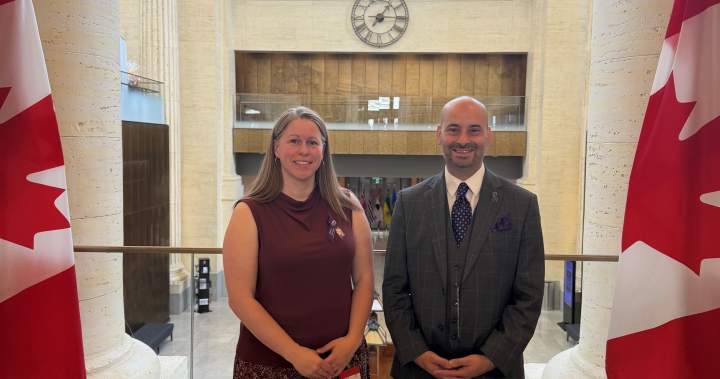
McCourt's relative, Debbie Henderson, addressed reporters at the federal legislature following the bill's passage. She emphasized that the victim had complied with every protective measure available through existing channels, yet those safeguards proved insufficient. Henderson stated that the enhanced penalties would provide families with greater stability by reducing the frequency of parole proceedings.
Conservative representative Frank Caputo, who brought forward the proposal as a private member's initiative last autumn, described the rapid legislative progress as exceptional. He observed that such initiatives rarely advance to final approval, and the timeline of under 12 months was notably brief.
Despite welcoming the statutory changes, Henderson urged provincial authorities to implement complementary protective technologies. She specifically advocated for electronic surveillance with geographic boundary alerts and instantaneous notifications to victims when offenders breach restricted areas.
The statute's implementation coincides with preparations to commemorate the one-year mark since McCourt's death. A public gathering is scheduled at a Kelowna venue on July 4, running from mid-morning through early afternoon, with proceeds supporting continued advocacy for stronger victim safeguards.
Source: Global News Crime