B.C. Supreme Court rejects 'sovereign citizen' appeal over paper licence plate stop
A B.C. man who refused to give his legal name to police, claiming sovereign status, has lost his appeal of an obstruction conviction at the B.C. Supreme Court.
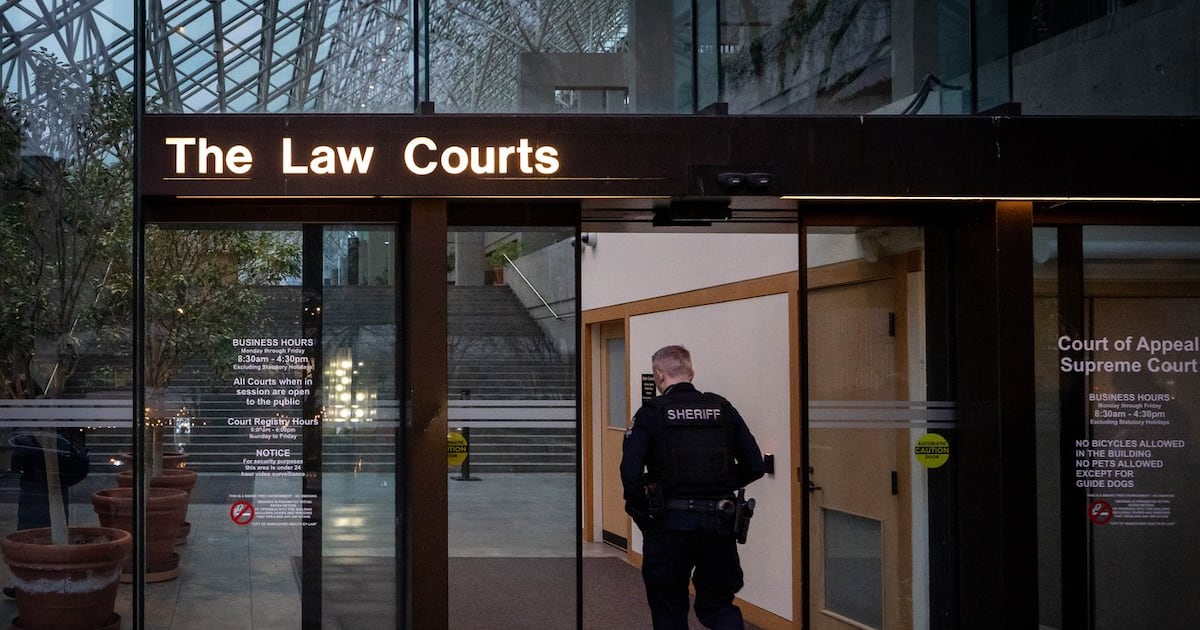
B.C. Supreme Court upholds obstruction conviction against man who claimed Canadian law did not apply to him
A British Columbia man who refused to identify himself to a police officer on the grounds that he was a "sovereign" or "natural" person has lost his appeal of an obstruction conviction, cp24.com reports. Justice Sandra Sukstorf of the B.C. Supreme Court handed down her decision last week, finding the original trial judge was correct to reject the appellant's claims.
"The appellant's disagreement with the legitimacy or authority of ordinary legal processes does not exempt him from compliance with Canadian law," Sukstorf wrote in her ruling.
The incident began on Feb. 17, 2025, when a witness reported a blue Ford F-150 displaying what the court described as a "fictitious laminated paper licence plate" parked near the Coquitlam Grill on Barnet Highway. The responding officer found the truck was uninsured, had a cracked windshield, and was missing a rear window.
After the driver pulled out of the lot, the officer stopped the vehicle and asked for his licence and proof of insurance.
The man refused to provide his last name, identifying himself only by what he called his "sovereign names," Peter William. His full legal name — Peter William Embleton — was later established through further investigation.
"After repeated warnings that failing to provide his full legal name would result in an obstruction arrest, Mr. Embleton continued to refuse and was arrested," according to the court's summary of the incident.
Embleton remained in custody for more than a week after being granted bail because he declined to sign his release document, telling the court it did not reflect what he described as conditions relating to his asserted sovereign status.
When his trial opened last August, Embleton again declined to state his name, telling the court he was appearing "by special diving appearance." A judge issued a bench warrant, and sheriffs subsequently located an expired passport in his pocket, confirming his identity.
He was ultimately found guilty of obstructing a peace officer and received a conditional discharge with one year of probation and 40 hours of community service. The sentence spared him a criminal record.
His probation terms include a prohibition on sharing information about "OPCA (Organized Pseudo-legal Commercial Argument) ideologies" with anyone under 19. Courts broadly define OPCA as strategies used by so-called sovereign citizens and affiliated groups to argue that laws do not apply to them.
In his appeal, Embleton advanced arguments that Sukstorf described as "OPCA-style," including that he had withdrawn from "public representation," that he identifies as a "living man," and that he is what he described as a "general executor" of a purported trust estate. In essence, he argued that he existed in a personal capacity outside the legal identity recognized by the state, and was therefore not subject to certain police requirements.
Sukstorf noted that such arguments are not recognized in Canadian law.
Embleton had also submitted that the trial judge wrongly dismissed his materials as "nonsense" and failed to consider how his stated beliefs affected his intent during the offence. The appeal court disagreed.
"While the appellant disputes the characterization of his materials as OPCA-related, the concepts advanced in his submissions are consistent with concepts that Canadian courts have repeatedly considered to have no legal effect," Sukstorf wrote.
The central question on appeal was whether Embleton's sincere beliefs negated the wilful intent required for an obstruction conviction. He argued that he had not intended to obstruct the officer, that police already had sufficient information to identify him, and that his conduct reflected genuinely held convictions about his legal status rather than any deliberate interference.
Sukstorf found the trial judge was correct in concluding that Embleton was well aware his refusal to provide his name would impede the officer's duties. Even if he sincerely believed he was exempt from complying, she wrote, "this was not a mistake of fact but rather a mistaken belief about legal obligations."
On the question of sentence, Sukstorf said the conditional discharge, probation, and community service were restrained and lenient in the circumstances. Embleton had characterized the sentence as excessive and specifically challenged the condition barring him from sharing OPCA ideas with minors, arguing it improperly restricted his beliefs and freedom of expression.
The court was not persuaded. Sukstorf noted that Embleton mentors youth in laser chess programs and found the condition reasonable given that risk. She also rejected the argument that the condition criminalizes his beliefs or prevents him from continuing to work with students.
"The sentencing judge was entitled to conclude, on the evidentiary record, that OPCA-style concepts are legally ineffective, disruptive to court and police processes, and capable of misusing public resources," Sukstorf wrote.
The appeal of both the conviction and the sentence was dismissed in full.
Source: Google News CA — Crime (EN)