Top Court: Deleted Police Discipline Files Still Belong in Criminal Cases
Canada's highest court has ruled that an Edmonton police detective's prior disciplinary violations must be disclosed to a man facing prosecution, even though the misconduct record had been administratively removed.
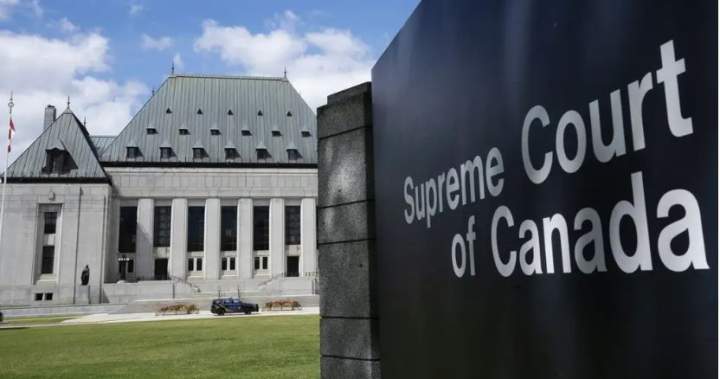
Top Court: Deleted Police Discipline Files Still Belong in Criminal Cases
A landmark ruling from Ottawa's apex tribunal establishes that law enforcement agencies cannot withhold an officer's prior professional sanctions from defendants simply because those sanctions were administratively purged, according to Global News.
The matter originated in Alberta's capital. During 2015, an internal adjudication body determined that Jared Ruecker, employed at the time by the municipal constabulary, had breached professional standards. A formal written determination captured this outcome. Regulatory rules, however, permitted the subsequent removal of this notation from Ruecker's employment dossier prior to the start of 2022.
In the spring of that same year, John McKee found himself accused of controlled substance and weapon possession. Ruecker had steered the probe leading to these accusations. Canadian law mandates that prosecuting authorities share every material detail with those they charge, guaranteeing defendants adequate means to contest allegations.
Edmonton officers assembled a packet of evidence for Crown lawyers. When queried about Ruecker's conduct history, the service indicated no responsive documents existed. Prosecutors then passed this collection to McKee's representatives.
Later, McKee's counsel unearthed proof of Ruecker's earlier breach and pressed for its delivery. It transpired that the Crown had acquired this very documentation via a different prosecution entirely.
By the following year, prosecuting attorneys conceded to McKee's side that Ruecker's historical professional shortcomings might plausibly undermine the investigator's reliability on the witness stand.
McKee secured a favorable ruling from Alberta's Court of King's Bench compelling disclosure. The city's police leadership appealed upward, ultimately reaching the country's ultimate appellate body.
This past Friday, all participating magistrates concurred. They declared that constabularies must actively participate in evidence-sharing protocols by pinpointing and transmitting applicable records to prosecuting services. This requirement extends beyond case files to encompass personnel disciplinary matters.
Prosecutors maintain ultimate discretion over filtering such materials and deciding what reaches defence counsel.
Writing for the bench, Justice Sheilah Martin stressed that bureaucratic erasure of a constable's professional lapse under governing rules leaves untouched the statutory criteria dictating whether such facts surface during criminal proceedings.
Source: Global News Crime