RGPF Under Fire Over Two Unsolved Deaths in Grenada, Retired Officer Speaks Out
A retired senior RGPF officer has criticised police handling of two suspicious deaths — that of ex-Senator Neilon Franklyn and British national Andrew Frederick.
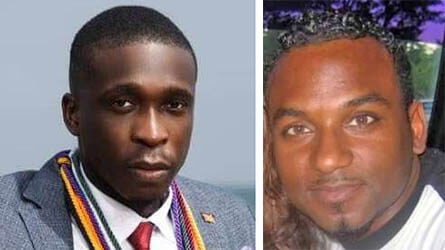
Retired cop calls RGPF probes into two deaths "a farce"
A retired senior officer of the Royal Grenada Police Force (RGPF) has expressed grave disappointment over the handling of two unresolved death investigations on the island — one involving former Senator Neilon Franklyn and the other the death of British national Andrew Frederick, whose parents are Grenadian.
Speaking to thenewtodaygrenada.com on Thursday, the ex-officer — experienced in Criminal Investigation Department (CID) work — said police needed to have done substantially more work on the Franklyn case before referring it to Acting Chief Magistrate Francine Foster, who has since ordered a Coroner's Inquest into the suspicious death.
Top Trinidad & Tobago pathologist Professor Hubert Daisley, retained to examine the case, concluded that Franklyn — who died in August 2025 — had consumed an antifreeze poisonous substance.
"Actually, it's a farce," the retired officer said of the investigation.
Questions over quality of the Franklyn probe
The former officer drew a contrast with the period when ex-Chief Magistrate Patricia Mark held office, when he said police investigations were of a markedly higher standard. Under Mark, cases proceeded directly to Preliminary Inquiry, bypassing the need for a Coroner's Inquest entirely.
He said Mark would question police investigators rigorously about anything suspicious or unresolved in a case, and would call on a forensic pathologist when questions remained unanswered. She did not wait for direction from the Director of Public Prosecutions or the Commissioner of Police before acting, preferring, as the retired officer put it, to "do her thing for herself."
He warned that if the Franklyn family retains a competent lawyer, that lawyer could raise a number of issues during the Inquest that would compel the RGPF to conduct further investigation.
"The standard has dropped tremendously in our legal system," he said.
In his personal assessment, the evidence gathered points to Franklyn having been poisoned, though he stopped short of declaring it a murder. He nonetheless stressed that investigators are obligated to trace the origin and source of the poison as part of any thorough probe.
"It is a long time now that the Police have that laissez-faire attitude towards their job," he remarked.
The retired officer said the very fact that a Coroner's Inquest was ordered signals that police have reached a stalemate — that the investigation remains incomplete, and the Inquest is now being used to establish the cause of death and determine whether it was accidental, suicide, or something else.
"They are doing the Coroner's Inquest now [to] let the cross section of the public and the Coroner determine if it needs to be escalated to a murder or what not — that's what they are doing," he added.
Lance Aux Epines: family frustrated as investigation stalls
On the separate case of Andrew Frederick, whose body was discovered in January at a property in the upscale Lance Aux Epines area in the south of the island, the retired officer said he had received information from inside the RGPF that police are not pursuing the matter any further.
Professor Daisley, again retained by the family, found that the 47-year-old had been tortured and concluded that his death was a homicide.
The retired officer said he believes police have internally concluded that Frederick was responsible for his own death — that he had vomited blood after inflicting wounds upon himself. Professor Daisley's findings, however, directly contradict that assessment. The pathologist found that Frederick did not vomit and that he asphyxiated on his own blood, which originated from injuries above his eyes.
The former officer said the marks found on Frederick's body could not have been self-inflicted, based on the evidence available.
Frederick's family members have also expressed frustration over their attempts to secure assistance from the British government in pursuing the alleged homicide on Grenadian soil.
Source: Google News GD — Crime