Supreme Court Overturns Death Sentence of Black Mississippi Man Over Racial Jury Bias
The U.S. Supreme Court ruled 5-4 for Terry Pitchford, a Black man on Mississippi's death row, finding his trial violated anti-discrimination rules in jury selection.
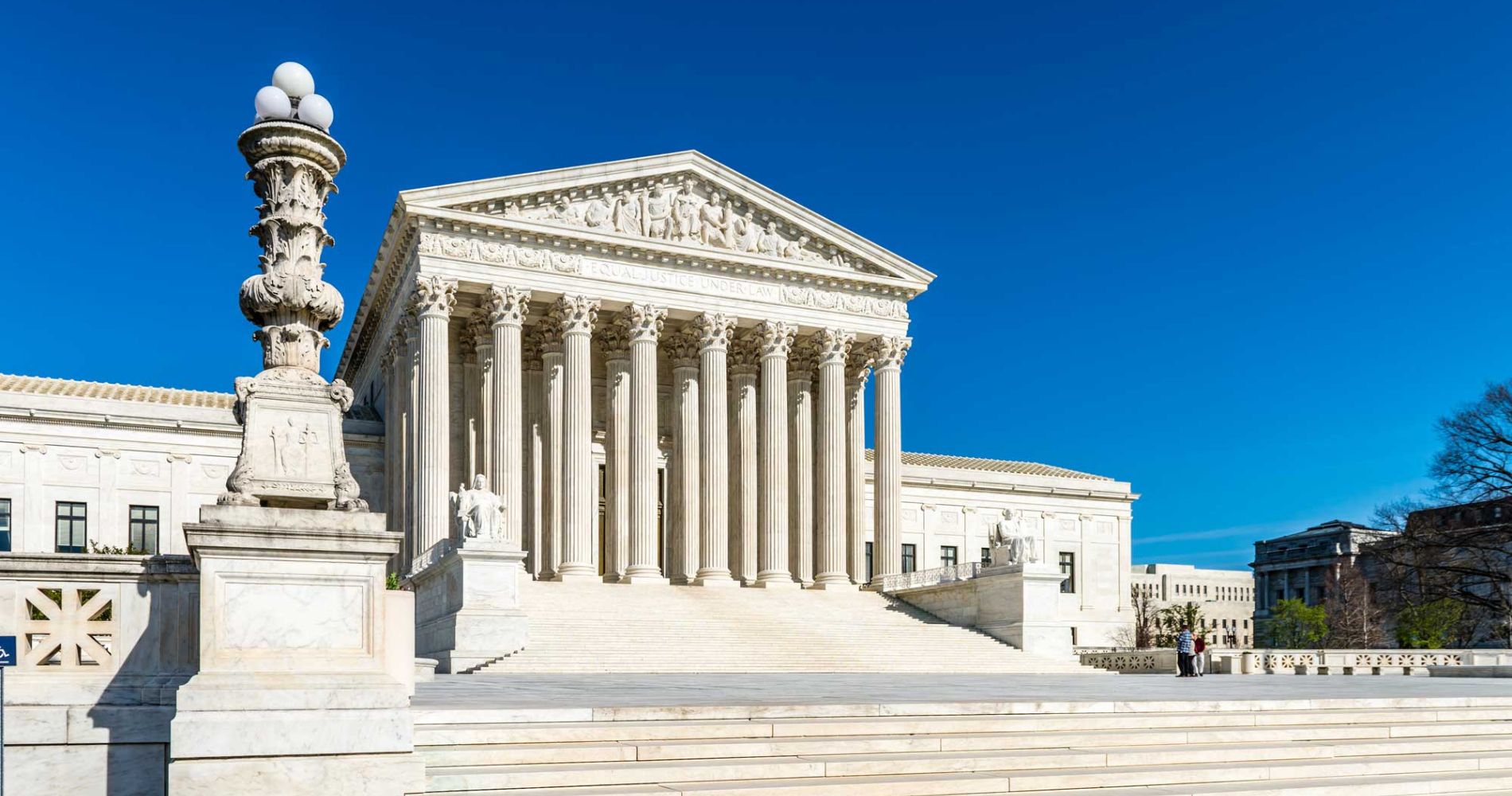
Supreme Court Vacates Mississippi Death Sentence Over Racial Discrimination in Jury Selection
The U.S. Supreme Court ruled Thursday in favor of Terry Pitchford, a Black man on death row in Mississippi, finding that the trial court had denied his legal team the opportunity to challenge racially biased jury selection, eji.org reports.
The 5-4 decision, authored by Justice Brett Kavanaugh, upheld a lower court's order to vacate Pitchford's conviction and remanded the case for a new trial.
The 2004 robbery and its aftermath
Pitchford, now 40, was 18 years old in 2004 when he and Eric Bullins, another Black teenager, attempted to rob a grocery store near Grenada, Mississippi. The white store owner was killed after Bullins shot him three times with a pistol. Pitchford fired into the floor.
Bullins, who was 16 at the time, was not eligible for the death penalty. He pleaded guilty to manslaughter and received a 20-year prison sentence.
Pitchford was charged as an accomplice with capital murder in Grenada County, where Black residents made up approximately 40% of the population. Forty Black residents reported for jury service. Five were excused for statutory cause, and 30 were dismissed primarily because of their views on capital punishment.
Of the five remaining Black prospective jurors, the prosecution used peremptory strikes to remove four. Only one Black person remained on Pitchford's jury.
The Batson challenge
Defense counsel objected under Batson v. Kentucky, the legal framework that establishes a three-step process for determining whether a prosecutor has engaged in illegal racial discrimination during jury selection.
The trial court found that Pitchford had made a prima facie showing that the strikes were race-based — satisfying step one — and required the prosecutor to offer race-neutral explanations, satisfying step two. The court, however, ended its analysis there, never advancing to step three, which requires the defense to have a meaningful opportunity to argue that the stated reasons were pretexts for discrimination.
Defense counsel attempted to argue pretext, but the trial court cut them off and offered no opportunity to respond. The nearly all-white jury convicted Pitchford on February 8, 2006, and sentenced him to death the following day.
Federal courts diverge
On appeal, the Mississippi Supreme Court rejected Pitchford's Batson claim, ruling that his attorneys had failed to rebut the prosecutor's stated reasons — despite the fact that the trial court had never permitted them to do so.
In 2023, a federal district court granted habeas relief, finding that the record showed defense counsel had tried to argue pretext and had been prevented from doing so. The district court vacated Pitchford's conviction and death sentence and ordered a new trial.
The U.S. Court of Appeals for the Fifth Circuit reversed that ruling, prompting Pitchford to seek review from the Supreme Court.
The Supreme Court's reasoning
The Court agreed that the Mississippi trial court had never conducted the essential third step of the Batson inquiry. Justice Kavanaugh wrote: "In this case, whether due to confusion, oversight, an overly hurried jury selection process, or some other cause, things broke down, and the ordinary trial-court procedure for resolving Batson claims at step three never occurred — notwithstanding the repeated efforts of Pitchford's counsel to pursue and preserve the Batson objection."
The Court reversed the Fifth Circuit and remanded the case for a new trial.
A pattern involving the same prosecutor
This is the second case in which the Supreme Court has vacated a capital conviction based on a Batson challenge against District Attorney Doug Evans.
In 2019, the Court reversed the conviction of Curtis Flowers, a Black man tried six times for the same offense in Winona, Mississippi, dating to 1996. Across those six trials, Evans struck 41 of the 42 Black prospective jurors he had the opportunity to remove. At the sixth trial alone, he struck five of six Black prospective jurors. Flowers, like Pitchford, was convicted and sentenced to death by a jury of 11 white people.
In that 7-2 ruling, Justice Kavanaugh wrote: "The numbers speak loudly. The State's relentless, determined effort to rid the jury of Black individuals strongly suggests that the State wanted to try Flowers before a jury with as few Black jurors as possible, and ideally before an all-white jury."
Kavanaugh had also admonished the Mississippi Supreme Court in Flowers for failing to account for Evans's documented history of racially biased jury selection. "We cannot ignore that history," he wrote. "We cannot take that history out of the case."
The federal district court in Pitchford's case drew the same conclusion. It found that Evans's "troubling case history… in the same judicial district" was well established by the time the Mississippi Supreme Court reviewed Pitchford's appeal, and should have been weighed as part of the totality-of-the-circumstances analysis required under Batson.
The Supreme Court's ruling leaves Pitchford's ultimate fate to be determined at a new trial, which has yet to be scheduled.
Source: Google News GD — Crime