Ludlow murder: Louth family accuse Gardaí of ignoring loyalist prosecution evidence
The family of Seamus Ludlow, shot dead near Dundalk in 1976, say Gardaí had "no interest" in prosecuting loyalists after the DPP directed no charges.
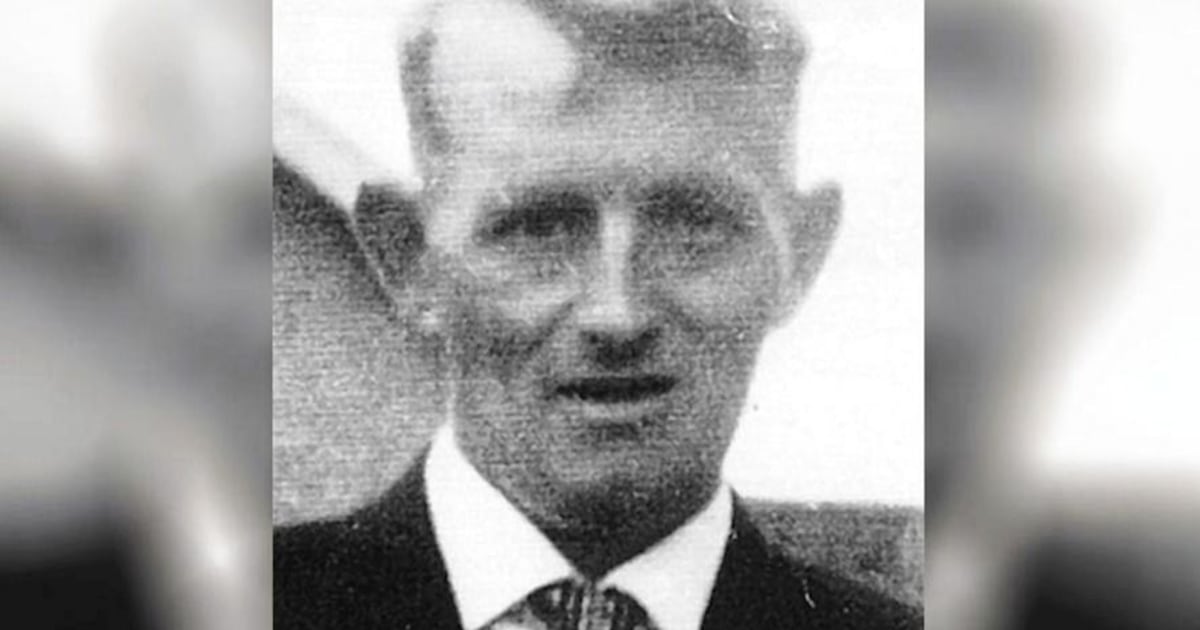
Ludlow family condemn no-prosecution decision almost 50 years after Dundalk killing
The family of Seamus Ludlow, shot dead by a loyalist gang near Dundalk in May 1976, have accused An Garda Síochána of having "no interest" in prosecuting loyalists, following a decision by the Director of Public Prosecutions (DPP) to bring no charges in the case, irishnews.com reports.
Ludlow, aged 47, was gunned down on a narrow lane outside Dundalk on 2 May 1976. His killers are believed to have included members of the Ulster Defence Regiment (UDR) and the Red Hand Commando (RHC), an outlawed loyalist group with close links to the UVF. His body was found after he was killed making his way home from a local pub.
Names passed on, then ignored
In 1979, the RUC provided Gardaí with the names of four loyalists suspected of involvement in the killing. No action was taken on that intelligence. In 1998, named suspects were arrested and questioned by the RUC. Two of those individuals subsequently allegedly made admissions and drew sketches of the murder scene. The DPP nonetheless decided a year later not to bring anyone before the courts.
The case was later examined by the Kenova investigation team as part of Operation Denton, a detailed review of the activities of the Mid Ulster UVF.
Family told 'two should be prosecuted'
Michael Donegan, Ludlow's nephew, said the family's last meeting with the Kenova team took place in 2022. At that point, current PSNI Chief Constable Jon Boutcher told the family he believed two individuals warranted prosecution.
"I asked John Boutcher himself, how many people did he think should be prosecuted, and he said, 'two'," Donegan said. "They spent about three years investigating the case. They were satisfied they had evidence to justify prosecutions of two. They basically handed their file to the Gardaí the next day."
Donegan said the tone shifted markedly once Gardaí became involved. "It wasn't about how they were going to get prosecutions, it was going to be how difficult it would be to get prosecutions," he said. "We knew the way the wind was blowing."
Christmas timing condemned as deliberate
The family's solicitor was informed of the no-prosecution outcome after 4.40pm on 23 December — a timing Donegan described as a deliberate attempt to suppress the news.
"They tried to bury the bad news over the holiday," he said. "Christmas is basically a news down period, nothing gets reported. I would say it was very British of them — the British always bury their bad news on Friday evening. That's basically what the Gardaí did."
'Delay, deny and death'
Donegan was direct in his characterisation of the State's approach over the past half-century. "They basically had no interest down there in prosecuting loyalists for anything," he said. "They just want to make it all go away."
He noted that Ludlow's siblings have all died in the intervening years since the 1976 murder. "That's what they wanted, they wanted them all to die, they let them all die," he said.
Donegan acknowledged the campaign faces a generational problem. "We are all getting on ourselves. I think the Gardaí are playing the long game. We'll all be going too and we can't expect the next generation, who never knew the man, to carry the fight on. We have to face that reality. Delay, deny and death — that's the game the Gardaí have been playing for years."
The family has previously called for an independent inquiry into the Gardaí investigation and into case files that went missing. In 2006, a joint Oireachtas committee recommended two commissions of investigation be established following a report by retired High Court judge Henry Barron. In 2021, the Ludlow family failed in a Supreme Court bid to compel the Irish government to set up an inquiry into the handling of the case.
Garda response
A Garda spokesman did not address Donegan's specific allegations directly. The spokesman said An Garda Síochána appointed a senior investigating officer in March 2023 to analyse all evidence and new lines of inquiry, with material subsequently submitted to the DPP.
"An Garda Síochána does not comment on decisions made by the DPP and has no input on the timing of directions from the office of the DPP," the spokesman said. He added that arrangements are in place for members of the Garda National Bureau of Criminal Investigation (GNBCI) to meet with the family and their legal representative "in early course". The family also retains the right to seek reasons for the DPP's decision and to request a review.
Solicitor: decision 'flies in the face of common sense'
Gavin Booth, of Phoenix Law, said the DPP's no-prosecution direction was inexplicable given the evidence on the table. "These suspects confessed in the late 1990s to crossing the border at Omeath, to kidnapping Seamus and murdering him," he said. "We understand again these same persons confessed to Operation Kenova and still the DPP directed no prosecution."
Donegan said the family has gathered considerable information about the case independently, without Garda assistance. "Anything we have uncovered has been in spite of them," he said. "The fact we keep uncovering information scares the life out of them."
Source: Google News IE — Crime (en)