500 deaths, no definition: Inside TTPS' mysterious 'Other' homicide category
Over 500 deaths recorded by Trinidad and Tobago Police since 2016 sit in a category called "Other" — with no written definition provided. Guardian.co.tt investigates what the classification actually means.
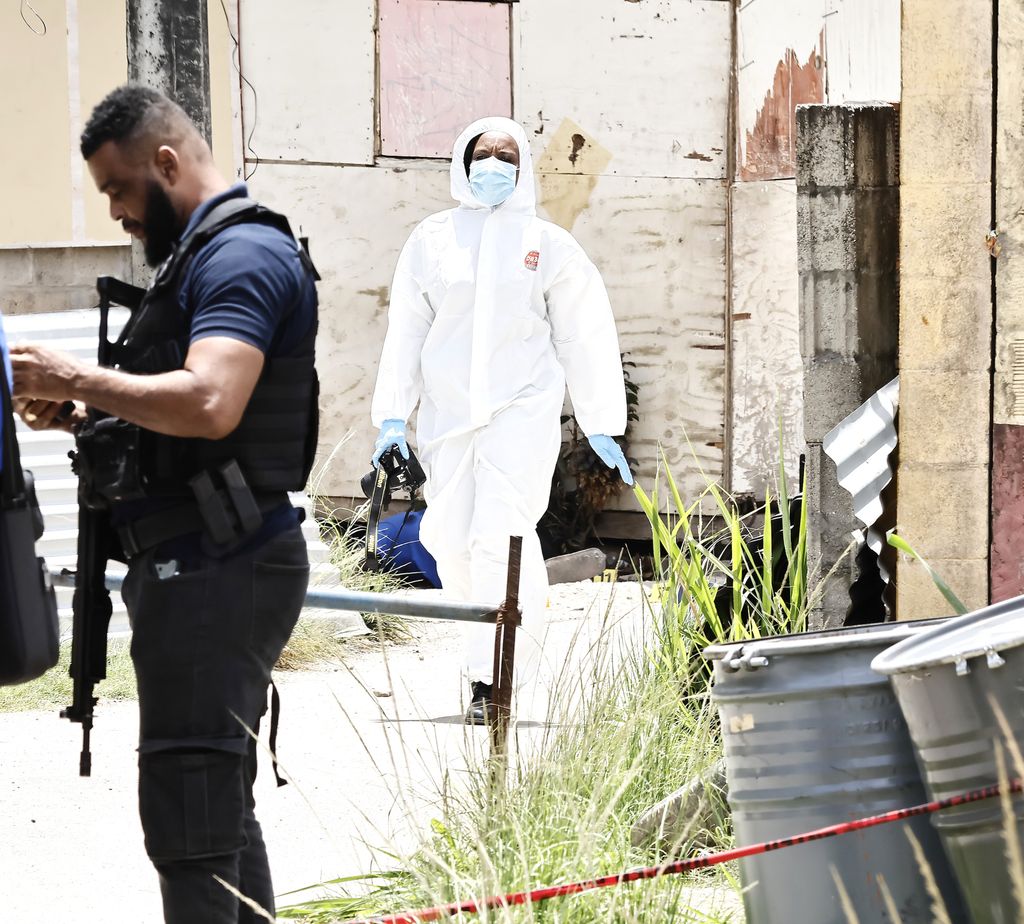
500 deaths, no definition: TTPS cannot explain its own homicide category
Trinidad and Tobago measures its fight against violent crime with a single annual figure: murders. But according to guardian.co.tt, a two-part investigation into the Trinidad and Tobago Police Service (TTPS) has uncovered a significant gap in how those numbers are constructed — one the public has never been shown.
Between January 1, 2016 and June 3, 2026, the TTPS recorded 500 deaths and placed them in a category labelled simply "Other." No written definition of that category has been provided by the Police Service.
The figure was obtained from a Crime and Problem Analysis Branch (CAPA) document released under the Freedom of Information Act. CAPA is the unit within TTPS responsible for compiling and analysing crime data.
The numbers behind the category
The CAPA table recorded 6,157 Total Homicides over the period. Of those, 5,211 were classified as Murders. The remaining 946 were distributed across four other categories: 321 Unclassified Deaths, 68 Inquests, 57 Manslaughter cases, and 500 Other.
"Other" was the largest of the four non-murder categories — yet the table contains no definition, no breakdown of the deaths it includes, and no indication of why those cases were placed there rather than elsewhere in the classification system.
The investigation is clear on one point: the existence of the category does not mean those 500 deaths were murders that went uncounted. The records do not support that conclusion. The question is a different one — what, precisely, does "Other" contain?
Senior officers offer conflicting accounts
The CAPA table lists "Other" separately from "Unclassified Death," and Deputy Commissioner of Police Junior Benjamin confirmed the two categories are not interchangeable.
"I think that 'Other' is classified, but it is classified outside of a murder and a manslaughter," Benjamin said. "But unclassified, it means that we have not had enough evidence, either forensic or otherwise, to determine exactly what category it should be."
However, his follow-up description blurred that distinction. Benjamin described a scenario involving a deteriorated body still awaiting forensic results — a situation he had just associated with Unclassified Death — as potentially leading to placement in the "Other" category.
"We find a body, right? We do not know — the body is deteriorated," Benjamin said. "We would then need to find out from forensic whether or not they saw projectiles in the body, or whether there was some strangulation. Different things will tell you whether it was an unnatural death, whether it was by natural causes. So you have to wait until the forensic results to determine what direction it will go and whether or not you will probably place it in the Other category or in the murder category."
Benjamin said his understanding was that "Other" included suicides — even though "Other" forms part of the total homicide figure — as well as vehicular manslaughter or vehicular homicides. He acknowledged that his answer was not a written definition, and the boundary between "Other" and "Unclassified Death" remained unresolved.
Referral to Homicide Bureau yields no definition
When guardian.co.tt asked Benjamin about the methodology TTPS uses to classify deaths, he referred the query to Senior Superintendent Sean Dhilpaul, head of the Homicide Bureau of Investigations.
Dhilpaul confirmed that TTPS operates with a glossary to determine the motive assigned to homicide cases.
"We have a glossary. TTPS has a glossary. And that is how we determine. Based on the glossary, that is where the motive will be given from," Dhilpaul said, adding that the glossary "itemises the certain categories" used to assign motives.
He clarified that the glossary governs motive assignment, not the movement of a case from Unclassified Death to Murder. "That would be based on the investigation," he said. "Normal investigative procedures and evidence would determine how a death moves from unclassified to whether be reclassified or remain unclassified."
When asked directly what types of deaths are placed under "Other," Dhilpaul did not provide an answer. "Let me verify one thing with regards to Other," he said. No further explanation followed.
Freedom of Information request filed
With senior officers unable to resolve the definition, guardian.co.tt turned to the Freedom of Information Act to obtain the written rules behind the classification system.
On January 26, 2026, a formal request was submitted to TTPS asking for the total number of cases initially classified as Homicide, Murder, and Suspected Homicide. The request also sought records of cases subsequently reclassified from those categories to others — including accidental death, suicide, sudden death, or "no classification" — between 2016 and the present.
Additionally, the request asked for cases marked as "not classified" or otherwise removed from homicide statistics, as well as the criteria or policy used to make those classification decisions.
The response to that request, and what it reveals about the machinery behind Trinidad and Tobago's most closely watched crime statistic, is the subject of Part 2 of this investigation.
Source: Google News TT — Crime