Martin Lewis loses battle against deepfake scams stealing victims' life savings
Finance expert Martin Lewis says he is "losing" the fight against online scams using his identity, with victims losing over £20m to deepfake fraud schemes.
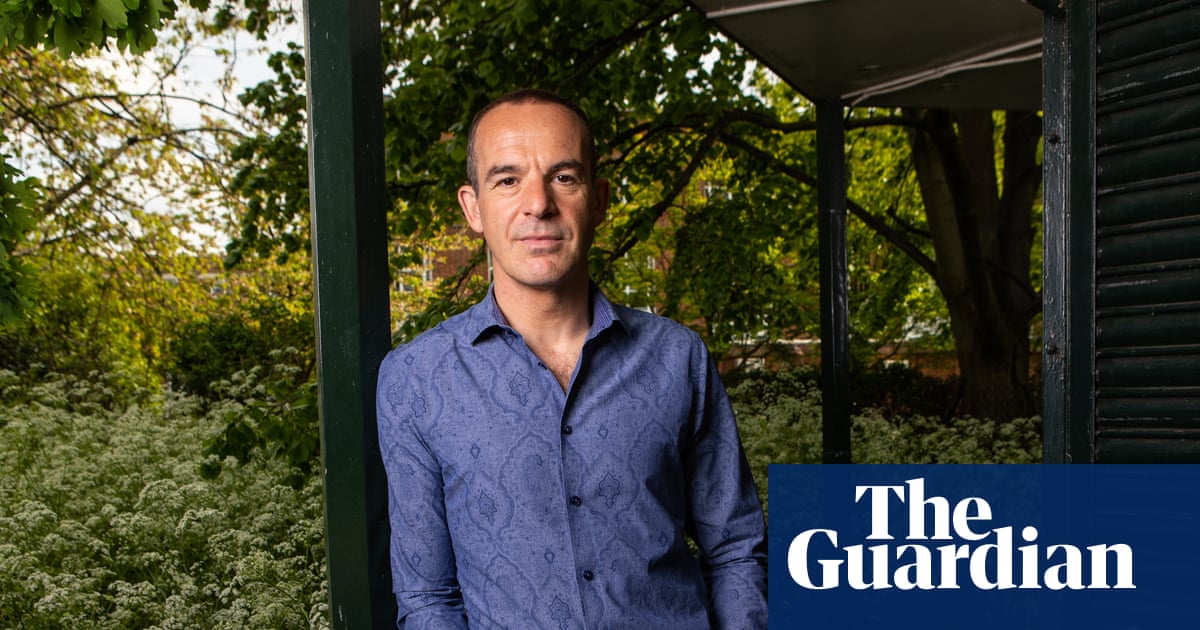
'I am losing it': Martin Lewis on deepfake scams and a decade of government inaction
An elderly disabled woman lost her entire life savings after investing in a scheme that falsely claimed to be endorsed by personal finance expert Martin Lewis. "THEY ARE BASTARDS!" Lewis wrote on social media when the woman's email arrived in his inbox this month. He told The Guardian UK he had "tears running down my face" as he read it — and still sounds shaken recounting it. "I felt a mixture of frustration, anger and sadness," he says, not only for the woman's plight but for the "constant, ongoing deluge of shit from the scammers".
Lewis has never advertised anything. His social media profile picture carries the words "I don't do ads" overlaid on his forehead. Despite that, people continue to fall victim to deepfake videos and fraudulent adverts that use his likeness to promote fake investments. The problem is now serious enough that MoneySavingExpert (MSE) — the consumer website Lewis founded in 2003 and sold in 2012 for up to £87m, where he remains executive chair — employs one person full-time just to handle these cases.
When MSE analysed 2024 research by Action Fraud, it found that victims had reported losing more than £20m to scams featuring Lewis's image and name. He topped the chart of celebrity faces exploited in fraudulent adverts, ahead of Taylor Swift and Elon Musk.
"This is organised crime"
Lewis is clear that calling these operations "scammers" understates the threat. "Scammers is not the right word," he says. "This is organised crime. And these are psychologically adept marketing systems. These people have the equivalent of dark web marketing agencies."
In consumer advocacy terms, Lewis has built a career on trust spanning more than two decades — challenging unfair bank charges, mis-sold payment protection insurance, and what he describes as "aggressive" council tax billing and collection, among other campaigns. To see his reputation weaponised against the very people he has spent his career protecting is, he says, "like a slap in the face".
He has been fighting this particular battle for nearly a decade. In 2018, he settled a defamation case against Facebook for a £3m donation to Citizens Advice, after the platform published adverts using his image to market fraudulent investments. He subsequently campaigned successfully for scam advertising to be included in the 2023 Online Safety Act, which places responsibility for fraudulent adverts on tech platforms. Since then, he says: "Absolutely bugger all has been done. They said, unfortunately, because there were other priorities, the consultation would take time, but they'd start in early 2025. That became mid-2025. That became mid-2026."
Government accused of inaction
Ofcom, the regulator responsible for enforcing the Online Safety Act, says it is "working at speed to develop new rules for paid-for fraudulent ads on the most widely used social media and search services". A 12-week consultation is due to begin in July, with final policy statements expected by mid-2027 at the earliest.
That timeline does not satisfy Lewis. "I feel completely let down by the entire political classes," he says. "I would love them to get my mailbag. I'd love to see how they react to my mailbag day in, day out."
In May, Lewis joined the chief executive of Which? in writing an open letter to Prime Minister Keir Starmer, expressing concern about "the government's lack of action to hold big tech accountable for the fraud that takes place on its platforms". No reply has been received. "We haven't heard back yet," Lewis confirms.
He is particularly stung by a contrast with Starmer's public response to AI-generated non-consensual intimate imagery — so-called nudification. The Prime Minister stated that technology companies which "profit from harm and abuse" lose the right to self-regulate. Lewis's reaction was blunt. "I metaphorically threw my sock at the television. AI nudification is terrible. But destroying people's lives through stealing their money and stealing their mental health through scam ads is just as terrible, just as destructive. Yet it's been ignored for a decade."
He points to a Reuters report from last year, which cited Meta's internal projections suggesting approximately 10% of its 2024 annual revenue — around $16bn (£12.1bn) — would derive from illicit advertising. Meta said in response that it had reduced user reports of scams by 58% over the preceding 18 months. Lewis remains unconvinced. "If that isn't the definition of profiting from harm and abuse, I don't know what is," he says. "Yet we have done nothing."
Previous governments no better
Lewis traces the pattern of inaction back beyond the current administration. Before the pandemic, while pursuing his legal action against Facebook, he held a private meeting with a secretary of state under the then Conservative government. The minister's response astonished him. "He said to me: 'Oh, it's really good you're suing Facebook because it's a lot easier for you to act than us.' I said: 'What are you talking about? You're the government! Don't regulate with my money. Do it yourself!'"
Lewis now allows himself some "wry amusement" at the media attention generated by AI-generated footage depicting Nigel Farage and Bank of England governor Andrew Bailey. The incident, he suggests, brought mainstream visibility to a technology that has been used against ordinary members of the public — and against his own identity — for years without equivalent political urgency.
Asked plainly whether this is a battle he can win, Lewis does not hesitate. "Do I feel I'm losing this one? Yes, I am losing it. That's it. I'm losing it," he says.
He insists, however, that the solution is not complicated. Enforcing the Online Safety Act and holding platforms financially liable for fraudulent adverts would, he argues, be straightforward. "It would be very simple for the government to stop them," he says. The elderly woman who lost her life savings this month — one of countless such cases landing in his inbox — suggests time is already short.
Source: The Guardian UK