Lowestoft MP Jess Asato sues xAI over Grok-generated fake sexual images
Labour MP Jess Asato has filed a high court claim against Elon Musk's xAI after its Grok tool generated fake sexualised images of her. The case could set a legal precedent for AI liability.
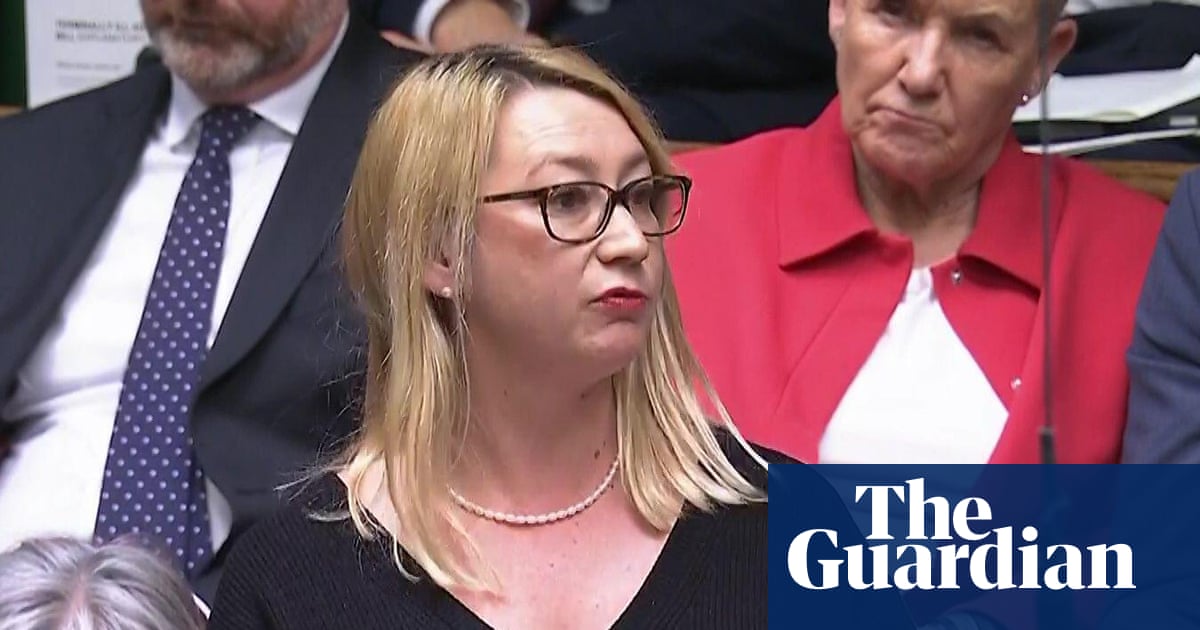
Labour MP takes xAI to high court over AI-generated fake sexual images
Jess Asato, the Labour MP for Lowestoft, has filed a legal claim against xAI — the artificial intelligence company founded by Elon Musk — alleging its Grok tool was used to generate fake sexualised images of her without her consent, The Guardian UK reports.
The claim, submitted to the high court in London, accuses xAI of breaching data protection law and the law on misuse of private information. According to the Financial Times, which first reported the legal filing, xAI — now a subsidiary of SpaceX, which also owns the social media platform X — enabled users to prompt Grok into creating such images.
Asato said in January that seeing herself portrayed by the AI tool as wearing a bikini was "violating". She has since told the Financial Times that Grok also produced a video "showing her being chloroformed and prepared for a sexual assault".
Her case follows a lawsuit filed in New York state by Ashley St Clair, the mother of one of Musk's children, who alleged that explicit images were generated of her by Grok — including one in which she was depicted as underage.
A potential test case for AI liability
Asato's action could establish how far AI developers can be held legally responsible for content their tools produce at a user's instruction. She told the Financial Times that the images were generated after she had publicly condemned the creation of non-consensual sexualised pictures.
"My hope is that this will rebalance individuals' rights against very large tech companies that should have put safeguards in place before they harmed women and children," Asato said.
Her lawyer, Ravi Naik, set out the central argument to the newspaper: "At its heart this case is about a single principle: that developers must answer for the way they design and deploy their tools. Our case is that … an image that is of you, is designed to look like you and [whose] very purpose is to degrade you or have you represented in different conditions, must be an image of you. xAI say otherwise."
Government and regulator responses
The UK government threatened action against X in January after Grok was used to generate large volumes of sexualised imagery based on real women and, in some cases, children. Media regulator Ofcom launched a formal inquiry into the matter.
Musk's company initially said it would restrict the creation of such imagery to paying subscribers on X — a response that Prime Minister Keir Starmer described as "horrific". Days later, X announced it had stopped Grok entirely from editing images of real people to show them in revealing clothing.
Despite calls for public figures to leave the platform — citing both the Grok-generated images and Musk's support for far-right causes in the UK — Downing Street, government departments and many MPs have continued to use X.
Earlier Grok misidentifications
Grok has faced separate controversy after falsely identifying two Hampshire police officers as having been involved in the arrest of Henry Nowak. One of the officers, Christi Hill, who served as a police constable for 12 years, said she had been forced to flee to a safe location. Numerous posts on X called for Hill and a male officer — also wrongly identified — to be tracked down and arrested, or in some instances to face violence.
Source: The Guardian UK