Southampton Sikh leader condemns backlash after Henry Nowak murder conviction
A Sikh community leader in Southampton has spoken out against abuse directed at the faith following Vickrum Digwa's life sentence for stabbing 18-year-old Henry Nowak.
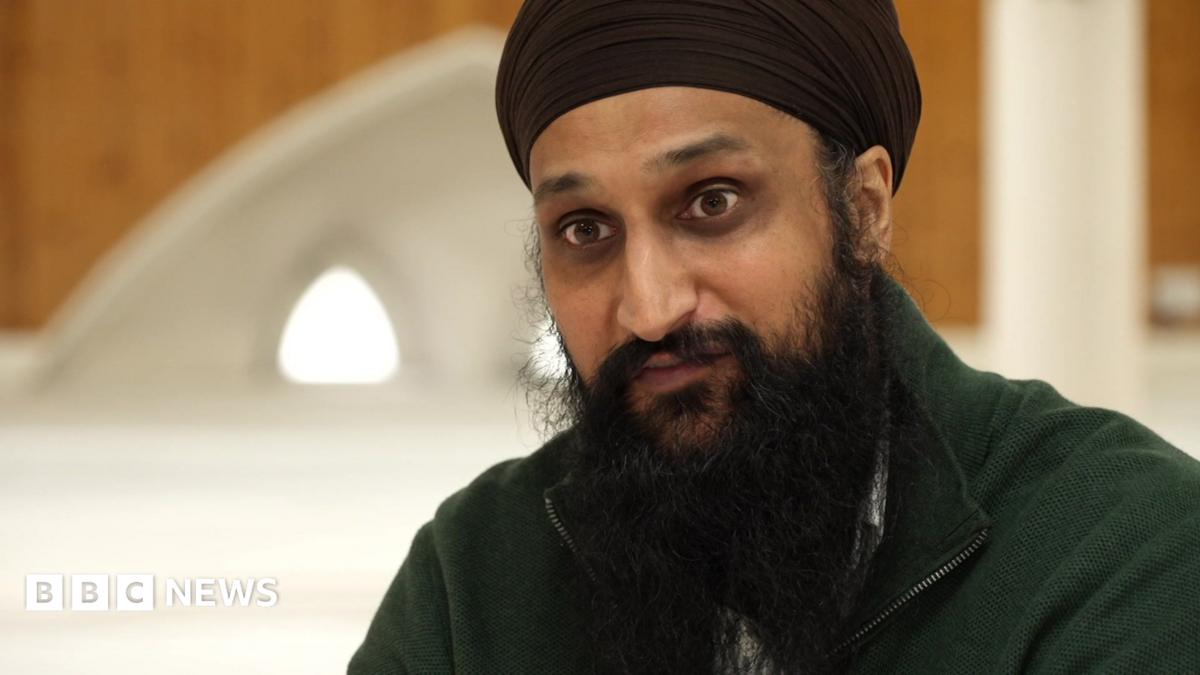
Southampton Sikhs face abuse in wake of Nowak stabbing case
A Sikh community leader in Southampton has condemned a wave of hostility directed at members of the faith following the conviction of Vickrum Digwa for the murder of Henry Nowak, bbc.co.uk reports.
Nowak, 18, was fatally stabbed by Digwa in Southampton in December 2025 with a blade Digwa claimed he carried as part of his Sikh religion. On 1 June, Digwa was jailed for life with a minimum term of 21 years — a sentence since referred to the Court of Appeal under the Unduly Lenient Sentence scheme by the solicitor general.
Harjit Singh, a prominent figure in the city's Sikh community, said members of the faith had been subjected to abuse in the days since sentencing. He was clear that Digwa's actions bore no reflection on the broader religion.
"Our deepest sympathies and condolences go out to the Nowak family. We were shocked and horrified by what happened," Singh said. "We're further saddened and a little bit alarmed by the backlash on the Sikh community. This was an individual crime, committed by an individual, yet the Sikh community has been targeted."
Questions over religious exemptions
Singh also addressed the legal and religious questions raised by the case — in particular, the classification of the murder weapon and its relationship to legislation governing the carrying of ceremonial blades.
Under Section 139 of the Criminal Justice Act 1988, a practising Sikh may lawfully carry a kirpan — a small ceremonial blade and one of the religion's five articles of faith — in a public place for religious reasons. The same exemption applies to items worn as part of national dress, such as the sgian dubh blade associated with Scottish Highland dress. Should such an item be used in an act of violence, it is treated as an offensive weapon.
Digwa was carrying two blades at the time of the attack. The large dagger used to kill Nowak was worn in a sheath around his neck and was linked to his membership of the Nihang order of Sikhs. He also carried a smaller knife — a more conventional kirpan — beneath his clothing.
The Crown Prosecution Service said Digwa chose to carry both ceremonial knives and stated that the trial judge agreed with its assessment that it was a kirpan Digwa chose to use. A number of Sikh leaders have rejected that characterisation.
Singh described the dagger as "an offensive weapon" and not a kirpan, distancing Digwa's conduct from recognised Sikh practice.
"Proud of our identity"
Singh situated the kirpan within Sikhism's wider tradition, referencing Shastar Vidya — the Sikh science of weaponry — which has deep historical roots within the faith.
"The tradition goes back centuries when our forefathers were fighting against tyranny and our forefathers stood up against that," he said. "It's a daily reminder for us to stand up against oppression and tyranny. A constant reminder that we are Sikhs and we should help anybody."
Singh said his congregation would take time to reflect on recent events but made clear that the controversy would not weaken the community's commitment to its identity or values.
"We're proud of our identity. I'm proud of my dastar. I'm proud of my beard. If you see us on the streets, we will help you. That's what we do. That's what we are as a people, that's what Sikhi is."
According to the Office for National Statistics's 2021 census, more than 4,000 people in Southampton identify as Sikh.
Source: Google News UK — Crime (en)