Sturgeon breaks silence on husband's £400k SNP embezzlement in BBC interview
Nicola Sturgeon has given her first media interview since Peter Murrell admitted stealing £400,000 from the SNP, insisting she knew nothing of his crimes.
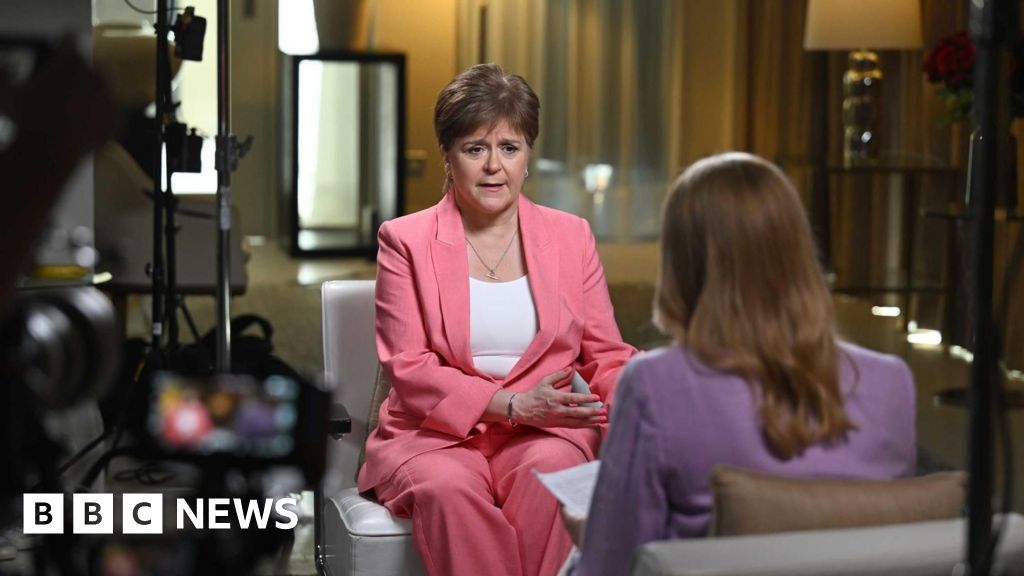
Sturgeon speaks out after Murrell's guilty plea over SNP fraud
Nicola Sturgeon gave her first media interview since her estranged husband Peter Murrell admitted embezzling £400,000 from the SNP, telling the BBC she had no knowledge of his crimes. BBC Scotland's political editor Glenn Campbell has offered his analysis of an exchange in which the former first minister's personal life and political record became inseparable.
The interview, conducted by Laura Kuennsberg, confronted Sturgeon with the fact that some of the stolen party funds were used to purchase gifts she had received and been photographed wearing in public. The most prominent example is a £400 pendant from a Shetland jeweller she and Murrell visited together. Sturgeon described her distress on learning it had been paid for with money taken from the SNP.
To explain how she could have remained unaware of Murrell's conduct, Sturgeon offered detail about the practical realities of their domestic arrangements. She said that as first minister she worked long hours and was away frequently, that she was not involved in managing the household, that she gave Murrell money to cover her share of bills, and that they held separate bank accounts. She said nothing in the home struck her as beyond what two people on high salaries could reasonably afford.
That reasoning extended to a Jaguar car parked in their driveway, which Murrell had bought with party funds. Sturgeon said she had no particular interest in cars. On high-value watches purchased with SNP money, she said she had never seen them and only learned of their existence when Murrell entered his guilty plea in court.
Her account of the most high-profile item — a motorhome that became a focal point of the police investigation — is more qualified. The vehicle was kept at the Dunfermline home of Murrell's mother. Sturgeon acknowledged she would have visited the property while the motorhome was parked there but said she had no "conscious memory" of having seen it. She explained this partly by reference to how they approached the house and where they parked, suggesting the vehicle may not have been visible. She added that even if she had noticed it, she would not have assumed it belonged to her in-laws, still less that it had been bought with SNP funds.
On the political dimension of the scandal, Sturgeon declined to accept that she had failed in her responsibilities as party leader to oversee the SNP's finances. She said the accounts contained nothing that was glaringly suspicious and that it was the treasurer's role — she named Colin Beattie — to flag anything requiring closer scrutiny. When a subsequent treasurer and other elected officials raised financial concerns, they have said they were unable to obtain the level of detail needed to satisfy themselves that nothing was wrong.
Sturgeon drew a distinction between those concerns and the embezzlement Murrell has admitted. She noted that the worries at the time centred on independence campaign funds that did not appear to be held in the SNP's accounts — a separate matter, she argued, from what Murrell was doing. Campbell observed, however, that it was precisely the police investigation into those missing independence funds that eventually uncovered Murrell's wider conduct. He noted that while Murrell had worked to conceal his crimes, they were discoverable upon close examination.
Sturgeon herself accepted, in hindsight, that she should not have allowed Murrell to remain as SNP chief executive when she became party leader and first minister — even though, she noted, his stealing had begun several years before that point. She also said she was open, subject to legal advice, to releasing the detailed statement she gave to police, as a means of addressing suggestions that she had not co-operated with investigators by declining to answer questions in a formal interview setting.
Throughout the interview, Sturgeon resisted taking responsibility for the actions of the man she married and has since separated from. She said she was "deeply sorry" that events had reached this point but stopped short of apologising to SNP donors or to those within the party who had raised financial concerns that were not adequately addressed. She said she was still waiting for Murrell to provide her with an explanation for what he had done — crimes that she said had led to her being, in her own words, unfairly vilified, humiliated and placed under suspicion.
Source: BBC News