11th Circuit poised to overturn $6.2M verdict for Miami man jailed on dropped terror charges
An appeals panel signaled it may reverse a $6.2M damages award to Irfan Khan, held 317 days in solitary before terrorism charges were dropped.
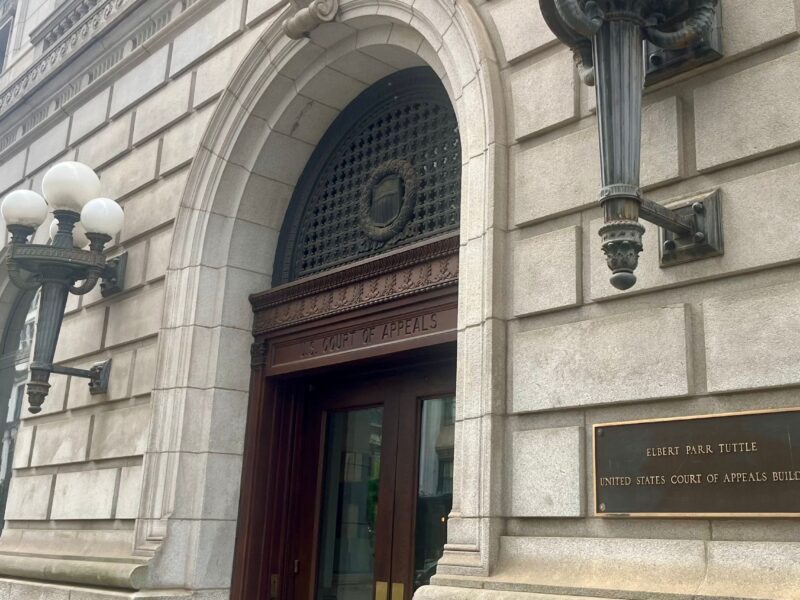
Appeals panel skeptical of $6.2M payout to man wrongfully held on terrorism charges
A federal appeals panel in Atlanta signaled on Friday it is likely to overturn a $6.2 million damages award to a Pakistani-born Miami man who spent nearly a year in solitary confinement before federal terrorism charges against him were dropped, Courthouse News Service reports.
Irfan Khan, a U.S. citizen born in Pakistan, was arrested in May 2011 on charges of providing material support to the Pakistani Taliban. He had no prior criminal history. During 317 days in custody, Khan lost approximately 50 pounds and was subjected to 159 strip searches. After the charges were abruptly dropped, he was released. Khan says the ordeal left him with post-traumatic stress disorder.
In 2024, Chief U.S. District Judge Cecilia Altonaga ruled the government was liable for malicious prosecution, finding Khan "suffered considerably" during and after his detention. The decision resulted in a $6.2 million damages award.
Justice Department seeks to reverse the ruling
On Friday, Justice Department attorney Sarah Smith asked a three-judge 11th Circuit panel to overturn both the damages award and Altonaga's liability finding. Smith argued prosecutors were justified in charging Khan based on information supplied by FBI agents, even if that information later proved incorrect.
"The government here did the right thing in that when it had probable cause that a serious crime was being committed, it investigated. But when it made the determination it couldn't prevail at trial, it dropped charges," Smith said. "That's what we want the government to do."
Two of the three panel members appeared receptive to that argument. U.S. Circuit Judge Britt Grant, a Trump appointee, questioned whether FBI agents are obligated to fully investigate a case before seeking an indictment "so [the case] can be presented to a jury and proven beyond a reasonable doubt."
Fellow Trump appointee U.S. Circuit Judge Barbara Lagoa went further. "No one misled or misrepresented anything. It was a poorly-done investigation but that doesn't necessarily mean as a matter of law that [the agents] were the legal cause of the ultimate prosecution," Lagoa said.
Faulty translations and misidentified money transfers
According to Khan's attorneys, the government secured a grand jury indictment based in part on phone calls in which Khan's father called for terrorist attacks, and on four money transfers Khan sent to relatives in Pakistan.
In one instance, investigators failed to promptly verify the identity of a money transfer recipient who shared a name with a Taliban commander. That recipient turned out to be a relative with whom Khan's wife was staying while attending a wedding in Pakistan.
The lower court found the government lacked probable cause to believe the transfers were part of a conspiracy to aid the Taliban, or that Khan had agreed to support attacks on Pakistani officials.
Smith acknowledged that "subtle changes" in translations of phone transcripts ultimately led the government to drop the charges.
Arguing for Khan, attorney David Luck of Morgan & Morgan said Altonaga correctly determined the prosecution lacked probable cause and that the FBI based its accusations on inaccurate information and flawed translations.
"There was no information ever in any [phone] call, ever, that our client agreed to send any money to any member of the Taliban, agreed to any attack, agreed to support terrorism whatsoever," Luck said.
Sole dissenting voice on the panel
U.S. Circuit Judge Nancy Abudu, appointed by President Joe Biden, appeared to be the only panel member opposed to overturning Altonaga's ruling. Abudu said the appeals court was bound to defer to the lower court's "pretty thorough" findings "unless we can say without any hesitation that they were wrong."
Abudu also challenged Smith's contention that the FBI agents were insulated from liability because prosecutors made an independent decision to proceed. She noted that the evidence presented by agents was "the basis upon which the prosecution decided to proceed" and questioned whether the completeness of that evidence ought to be weighed.
"The failure to do a thorough investigation, coupled with the presentation of a person as Taliban [affiliated], how is that not misleading in any way and a misrepresentation that could've been prevented by a more thorough investigation?" Abudu asked.
Smith countered that because FBI special agents presented their gathered evidence to a prosecutor who independently determined probable cause existed, that "independent decision insulates the officers from liability as a matter of law."
Khan's father convicted separately
Khan's father, Hafiz Muhammed Sher Ali Khan, was convicted in 2013 of providing material support to terrorists and sentenced to 25 years in prison. He was later released on humanitarian grounds.
The three-judge panel did not indicate when it would issue a ruling in the appeal.
Source: Courthouse News Service