California Supreme Court strikes down death sentence in 1991 LA gang shootings over racial bias
The California Supreme Court reversed Anthony Bankston's death sentence, ruling prosecutors used racially biased language, including a Bengal tiger analogy.
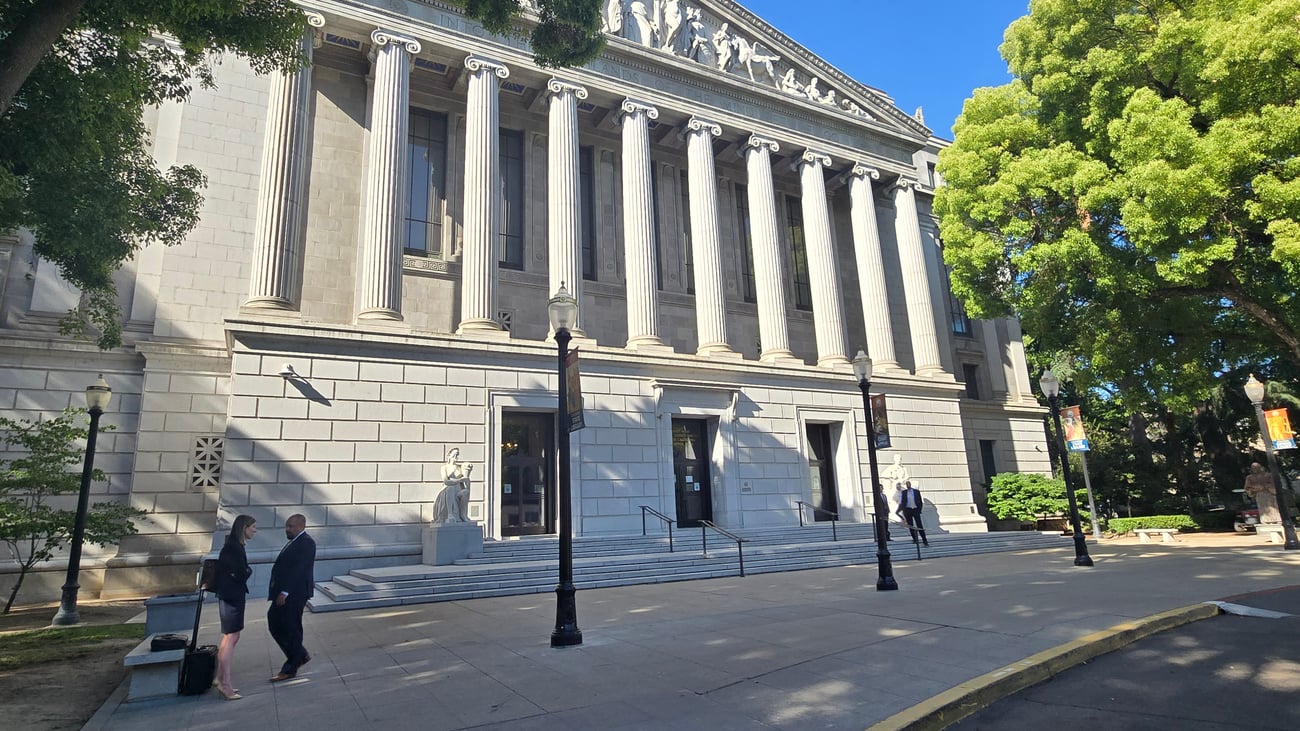
California Supreme Court vacates death sentence tied to racially biased prosecution language
The California Supreme Court on Monday reversed the death sentence of Anthony George Bankston, a Los Angeles man convicted of murders stemming from gang-involved shootings in 1991, after finding that prosecutors violated state law by using racially discriminatory language during the penalty phase of his trial. Courthouse News Service reports that both the court and the California attorney general agreed the language — including a story comparing Bankston to a Bengal tiger — crossed a line under the California Racial Justice Act.
Convictions rooted in rival gang violence
A jury convicted Bankston of the first-degree murder of Benson Jones, the attempted premeditated murder of Benjamin Jones, and possession of a firearm by a felon. Witnesses testified that Bankston identified himself as a member of the Nine Deuce Bishops, a Blood gang, while the Jones brothers were members of the rival Crips.
After jurors deadlocked on additional charges, prosecutors retried the case and secured convictions for the first-degree murder of Jesus Sanchez — shot in territory controlled by the Compton Chicano Gang, a rival of a gang allied with the Bloods — and for assault with a firearm against Linda Jones, sister of Benson and Benjamin. Bankston was sentenced to death on Jan. 20, 1995.
The Bengal tiger story at the center of the appeal
During sentencing, prosecutors described Bankston, who is Black, as a "killing machine" and a "thug," closing with a story that compared him to a Bengal tiger. The prosecution warned jurors not to be swayed by his composed appearance at trial, depicting the animal as "enormous," with "muscles all flexed out," "claws out," "fangs" visible, growling, and placed deep in the "jungle."
More than a decade later, Bankston appealed his death sentence to the state supreme court under the California Racial Justice Act. Enacted in 2020, the law prohibits racially discriminatory language during trial and explicitly names the Bengal tiger story as an example of "racially incendiary or racially coded language, images and racial stereotypes in criminal trials."
Court: tiger story evokes history of dehumanizing language
Associate Justice Leondra R. Kruger, writing for the court, stated that the Bengal tiger story "should no longer be told in California courtrooms" regardless of the intent behind it.
"There is no reason to permit prosecutors to continue running the risk of appealing to biases that undermine the very foundation of a system of equal justice, simply to make an unremarkable point about a defendant's behavior outside a controlled courtroom setting," Kruger wrote.
The court drew a distinction between neutral animal expressions — such as "happy as a clam" or "free as a bird" — and comparisons like the Bengal tiger story that invoke racial bias. Kruger acknowledged that the prosecutor's underlying point was permissible: that a defendant may behave differently in the courtroom than at the time of the crime. But she found the specific embellishments went further.
"None of these embellishments, to be sure, explicitly appealed to racial bias. But they nonetheless evoked a well-known history of the use of language demeaning Black individuals through comparisons to hyperpredatory 'jungle' animals," Kruger wrote.
The court also ruled that the prosecutor's use of the word "thug" to describe Bankston functioned as an appeal to racial bias.
"Though the prosecutor may not have intended her language as any kind of appeal to racial bias, the penalty phase argument as a whole employed, as a kind of secondary running theme, images and descriptions that have historically been associated with bias," Kruger said.
Attorney general concedes error; case returns to trial court
The California attorney general conceded that the Bengal tiger analogy relied on racially discriminatory language and that the error was not harmless beyond a reasonable doubt, warranting reversal of Bankston's death sentence.
The court vacated the death penalty but otherwise affirmed the lower court's judgment. The case now returns to the trial court, where prosecutors may decide whether to seek a new penalty phase trial.
Chief Justice Patricia Guerrero and Associate Justices Carol A. Corrigan, Joshua P. Groban, and Retired Associate Justice Martin J. Jenkins, sitting by designation, concurred in the majority opinion. Associate Justices Goodwin H. Liu and Kelli Evans filed separate concurring opinions.
Representatives for the parties did not immediately respond to a request for comment.
Source: Courthouse News Service