U.S. Supreme Court Blocks Alabama Nitrogen Execution
The U.S. Supreme Court halted Alabama's planned execution of Jeffery Lee by nitrogen gas inhalation, following a lower court ruling that the method likely violates the Constitution.
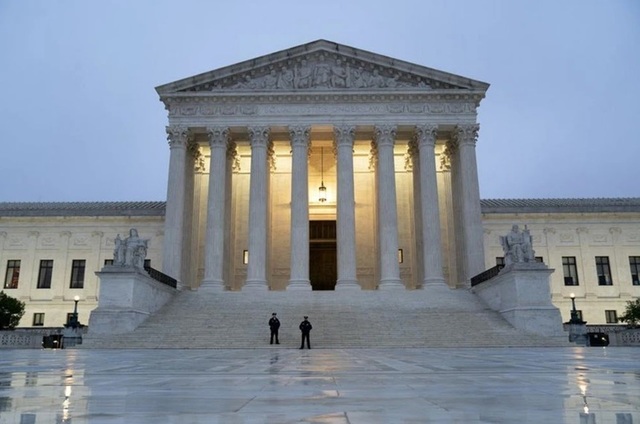
U.S. Supreme Court Blocks Alabama Nitrogen Execution
The United States Supreme Court issued an emergency order on Thursday preventing Alabama from carrying out the execution of Jeffery Lee, a 49-year-old inmate, by nitrogen gas inhalation. The decision came after a federal district court ruled earlier in the week that this execution method probably violates the U.S. Constitution.
Lee had been scheduled to die on Thursday for the murders of two people during a 1998 robbery. The nitrogen gas method involves forcing the condemned person to breathe pure nitrogen through a mask, causing death by oxygen deprivation.
In an unsigned order issued late Thursday, the nation's highest court stated: "The application for a stay or vacatur... addressed to this Court is denied." No explanation was provided for the ruling, which is common in emergency orders from the Supreme Court.
The case highlights ongoing legal battles over execution methods in the United States. Nitrogen gas inhalation has been condemned by United Nations experts as cruel and inhuman. Five inmates were put to death using this method last year out of 47 total executions nationwide, according to data cited by News.ro.
Alabama carried out five executions in 2025, matching the numbers in South Carolina and Texas. Florida led all states with 19 executions. Lethal injection remained the most widely used method, accounting for 39 of last year's executions.
The death penalty has been abolished in 23 of the 50 U.S. states, with three additional states observing moratoriums on capital punishment. President Donald Trump has been a vocal supporter of expanding the use of the death penalty for what he describes as "the most serious crimes."
The lower federal court had blocked Alabama's use of nitrogen gas on Tuesday, finding that the method likely constituted cruel and unusual punishment prohibited by the Eighth Amendment. Alabama had appealed that ruling to the Supreme Court, which ultimately declined to intervene in time for the scheduled execution.
Source: News.ro