California Supreme Court Ruling Reshapes Pretrial Detention Rights
The California Supreme Court unanimously ruled that most accused have a constitutional right to pretrial release. Prosecutors must now prove specific cause to keep someone jailed before trial.
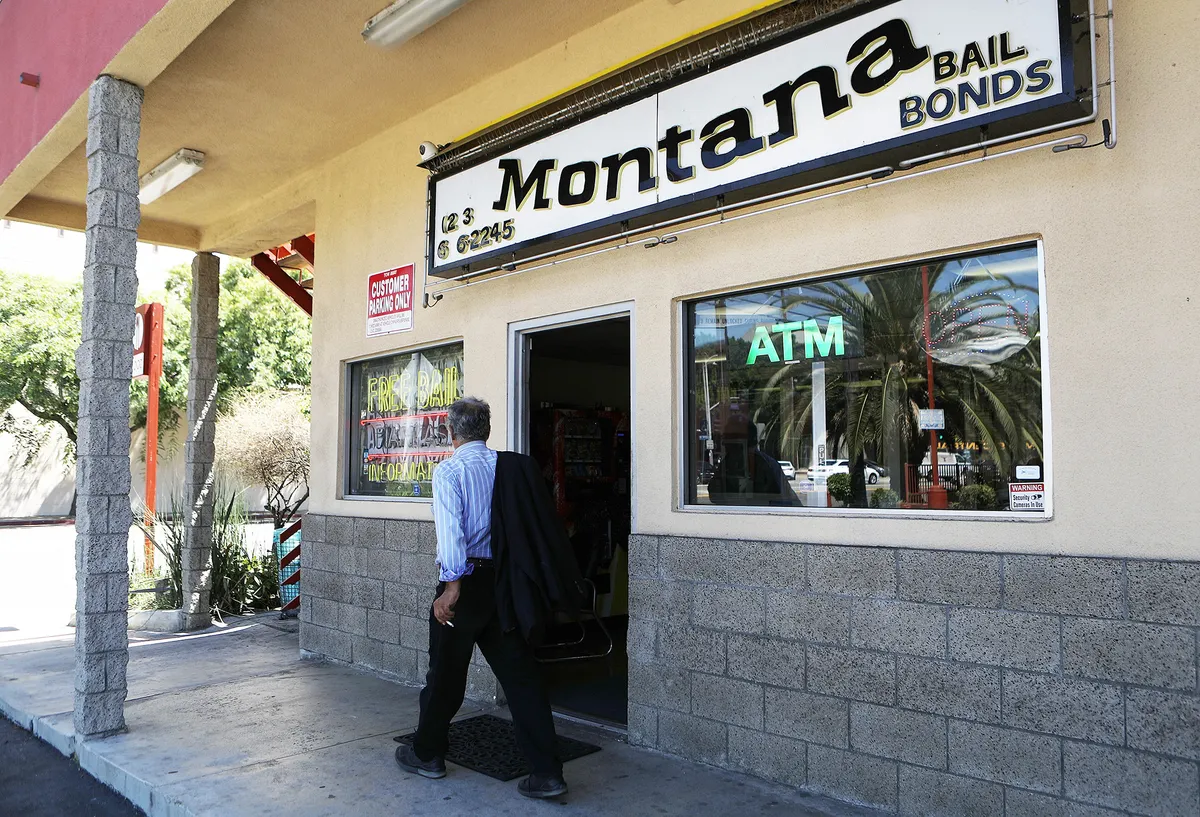
A $7 Cheeseburger That Reached California's Highest Court
In January 2021, Gerald Kowalczyk, a disabled and unhoused 55-year-old man in San Mateo, California, picked up a stranger's credit card from the ground and used it to buy a $7 cheeseburger. According to his legal representatives, Kowalczyk quickly had a change of heart and asked for a refund. When the restaurant manager refused, he left without the food.
He was arrested shortly afterward on identity theft, petty theft and related charges. The underlying offense was nonviolent and involved a small dollar amount, but Kowalczyk carried more than 60 prior convictions and a documented history of failing to comply with pretrial release conditions. Under the state's pretrial risk assessment, he scored in the highest-risk category.
A judge set bail at $75,000 — an amount Kowalczyk could not afford. When he asked for a reduction, the judge declined and revoked his bail entirely. Kowalczyk filed a habeas corpus petition, a legal challenge used to argue that a person's detention is unlawful.
Court Issues Ruling After Case Becomes Moot
By the time the California Supreme Court took up the petition, Kowalczyk had already spent six months in jail, pleaded no contest to misdemeanor identity theft, and been released. His case was technically moot. The court nonetheless issued a decision that reform advocates, speaking with journalists earlier this week, called "seismic" and "monumental."
As The Marshall Project reports, the court unanimously affirmed late last month that the California state constitution gives most people accused of crimes a right to pretrial release. Judges cannot make that right meaningless by setting bail at an amount the defendant can demonstrate is financially impossible to meet. Prosecutors who seek to keep someone jailed must show the case falls within the state constitution's limited "no-bail" categories — mostly involving violent offenses — and a judge must hold a formal hearing before such an order can take effect.
In a concurring opinion, Justice Joshua Groban wrote that the prior status quo deprives "those accused of crimes of their freedom based on their financial circumstances, without any trial or conviction." He added: "Today's opinion marks the end of that practice in our state."
Prosecutors Flag Unanswered Practical Questions
Joshua Martin, a deputy district attorney in San Mateo County where Kowalczyk was charged, told The Marshall Project that his office was not surprised by the ruling and would follow it, but said the decision leaves trial courts with substantial practical questions. Among them: what constitutes "reasonably attainable" bail, and what evidence judges should require when a defendant claims inability to pay.
Martin acknowledged that nonfinancial release conditions — such as releasing people on a promise to return or electronic monitoring — are often effective, but said prosecutors remain concerned about cases where defendants repeatedly miss court dates or violate protective orders. "I'm really waiting to see how it plays out in court, probably in the same way everyone else is," Martin said.
Earlier Landmark Had Limited Measurable Impact
That kind of uncertainty is not uncommon following sweeping judicial decisions. California has been in similar territory before. In March 2021, while Kowalczyk was still in jail, the state Supreme Court ruled in the case of Kenneth Humphrey that judges could not use money bail solely to detain people who were poor.
That ruling was widely hailed as a landmark. Its practical effect, however, proved murky. A 2024 report from the UCLA School of Law found no evidence that the Humphrey decision reduced California's pretrial jail population or bail amounts, or that it shortened the average time people spent in jail before trial.
Lawyers from the Civil Rights Corps, the nonprofit law firm that represented Kowalczyk at an earlier stage and later filed arguments on his behalf before the state Supreme Court, expressed confidence that the new ruling would carry more weight than its predecessor. The Kowalczyk decision, they argued, does not merely reaffirm the unconstitutionality of wealth-based detention — it addresses a more fundamental question: when may the state detain someone before trial at all?
A Shift From Money to the Question of Detention Itself
Under the Humphrey framework, UCLA researchers found that judges often set high bail, claimed to have considered the defendant's ability to pay, but maintained that a high amount remained the least restrictive means of addressing flight risk or public safety concerns. The Kowalczyk decision, by contrast, establishes that pretrial release is the constitutional norm, and that it can be limited only under defined and specific circumstances.
That shift — from the question of money bail to the broader question of the state's authority to hold people before trial — mirrors a national trend in the debate over pretrial justice. Erin George, national director of policy for The Bail Project, a nonprofit advocating for less restrictive bail policies across the country, told The Marshall Project that wealth had long served as a natural entry point and proxy for a deeper debate on pretrial liberty. Increasingly, she said, "the conversation is very explicitly about detention."
Illinois offers a comparable example. In 2021, the state legislature passed legislation abolishing cash bail and replacing it with a system in which prosecutors may seek pretrial detention on public safety grounds — moving the legal argument away from a defendant's financial means and toward the state's justification for confinement itself.
Whether California's ruling produces measurable change where Humphrey did not will depend largely on how trial courts apply it. Advocates say the clarity of the new standard is its greatest strength. Prosecutors and judges, for their part, are still working through what that standard will require in practice.
Source: The Marshall Project