US charges Raúl Castro over shooting down of Hermanos al Rescate planes in 1996
The Department of Justice filed charges of murder and conspiracy against the former Cuban president over the deaths of four pilots three decades ago.
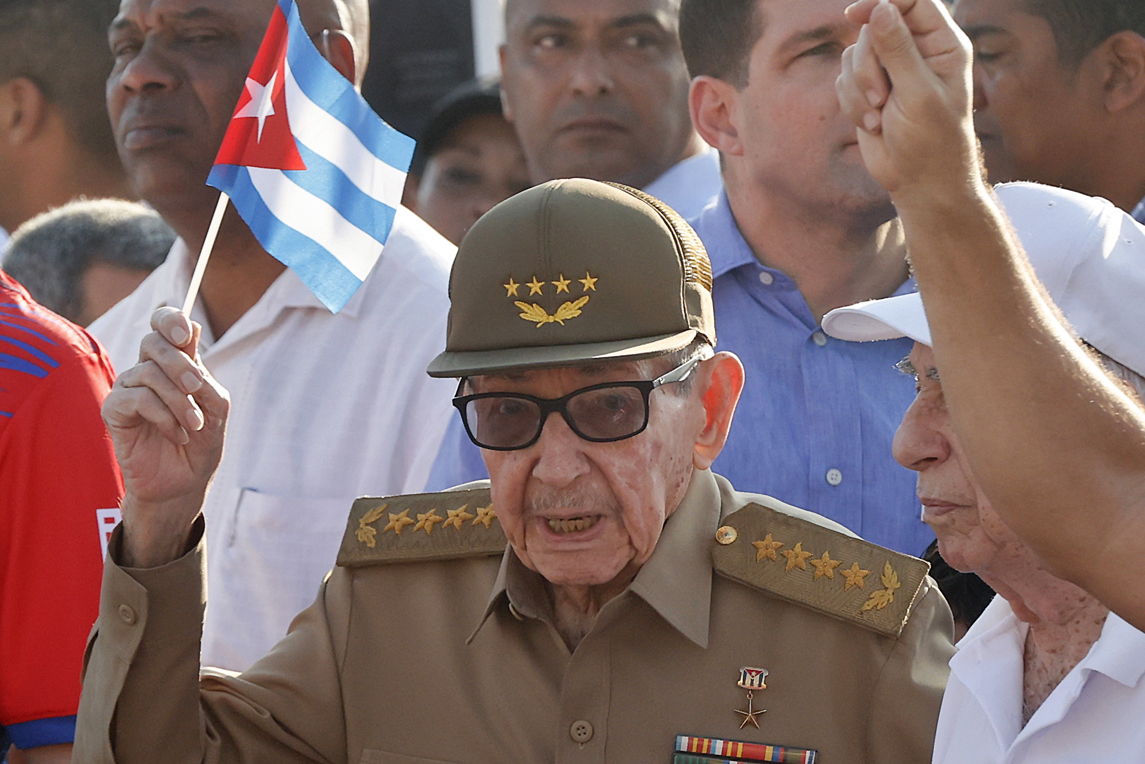
Federal charges against Castro over 1996 shooting down
The United States Department of Justice (DOJ) filed formal charges on Wednesday against former Cuban president Raúl Castro for murder, conspiracy to kill US citizens, and destruction of an aircraft, according to judicial documents cited by oncubanews.com. The charges were filed in the federal court of the Southern District of Florida.
The prosecution accuses Castro of having ordered, in his capacity as minister of the Revolutionary Armed Forces (FAR), the shooting down on 24 February 1996 of two aircraft belonging to the humanitarian organisation Hermanos al Rescate. On board were Carlos Costa, Armando Alejandre and Mario Manuel de la Peña, US citizens, and Pablo Morales, a legal resident of the US. All four died in the attack.
Hermanos al Rescate provided assistance to rafters attempting to escape Cuba. The formal accusation holds that Castro, then at the apex of the military chain of command, personally ordered the interception of the aircraft.
Other Cuban military personnel also charged
The accusation also includes five Cuban military personnel alleged to have been involved in the operation: Emilio José Palacio Blanco, José Fidel Gual Barzaga, Raúl Simanca Cárdenas, Luis Raúl González-Pardo Rodríguez and Lorenzo Alberto Perez-Perez.
The charges were made public moments before an event held by US acting attorney general Todd Blanche at the Freedom Tower in Miami, a symbolic landmark for the Cuban exile community. This sector had pressured president Donald Trump to bring the charge and increase diplomatic pressure on Havana.
Cuba's position and international ruling
The Cuban government maintained at the time that the aircraft were in its airspace and characterised the pilots as "terrorists". However, the International Civil Aviation Organisation (ICAO) ruled that the incident occurred in international waters, contradicting Havana's official version.
Castro, 94 years old and younger brother of Fidel Castro, was serving as minister of the FAR when the shooting down occurred. The US prosecution has not clarified how it would carry out an operation to capture the former leader or how many years of imprisonment a maximum sentence would entail.
Context: escalating pressure from Washington on Havana
The charge comes amid an escalation of pressure from the Trump administration against the Cuban government. Washington has imposed an oil blockade on the island, expanded sanctions against the Castro leadership and the military business conglomerate Gaesa, and intensified its threats to "take control" of the country.
To these measures is added the capture in January of Venezuelan president Nicolás Maduro in Caracas. Venezuela is one of Cuba's fundamental allies, and its weakening has aggravated the economic and humanitarian crisis facing the island, which is bereft of crude oil and suffering from serious energy problems.
Legal background to the case
The case has civil precedents. The litigation known as Basulto v. Republic of Cuba, initiated in the Southern District of Florida in 2002, arose directly from the 1996 shooting down and was brought under the anti-terrorism exception of the Foreign Sovereign Immunities Act (FSIA). Cuba, as it has historically done before US courts, did not formally appear in that proceeding.
Potential defenders of Castro could invoke several lines of legal argument. Among these is sovereign immunity: according to the FSIA (28 U.S.C. § 1604), foreign states enjoy a presumption of immunity from the jurisdiction of US courts, and the defence could argue that the legal requirements of the terrorism exception are not met if the incident occurred in Cuban sovereign airspace.
A second line of defence points to extraterritoriality: if the primary conduct and resulting harm occurred outside US territory, the unilateral application of US domestic law—including Florida substantive law—would be questionable under standard principles of choice of law. Finally, the defence could argue that a military interception does not fit the definition of "extrajudicial execution" established by the Torture Victims Protection Act (TVPA), which requires deliberate execution not authorised by prior judicial sentence.
For now, US authorities have not clarified the concrete mechanisms for enforcing the charge against a former head of state residing in Cuban territory.
Source: Google News CU — La Habana