Harvey Weinstein's Conviction Upheld by California Appeals Court
A California appeals court has upheld Harvey Weinstein's conviction for rape and sexual assault, though it ordered a resentencing because the trial judge improperly considered overturned New York convictions as an aggravating factor.
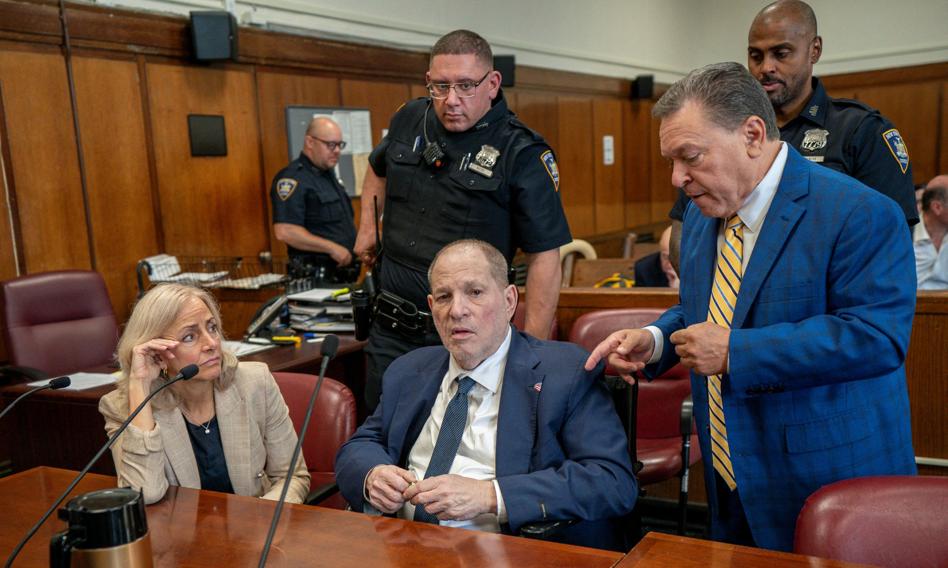
Harvey Weinstein's Conviction Upheld by California Appeals Court
A California appeals court on Friday upheld film producer Harvey Weinstein's conviction and 16-year prison sentence for rape and sexual assault. However, the court ordered that his sentence be recalculated because the trial judge had improperly considered his overturned New York convictions as an aggravating circumstance.
According to the Associated Press, a three-judge panel of the 2nd District Court of Appeal ruled that the trial judge did not violate the defendant's constitutional rights. "We reject his attempts to undermine the jury's guilty verdicts," the judges wrote in their opinion.
The court determined that the sentence must be set anew because the New York convictions, which were later overturned, had been wrongly factored in as an aggravating circumstance. California's attorney general agreed with this position.
The decision came one day after New York prosecutors abandoned plans for a fourth trial against Weinstein in one of the #MeToo-era cases, after the accuser stated she was unable to testify again. Nevertheless, the 74-year-old Weinstein still faces another sexual offense charge in New York, where he awaits a state court ruling scheduled for September.
In California, Weinstein was found guilty of one count of rape and two counts of sexual assault against Italian model and actress Evgeniya Chernyshova. She testified that in 2013, during the LA Italia Film Festival, the producer entered her hotel room uninvited and committed sexual assault.
The defense argued that the judge had wrongly blocked the use of Facebook messages between Chernyshova and festival organizer Pascal Vicedomini, which the attorneys claimed could have undermined the witness's credibility. "The lower court effectively deprived Mr. Weinstein of the ability to defend himself," said attorney Jennifer Bonjean.
The appeals court ruled, however, that the defense could present its arguments based on other evidence, and that the excluded materials violated California laws restricting the use of an accuser's sexual history. The court also upheld the admission of testimony from other women describing sexual assaults, even though those incidents were not included in the indictment.
Weinstein's spokesman, Juda Engelmayer, told the AP that the defense was disappointed with the ruling and intends to appeal to the California Supreme Court, still believing that "significant legal errors affected the proceedings."
Source: Bankier.pl
Reporting by Andrzej Dobrowolski (PAP) from New York
Source: Google News PL — Crime (pl)