Georgia Man Sentenced to $155,000 Restitution He Cannot Pay, Faces Return to Prison
Harold Doby III was ordered to repay $155,000 in one year after an Augusta bar shooting — a sum he says he never had a realistic chance of meeting.
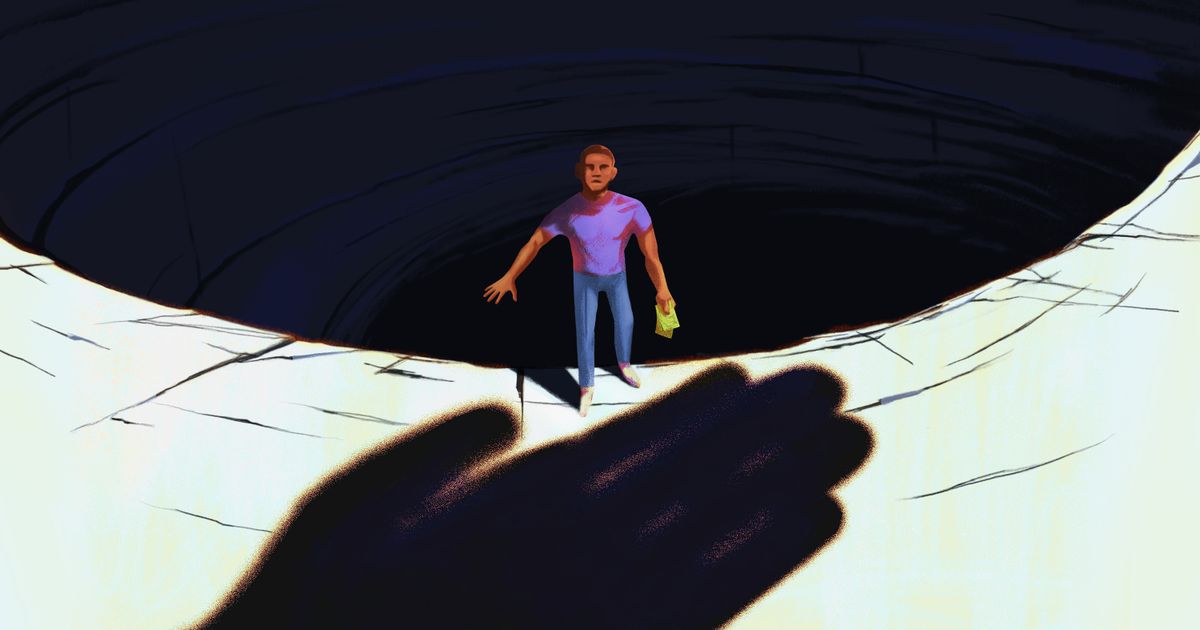
$155,000 Restitution Order Traps Augusta Man in Cycle of Debt and Supervision
Harold Doby III, a former Augusta University basketball player and community organizer, was sentenced in October 2022 to 20 years of probation and $155,000 in restitution — to be paid within one year — following a shooting outside a bar in Augusta, Georgia. Falling behind on payments could send him back to prison. The Marshall Project reports his case as part of a broader national pattern in which defendants are incarcerated not for new crimes, but because they cannot meet court-ordered financial obligations.
Restitution has been embedded in American criminal sentencing for centuries, rooted in the principle that defendants owe victims compensation for financial losses. In the 1980s, the victims' rights movement broadened that scope to include psychological harm, future losses, insurance company reimbursements, and payments to state governments. After Congress passed the Mandatory Restitution Act in 1996 — requiring full payment of victim losses in federal cases — all 50 states enacted similar statutes. Today, states carry tens of millions of dollars in uncollected restitution orders, and scores of defendants remain incarcerated because they cannot pay. Tim Curry of the Fines and Fees Justice Center told The Marshall Project: "So much happens in small courtrooms where no one is watching. This is a problem everywhere."
Doby's account of the events that led to his sentence begins in the winter of 2019, when he was 28 years old. He had gone to the Limelight Café in Augusta to celebrate a job promotion at the chemical plant where he worked, where he was about to become an operator overseeing safety protocols. A fight broke out at the bar. As he was leaving, several men connected to the altercation approached his car. Fearing for his safety, he fired a legally owned firearm, injuring one person. Days later, local media coverage portrayed him as a fugitive. After his mother alerted him that his face was all over the news, he turned himself in. He was charged with aggravated assault and aggravated battery.
Doby had intended to plead not guilty and go to trial. His attorney at the time encouraged him instead to enter an open plea, citing Georgia's First Offender Act, a provision designed to give first-time offenders a second chance after completing their sentences. His co-defendants — three others involved in the incident — received probation sentences of up to 10 years and were not ordered to pay restitution. That outcome, Doby writes, seemed like the worst-case scenario to him, and he judged it preferable to the cost and uncertainty of a trial.
The case took years to reach sentencing. During that time, Doby faced compounding hardships: the death of his grandmother, serious health problems, and a May 2022 incident at the same Limelight Café in which a Richmond County sheriff's deputy tased him in the eye while breaking up a fight. The injury required major surgery. He lost his right eye.
By the time his sentencing date arrived in October 2022, Doby describes himself as being in a severely distressed state. Judge Daniel J. Craig sentenced him to 20 years of probation under the First Offender Act — a term Doby says he was never adequately warned was possible — and ordered him to pay $155,000 in restitution within one year. Of that total, $90,000 was designated for the man he shot; $65,000 for another victim of the fight. Doby told the judge directly at sentencing: "Your Honor, I don't make that kind of money." Craig responded by gesturing toward the crowd of family and community members in the courtroom and suggesting Doby ask them for help.
Doby attempted to withdraw his guilty plea on the grounds that he had not fully understood what he had agreed to. The effort failed. Under the First Offender Act, a clean record and sealed criminal history remained possible — but only if he met every condition Judge Craig set, including the restitution deadline.
In the months after sentencing, Doby says he was never given a restitution hearing, never had an opportunity to present what he could realistically afford to pay, and never received a clear explanation of how the $155,000 figure was calculated. He also says it remains unclear to him whether insurance had already covered some of the losses attributed to the victims.
His financial situation deteriorated quickly. The taser injury had left him on medical leave from his job at the chemical plant, suffering from migraines and dizziness. When that leave ran out in November 2022, he was laid off. He relied on his mother and food assistance to survive. Despite having no income, he continued making monthly restitution payments — sometimes $100, sometimes less — using whatever he had available.
His case illustrates a structural tension at the heart of restitution law: orders are set according to victim losses, not defendant means. No federal standard requires courts to assess ability to pay before imposing a restitution amount or a repayment timeline. Critics, including advocates at the Fines and Fees Justice Center, argue that this framework routinely sets defendants up to fail — and that the consequences fall hardest on those who were already economically vulnerable before their arrest.
For Doby, whose community ties in Augusta — years of youth basketball camps, food drives, and clothing drives — had drawn dozens of supporters to his sentencing, the order represented a form of punishment he says bears no relationship to what he can actually provide. The First Offender Act that was supposed to give him a second chance has instead placed him under two decades of supervision with a financial condition his own judge acknowledged, at least implicitly, he could not meet alone.
Source: The Marshall Project