Florida Sanitation Worker Gets Death Penalty for Killing Expectant Girlfriend Recorded in Work Vehicle
A married refuse collector in Florida received capital punishment after jurors found him guilty of slaying his 23-year-old pregnant partner. Surveillance footage from his employer's truck formed the backbone of the prosecution's case.
Florida Sanitation Worker Gets Death Penalty for Killing Expectant Girlfriend Recorded in Work Vehicle
A married refuse collector in Florida received capital punishment after jurors found him guilty of slaying his 23-year-old pregnant partner. Surveillance footage from his employer's truck formed the backbone of the prosecution's case.
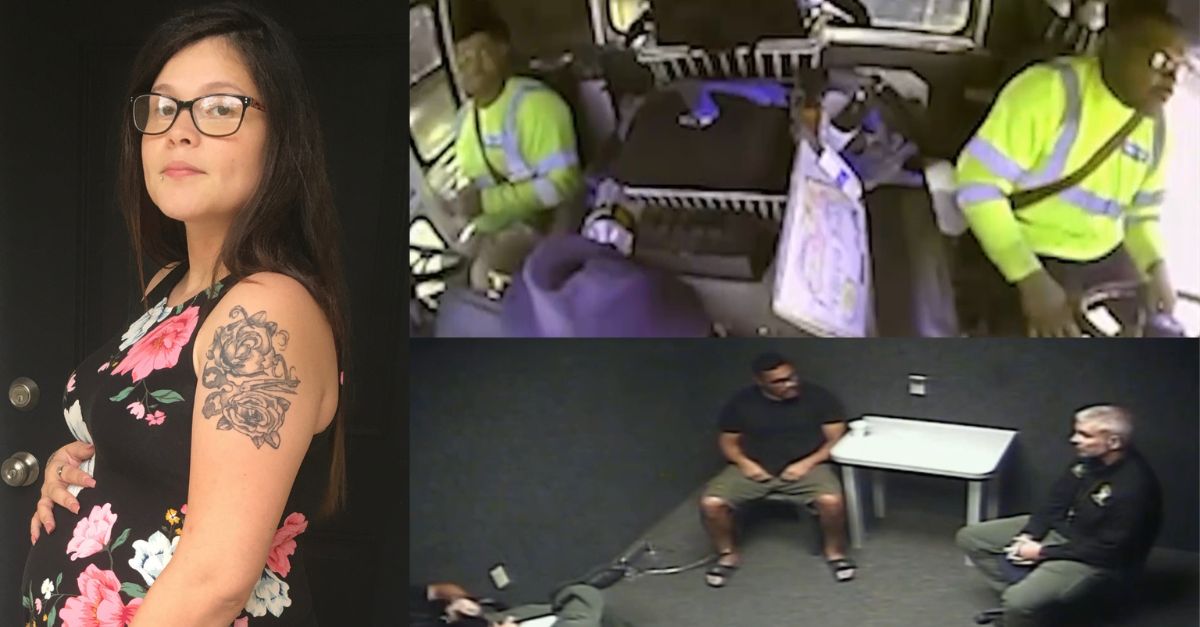
Authorities in St. Lucie County located Tania Wise in a drainage channel beside a road, her neck bearing two deep slashes. She was roughly eight and a half months along and had recently held a celebration for the impending arrival of her second boy, intended to be called Josiah Thomas.
Detectives initially focused on Wise's on-and-off companion, recently ejected from the family residence following an explosive clash. Following a prolonged videotaped questioning, they determined his sorrow appeared authentic and eliminated him as a suspect.
The probe then turned toward Jose Soto-Escalera, a refuse hauler suspected of fathering the baby. He had allegedly provided Wise with funds to terminate the pregnancy, which she never did. Genetic examination later verified his biological connection. A detective involved in the case noted that acquaintances believed Wise might seek additional payments, jeopardizing both his household stability and employment.
The critical evidence originated from equipment Soto-Escalera seemingly forgot about. Cameras mounted inside his work vehicle captured him describing the planned homicide to a relative. In court, an officer read from a translated transcript: the defendant stated he would shoot the victim to ensure her silence, insisting he lacked alternatives. Following the deed, the relative inquired whether blood was visible.
The lead prosecutor remarked that the footage demonstrated shocking audacity and represented an extraordinarily strong piece of evidence.
Supplementary proof included neighborhood security recordings correlated with the defendant's handset, positioning his truck close to Wise's dwelling on the fatal evening. Biological material recovered from the vehicle interior also showed a strong genetic match to the victim.
During proceedings, Soto-Escalera opted not to speak. His representatives summoned no testimony and, in a startling final statement, floated the theory that his spouse had shadowed him and committed the act herself.
The panel required slightly more than sixty minutes to deliver convictions for both the slaying of Wise and the death of her unborn offspring. In the subsequent punishment phase, Wise's adolescent son spoke to the tribunal about losing the person closest to him and the future moments they would never share.
By the slimmest margin permissible under local statute — eight in favor, four opposed — the panel endorsed execution. The presiding judge imposed the ultimate sanction.
Wise's mother, Elizabeth Bedolla, declared that neither her daughter nor her grandson deserved such a fate. She said her lasting memory is of Tania dancing and laughing.
Source: Law & Crime
Source: Law & Crime