Portland police shooting of Aaron Stanton to go to trial over excessive force claims
A federal judge ruled the civil lawsuit over Portland officer Joshua Dyk's 2022 fatal shooting of Aaron Stanton can proceed to trial. The judge rejected qualified immunity and found key facts genuinely disputed.
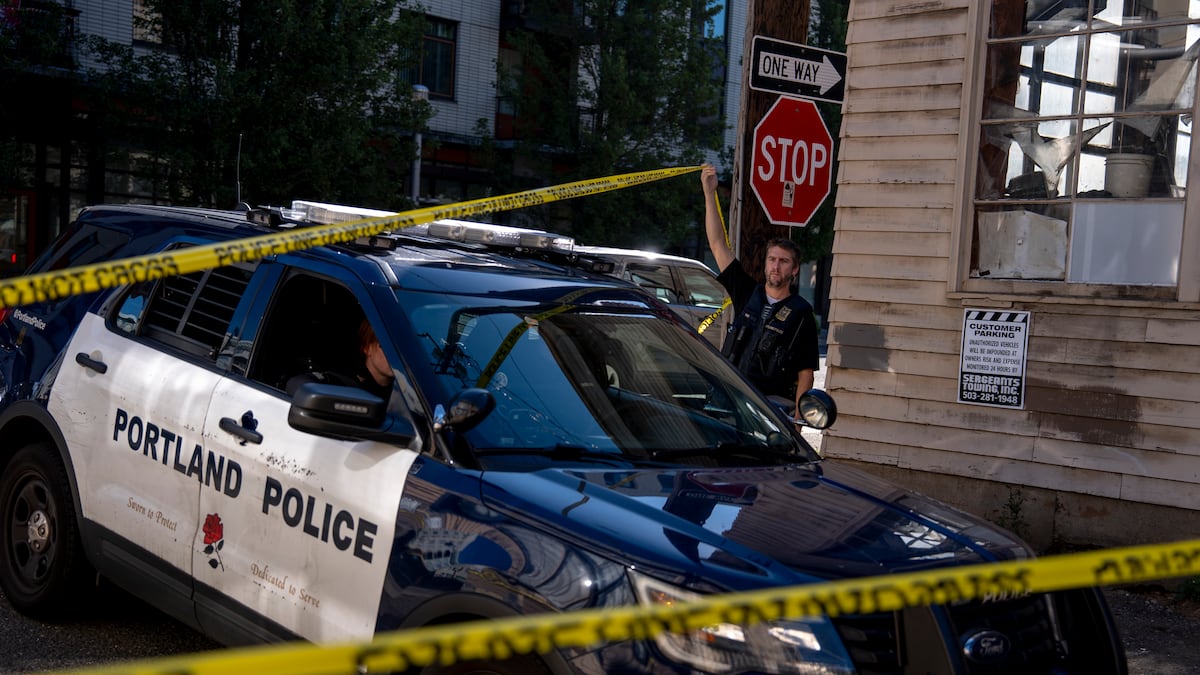
Federal judge allows civil trial in 2022 Portland police shooting death
A federal judge in Oregon has ruled that a civil lawsuit brought by the estate of Aaron Stanton — shot and killed by a Portland Police officer in July 2022 — can proceed to trial, opb.org reports.
At around 8:20 p.m. on 27 July 2022, police were dispatched to a Southeast Portland neighbourhood following reports of a man behaving erratically with a firearm. Stanton fired shots into the air using both a handgun and a semi-automatic rifle while his six-year-old daughter, identified in court records as 'A.S.', stood nearby. Portland Police officer Joshua Dyk then shot and killed Stanton.
A Multnomah County grand jury had previously cleared Dyk of criminal charges. The current civil lawsuit, filed by Stanton's estate, seeks financial damages.
Disputed accounts of where the gun was pointed
Central to the case is where Stanton was directing his weapon in the moments before he was shot. Attorneys for his estate cite a neighbour who said Stanton was pointing the gun skyward. At least one officer on the scene stated Stanton may have been pointing it at himself; others maintained he aimed it at police.
In earlier filings, city attorneys argued Dyk "fired one shot from his rifle to protect those officers and any neighbours that were in the houses near the officers." The city sought to have the lawsuit dismissed entirely.
On Tuesday, U.S. District Court Judge Adrienne Nelson found that sufficient factual disputes existed for a jury to weigh the evidence. Nelson declined to dismiss claims of excessive force, writing: "The Court can only conclude that whether Dyk saw Mr. Stanton point his gun at officers is genuinely disputed."
Qualified immunity rejected
Nelson also rejected the city's argument that Officer Dyk was entitled to qualified immunity. In her ruling she wrote: "Instances of officers firing on armed and sometimes erratic individuals at the first opportunity and without warning is an unfortunately common fact pattern, and one that federal courts have consistently found to be in violation of the Fourth Amendment."
Attorneys for Stanton's estate said they welcomed the ruling and were prepared to go to trial. In previous filings they argued: "Contrary to officer testimony, Mr. Stanton did not level the gun, nor point it at any officers."
What officers told Stanton's daughter
The ruling also addressed what Stanton's daughter was told after the shooting. Attorneys for the estate wrote that 'A.S.' told family members that officers informed her that her father "died of suicide" and "he did this to himself."
City attorneys described that account as, "at worst, an insensitive way to explain to a little girl what happened." Nelson rejected that characterisation in strong terms.
"A reasonable jury could conclude from evidence in the record that the City's officers lied to A.S. by telling her that her father killed himself in order to deflect responsibility from themselves," Nelson wrote, calling the city's explanation a "gross mischaracterisation."
Attorneys for the city of Portland did not respond to opb.org's request for comment on Nelson's ruling.
Source: Google News MT — Crime (en)