Oregon Supreme Court denies murder defendant's bid to access Meta user data
Oregon's highest court ruled Meta does not have to hand over Instagram messages in a 2024 teen murder case. The defendant argued the refusal violated his constitutional rights.
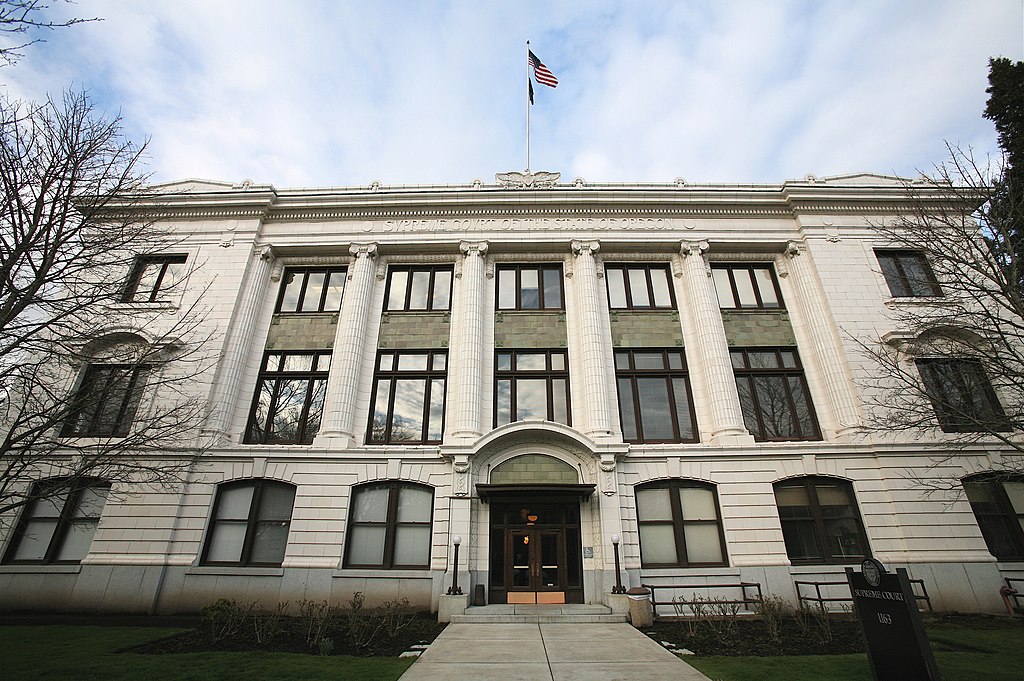
Oregon's Top Court Blocks Defense Access to Meta Instagram Records in Salem Shooting Case
Oregon's Supreme Court ruled Friday that Meta does not have to turn over internal user messages sought by the defense in a homicide case stemming from a 2024 shooting near Salem, according to Courthouse News Service. The court rejected an appeal from defendant David Ayon-Urbano, who argued that withholding the records violated his rights under both the state and federal constitutions.
The court declined to issue a writ of mandamus that would have directed a lower court to order Meta to produce records tied to the social media accounts of two individuals involved in the shooting. In a per curiam opinion, the justices acknowledged the case raised significant legal questions but found the record did not justify intervention at this stage.
"The mandamus petition in this case raises important issues of state and federal statutory and constitutional law arising pretrial during an ongoing criminal prosecution on serious charges, including a charge of second-degree murder," the court wrote. "However, upon consideration, the court declines to issue a peremptory writ of mandamus on this record at this time."
Prosecutors allege that Ayon-Urbano fatally shot Hector de Jesus Gonzalez Mendoza in June 2024. Both were teenagers at the time. Two teenage girls were present and witnessed the shooting.
Ayon-Urbano is seeking geolocation data, messages, and call records from Meta related to the Instagram accounts of Gonzalez Mendoza and one of the witnesses. His attorneys contend the information is essential to his defense. If convicted of second-degree murder, Ayon-Urbano faces a potential life sentence.
In its six-page decision, the court found that Ayon-Urbano had not met the "special loss" threshold that could have compelled Meta to release the records. Meta indicated it would preserve the contested records through the final resolution of the case, and the justices noted they would hold the company to that commitment.
"We are not persuaded that relator has established a 'special loss' at this point in the proceeding to justify the exercise of our discretion to resolve the issues raised in his mandamus petition," the justices said. The court also clarified that its denial would not bar Ayon-Urbano from filing future requests.
Six of the seven justices participated in the decision; Justice Christopher L. Garrett did not.
Oregon Attorney General Dan Rayfield praised the ruling in a statement to Courthouse News. "The Supreme Court sided with Oregon, agreeing that the key constitutional questions in this case weren't properly before them," he said. "If and when those questions do come before the court, we'll keep fighting to protect crime victims and trauma survivors from having their most private information exposed unnecessarily in court."
During oral arguments on May 5, defense attorney Rian Peck of the firm Visible Law argued the Instagram records were pivotal to his client's case. The defense has access to two physical phones — one belonging to Gonzalez Mendoza and one to a teenage witness — but contends it cannot fully access four Instagram accounts without Meta's cooperation.
According to the defense's theory, Gonzalez Mendoza coordinated with one of the teenage girls to arrange an unexpected encounter with Ayon-Urbano, which resulted in Gonzalez Mendoza's death. Peck argued that messages from their Instagram accounts could support that account of events. Ayon-Urbano and Gonzalez Mendoza were reportedly members of rival gangs, and Ayon-Urbano was said to be grieving the recent death of a fellow gang member at the time of the shooting.
A trial court had already quashed the defense's subpoena, concluding that the federal Stored Communications Act barred Ayon-Urbano from obtaining electronic communications from Meta. Government authorities are permitted to make such requests under the Act, but private parties — including criminal defendants — are not. Ayon-Urbano appealed to the state supreme court on the grounds that this distinction violated his due process rights.
"This is about a constitutional right," Peck said. "Relator either has it or he doesn't, and it applies pretrial and allows him to investigate and prepare his defense so he can have a complete defense in this case."
Meta countered that the request amounted to an attempt to conduct searches and seizures on equal footing with government authorities and that the Stored Communications Act prevents it from disclosing that type of information without the account holders' consent.
Leigh Salmon of the Oregon Department of Justice argued the appeal was premature, saying Ayon-Urbano had not demonstrated any irretrievable loss of information. "We assume that there are communications because we do know that the witness and the victim communicated via Instagram," Salmon said. "But the idea that this information and the contents of those communications are material to the defense is entirely speculative at this point."
Representatives for Meta and for Ayon-Urbano did not immediately respond to requests for comment.
Source: Courthouse News Service