U.S. Supreme Court Halts Alabama Nitrogen Gas Execution Hours Before Scheduled Death
The nation's highest court blocked Alabama's bid to execute Jeffery Lee by nitrogen hypoxia, a controversial method lower courts found likely violates the Eighth Amendment's ban on cruel and unusual punishment.
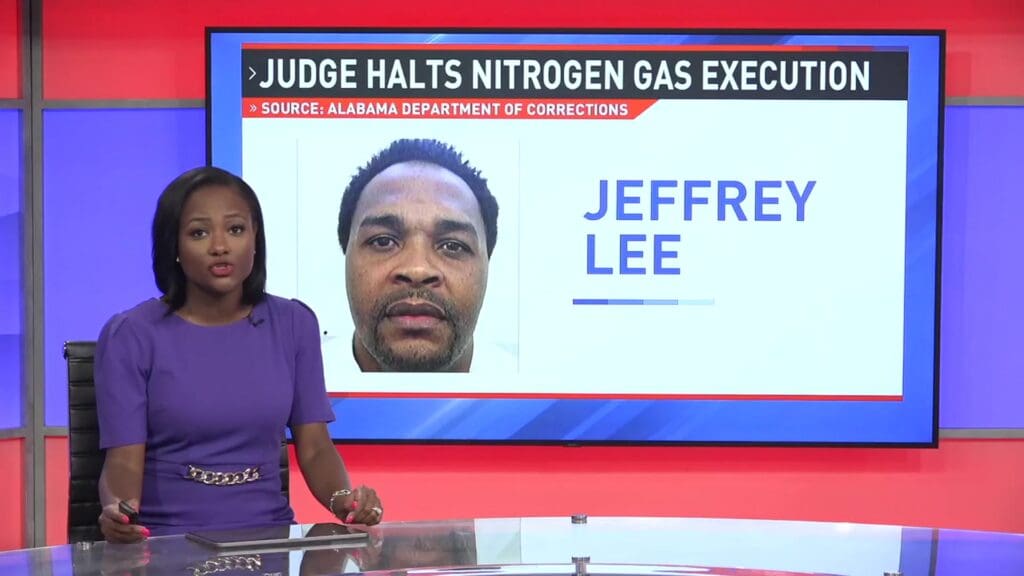
U.S. Supreme Court Halts Alabama Nitrogen Gas Execution Hours Before Scheduled Death
The United States Supreme Court stopped Alabama from carrying out a controversial execution just hours before it was set to proceed. The justices rejected the state's emergency appeal, sparing 49-year-old Jeffery Lee from death by nitrogen gas on Thursday evening, as reported by Tőzsdefórum.
The ruling arrived with little time to spare. Prison officials had planned to put Lee to death at 6 p.m. local time. Instead, the court issued a brief, unsigned order that halted the procedure without explaining its reasoning in detail.
The decision revealed a sharp divide among the nine justices. Three conservative members — Clarence Thomas, Samuel Alito, and Neil Gorsuch — publicly dissented, signaling they would have allowed the execution to move forward. Their opposition suggests the state's request came close to succeeding.
This was not the first legal obstacle Alabama faced in its attempt to use nitrogen hypoxia. Two lower federal courts had already barred the method, ruling that it probably breaches the Eighth Amendment to the Constitution, which forbids punishments that are cruel and unusual. During hearings in April, expert witnesses and medical professionals testified that forcing a prisoner to breathe pure nitrogen through a gas mask causes extreme physical and psychological torment before death comes from oxygen deprivation.
Since Alabama introduced nitrogen gas in January 2024, seven prisoners have been put to death using the technique. The state was one of only a handful nationwide to adopt it. A federal judge had permanently banned the practice in a separate ruling, adding another layer of legal pressure.
Alabama Attorney General Steve Marshall reacted angrily to the Supreme Court's intervention. In a written statement, he called the outcome a "miscarriage of justice" against the state and against victims' families who had prepared to witness the execution. Marshall added that Alabama remains determined to carry out Lee's lawful sentence and may seek to execute him using a different, legally accepted method such as lethal injection.
Lee has spent more than two decades on death row for a double murder committed during a 1998 pawn shop robbery. His case carries an additional layer of controversy: the jury that convicted him originally recommended life in prison without parole. However, the trial judge used a then-existing procedure known as judicial override to throw out the jury's recommendation and impose the death penalty. American courts have since abolished that practice entirely.
The Supreme Court's last-minute reprieve leaves Alabama searching for another path to execute one of its longest-serving death row inmates, while the broader legal battle over nitrogen gas as an execution method continues to unfold in federal courts.
Source: Google News HU — Crime (hu)