Ohio Lawmakers Move to Force Closures of Violent Youth Treatment Facilities
A new Ohio House bill would strip state officials of discretion and require action against troubled youth facilities. The push follows a Marshall Project investigation into violence at Mohican Young Star Academy.
Ohio Bill Targets Youth Facilities With Pattern of Violence
Ohio state officials would lose their discretion to ignore serious violations at residential youth treatment facilities under a newly proposed bill — and would instead be required to suspend admissions, deny license renewals, or shut down troubled centers outright.
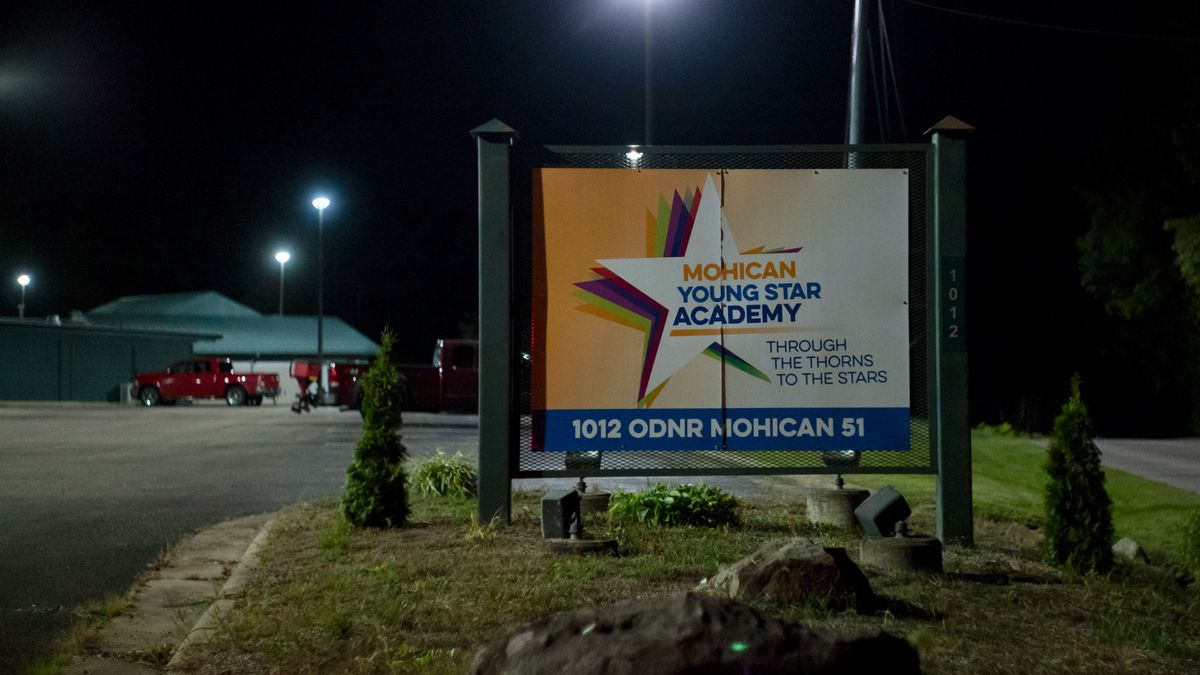
The Marshall Project – Cleveland reports that House Bill 811 was filed directly in response to its investigation into Mohican Young Star Academy, the state's largest youth residential treatment facility, located northeast of Columbus in Perrysville. That investigation documented escalating violence, staff injuries and campus-wide fights following an ownership change in November 2024.
"Just the fact that it's continuing in real time — it was our proof that this isn't a hypothetical situation that we're legislating for. It's a real situation unfolding," said Rep. Crystal Lett, a Democrat from Columbus and the bill's sponsor, in an interview Monday. "I can't help thinking: If my kid were in there right now, what am I doing to help that kid?"
Chaos at Mohican
Mohican staff, neighbors and local law enforcement described scenes of disorder at the Perrysville campus: youth attacking staff, climbing walls inside the facility and fashioning makeshift weapons. Some residents escaped the grounds and broke into nearby shops or turned up in neighbors' yards. Mohican's ownership declined to comment at the time of the original investigation.
After The Marshall Project – Cleveland published its findings, the Ohio Department of Behavioral Health suspended admissions to the facility. The state is now seeking to revoke Mohican's license entirely, citing a period from April 4 through December 1, 2025, during which officials allege the facility failed to protect residents from abuse and neglect. Additional findings included improper physical restraints on youth, failure to report critical incidents, inadequate staff training documentation and missing treatment records for multiple boys.
A license revocation hearing is scheduled for May 7.
Zach Logan, co-owner of Mohican, disputed the allegations in a written statement: "We look forward to vindicating our rights through the appropriate legal process and do not believe there is merit to the alleged violations."
Lawsuit and Rebranding
With its license under threat, the facility — which late last year rebranded as Empowering to Elevate Academy — has filed a lawsuit against the state seeking $750,000 allocated in the 2025 state budget. In court filings, Mohican argued the license revocation effort is an attempt to avoid paying those funds. The state, in a motion to dismiss, said the facility is "failing to protect residents from acts of physical, sexual and emotional abuse, neglect, and exploitation."
Logan wrote that "Mohican believes it is entitled to the funds that the Ohio General Assembly directed to Mohican."
This is not the first time the facility has faced state action. In 2021, Ohio Attorney General Dave Yost sued to remove the operator over improper restraints; a judge dismissed the case for lack of evidence. A subsequent revocation hearing process, running from December 2021 through April 2022, also failed.
Broader Pattern of Delayed Action
Lett described her bill as providing an emergency mechanism — one that current law lacks.
"To me, that bill is the immediate off switch for bad actors," she said. "This is a 911 moment where, if we do nothing, children will continue to die and be harmed and run away in these facilities. And so we have to have an off switch to protect children immediately."
State records and advocacy investigations suggest the problem extends beyond Mohican. Disability Rights Ohio, a federally authorized watchdog group, has investigated multiple residential treatment facilities in the state. Following a nine-month inquiry, the state suspended admissions at Sequel Pomegranate Health Systems in Columbus; the facility changed its name before ultimately surrendering its license voluntarily in 2021.
A separate 16-month Disability Rights Ohio investigation into Youth Intensive Services in Youngstown found pervasive abuse and frequent runaways who returned after experiencing sexual or physical violence outside the facility. Despite those findings, the facility remained licensed. The state temporarily suspended admissions in July 2024, and the facility surrendered its license in February 2025.
In each of those cases — and historically across Ohio — residential treatment centers facing scrutiny have relinquished licenses under pressure rather than having them formally revoked through state action. Lett's bill would shift that dynamic by removing agency discretion and mandating intervention.
Addison Torrence, placed at Sequel Pomegranate as a youth and now a residential liaison for ACTION Ohio, a statewide child welfare advocacy organization, said the bill addresses a long-standing gap.
"Youth safety must always come first. Too many young people are being harmed in residential facilities, and delay only puts them at greater risk," Torrence said. "This bill ensures the state can act immediately to protect them."
The Ohio Department of Behavioral Health has not publicly commented on the proposed legislation.
Source: The Marshall Project