AI Wrongful Arrests: How Faulty Algorithms Are Putting Innocent Americans Behind Bars
A Washington Post investigation reveals at least eight cases where Americans were wrongfully detained based on flawed AI facial recognition, with police treating algorithmic suggestions as definitive proof.
AI Wrongful Arrests: How Faulty Algorithms Are Putting Innocent Americans Behind Bars
On October 20, 2025, seventeen-year-old student Taki Allen sat outside his Maryland high school after football practice when an AI-equipped security camera flagged what it believed was a weapon in his pocket. Within seconds, police vehicles screeched to a halt. Officers drew their weapons, forced Allen to kneel, and handcuffed him while conducting a search. They found only a crumpled chip bag.
This was not an isolated incident. A Washington Post investigation documented eight cases where people were detained — and in some cases imprisoned for months — because artificial intelligence made an error.
In July of the same year, Tennessee grandmother Angela Lipps was arrested at gunpoint while watching her four grandchildren. Facial recognition software had incorrectly linked her to fraud charges in North Dakota, a state she had never visited. She spent five months in jail before being released on Christmas Day.
The Post examined 23 police departments and found that 15 had detained individuals identified by AI as suspects without seeking any independent corroborating evidence. This practice directly contradicts official guidelines from both law enforcement agencies and technology companies, which state that AI-generated results should serve only as investigative leads — never as standalone grounds for arrest.
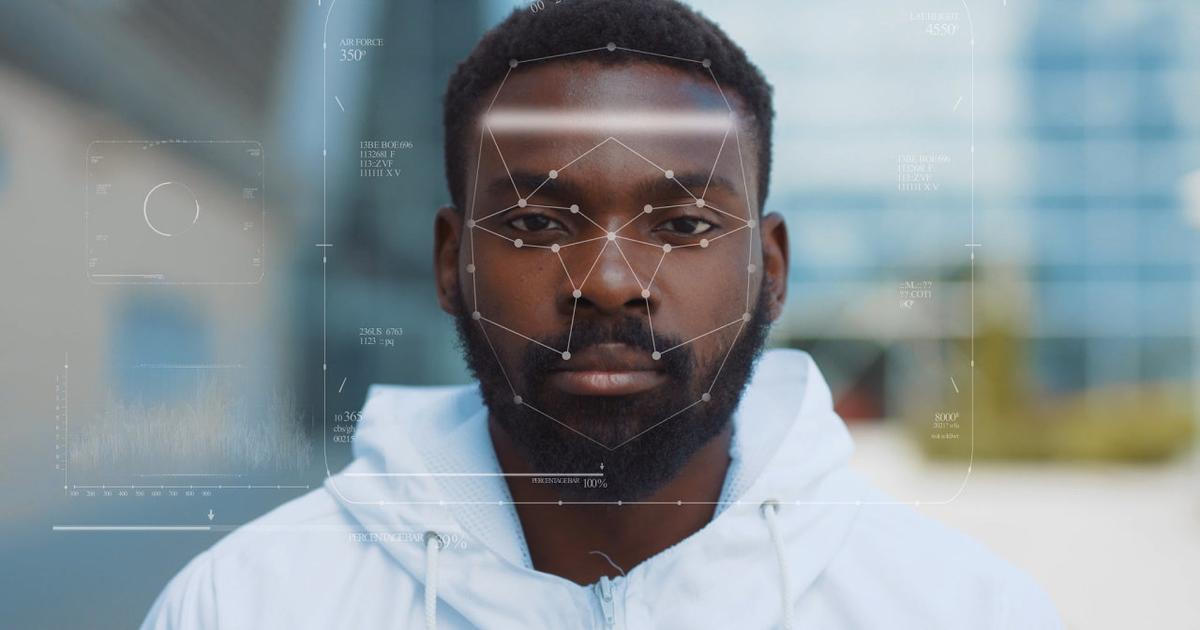
The core problem lies in how police actually use these tools versus how they were designed to function. Facial recognition algorithms do not establish identity with certainty. They compare facial geometry using mathematical models and produce a list of potential matches ranked by percentage similarity. Yet detectives routinely treat these probability scores as definitive proof, closing investigations once a computer points to a particular face.
Experts call this "automation bias" — the human tendency to trust machine-generated decisions as more objective than human judgment. The problem deepens when systems display not just a facial match but also biographical data, including criminal history. This creates "confirmation bias": an officer who learns that a flagged individual was previously arrested for a minor offense stops looking for other suspects and focuses solely on gathering evidence that supports the AI's conclusion.
The contamination spreads further. When police show an AI-generated photo to an eyewitness during a lineup, the witness — influenced by police authority and the limited selection — often confirms the erroneous identification. A machine-created error thus becomes validated by human testimony that would never have existed without the algorithm's initial mistake.
A study published last year in the journal Psychological Trauma identified three factors that increase the likelihood of false facial recognition results. First, as comparison databases grow larger, the risk of random visual matches increases. Second, algorithms perform significantly worse when identifying people from ethnic minorities, particularly those with darker skin, because the systems were primarily trained on photographs of white individuals. Third, poor-quality source photographs dramatically reduce system reliability.
The consequences for those caught in these errors are severe. Innocent people face armed arrests, prolonged incarceration, and lasting trauma — all because law enforcement treated a mathematical probability as an unassailable fact.
Source: Aktuálně.cz