Eleven charged in DC over transnational meth and GBL trafficking ring
A federal grand jury in Washington, D.C. has indicted eleven men linked to a transnational drug network importing methamphetamine and GBL from California and South Korea.
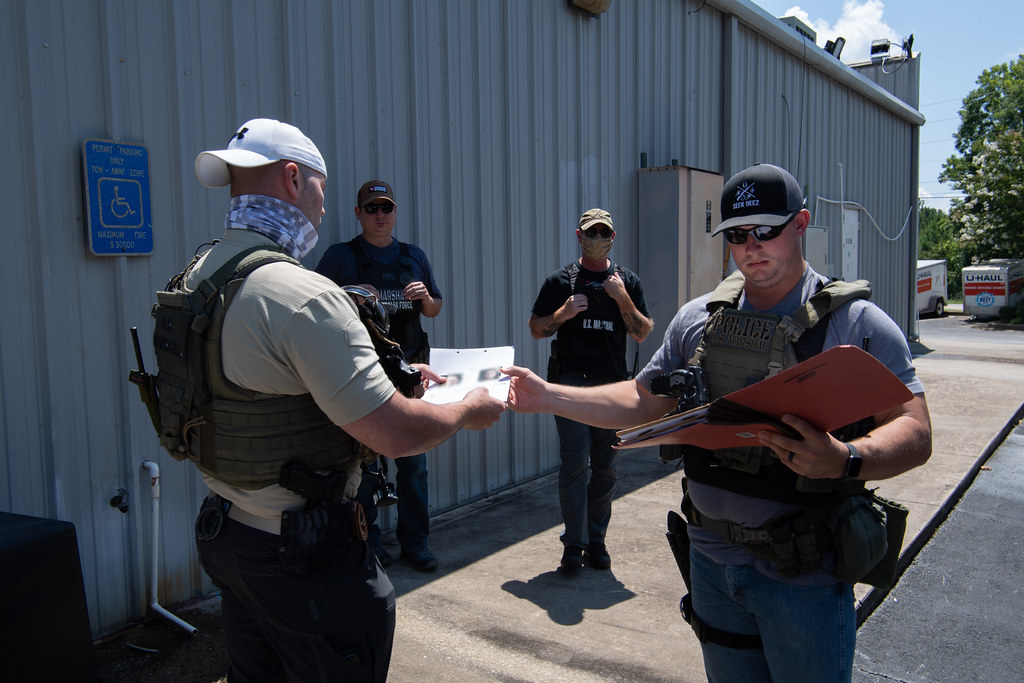
Federal indictment targets eleven in DC drug trafficking network spanning US East Coast and South Korea
A federal grand jury in Washington, D.C. has returned a five-count indictment against eleven defendants connected to a transnational drug trafficking organisation that imported large quantities of methamphetamine from California and gamma-butyrolactone (GBL) from South Korea, dea.gov announced on 7 May 2026. The drugs were distributed in Washington, D.C. and across the East Coast.
U.S. Attorney Jeanine Ferris Pirro announced the charges, describing the network as a "sophisticated drug trafficking empire" that recruited well-educated operatives, laundered proceeds through sham beauty companies, and supplied what she called "two of the most dangerous and lethal drug combinations available." The operation is part of the Homeland Security Task Force initiative established under President Donald J. Trump's Executive Order.
The defendants and charges
The indictment names Artemio Jacobo-Magana, Aaron James Landry, Matthew Thomas Kent, Colton Keet Huthsing, Rene Alexander Acosta, Joshua Glen Taylor, Robert David Fitch, Michael Robert Spitzer, Scott Patrick Morgan (also known as "Scotty Rox"), and Kenneth Harold Archer. All face charges of conspiracy to distribute 500 grams or more of a mixture containing methamphetamine, 50 grams or more of pure methamphetamine, and a detectable amount of GBL.
Three of the defendants — Spitzer, Morgan, and a third individual — face additional charges of conspiracy to commit money laundering in connection with their trafficking activity. Kent faces three separate counts of distribution of 50 grams or more of methamphetamine for specific transactions carried out in the District of Columbia.
A twelfth defendant, Gregory Wallace, is charged separately by complaint with conspiracy to possess methamphetamine and GBL with intent to distribute, as well as possession of a firearm in furtherance of a drug trafficking crime. Chief Judge James E. Boasberg is presiding. All defendants face mandatory minimum sentences of ten years to life in prison.
Operation stretching from Seoul to the US East Coast
According to court documents, the conspiracy ran from at least January 2023 through April 2026. The network operated along the Northeast Corridor, covering New York City, Philadelphia, Baltimore, and Washington, D.C., with active expansion efforts directed at Chicago, Florida, and Southern California.
The organisation maintained a clear division of labour. Upstream suppliers sourced narcotics in bulk; regional distributors stored, repackaged, and redistributed product; downstream distributors sold directly to customers while collecting and concealing proceeds. Members communicated through encrypted messaging applications and used coded language, commercial parcel services, stash locations, and shell business entities to conceal operations. Payments were accepted via peer-to-peer platforms and laundered through business accounts designed to make proceeds appear as legitimate income.
GBL seizures were recorded at John F. Kennedy International Airport in New York and at a warehouse in Seoul, South Korea, indicating the breadth of the supply chain. "From a storage unit in Northeast Washington to a warehouse in Seoul, we followed the supply chain end-to-end — and we've shut it down," Pirro said.
Investigation triggered by a fatal poisoning
Christopher Goumenis, Special Agent in Charge of the DEA Washington Division, said the investigation began following the fatal poisoning of a DMV-area resident. "Drug traffickers only care about making a profit and living 'the good life,'" Goumenis said. "The DEA, alongside federal, state, and local partners, are committed to a safer capital."
Kareem Carter, Special Agent in Charge of IRS Criminal Investigation in Washington, D.C., said the case demonstrated his agency's focus on disrupting the flow of money that enables narcotics traffickers. "Whether it is money laundering, Bank Secrecy Act violations, complex financial fraud, or leveraging our tax authority, we will continue working alongside our federal partners to take criminals off the street," Carter said.
Eric Weindorf, Special Agent in Charge for Homeland Security Investigations in Washington, D.C., described the case as tracing the supply chain "from an international parcel to a local distributor, and ultimately to a broader transnational criminal organisation."
GBL: industrial solvent sold for illicit use
GBL is an industrial solvent with legitimate commercial uses as a paint remover, adhesive, and nail polish remover. Court documents indicate the substance was imported from South Korea and sold illicitly for human consumption as part of the organisation's product range alongside methamphetamine.
The case was prosecuted as part of the broader Homeland Security Task Force's whole-of-government approach, involving the DEA, IRS Criminal Investigation, Homeland Security Investigations, and multiple federal, state, local, and international law enforcement partners.
Source: Google News MT — Crime (en)