Broadview Six case collapse raises questions over grand jury integrity in Chicago
A federal judge condemned "never before seen" prosecutorial misconduct in the Broadview Six ICE protest case. Experts warn public trust in grand jury proceedings may be seriously undermined.
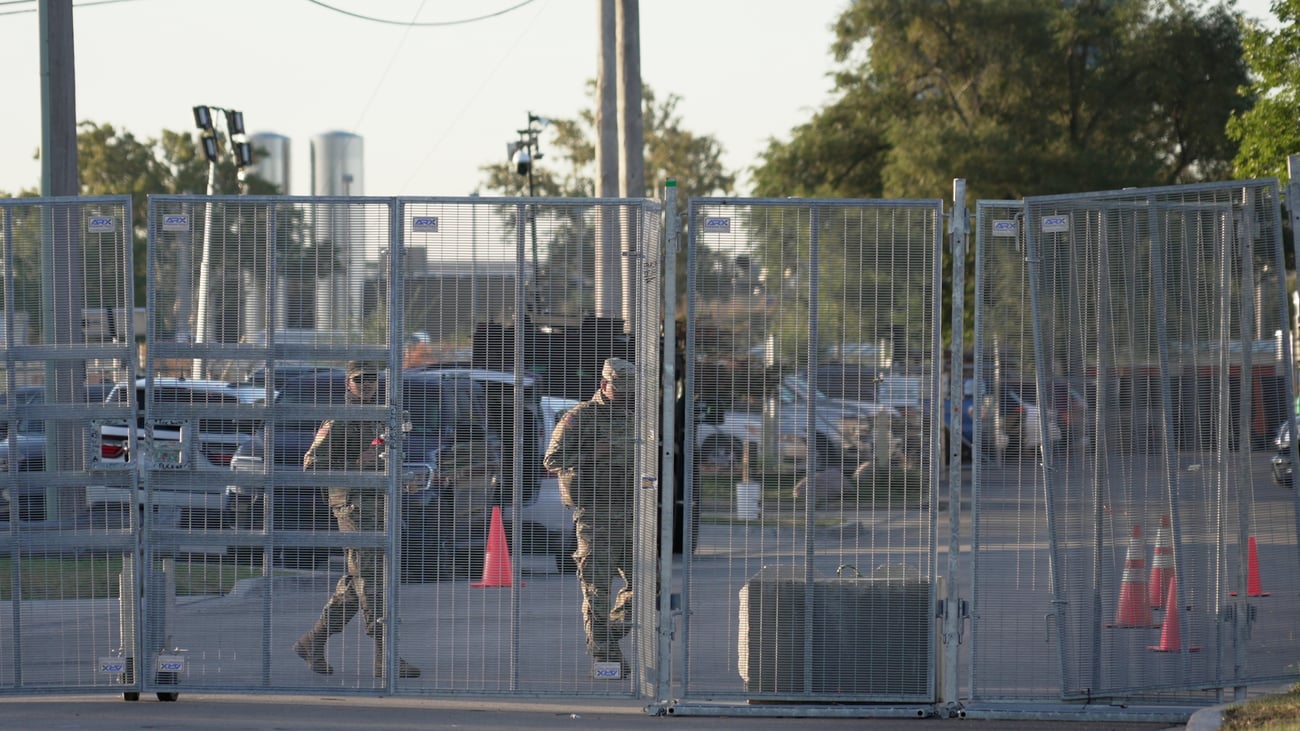
Broadview Six case collapse exposes grand jury vulnerabilities
Courthouse News Service reports that the dismissal of all charges against the so-called Broadview Six — a group of anti-ICE protesters in the Chicago area — has prompted legal experts to question whether grand juries can still function as a meaningful check on federal prosecutorial power.
U.S. District Judge April Perry learned, just one week before the remaining defendants were set to go on trial on May 26, that prosecutors had engaged in improper contact with the grand jury that originally indicted the group — and had subsequently redacted that contact from the transcripts.
"I have read hundreds, if not thousands, of grand jury transcripts involving prosecutors who are the most junior of prosecutors to several U.S. Attorneys who appeared before the grand jury," Perry said during closed-door proceedings on May 21, according to a transcript. "I have never seen the types of prosecutorial behavior before a grand jury that I saw in those transcripts."
The six protesters were initially charged after they blocked an Immigration and Customs Enforcement vehicle outside the Broadview immigration processing center, west of Chicago. Prosecutors alleged the group damaged a federal agent's car by etching the word "pig" onto it. The defendants consistently maintained the charges amounted to an effort by the Trump administration to silence political dissent.
Charges against two of the six were dropped early in the proceedings. The remaining four faced felony conspiracy counts, which were also eventually dismissed — a move defense attorneys characterized as a maneuver to prevent Perry from seeing unredacted grand jury transcripts. The four then faced misdemeanor charges, scheduled for trial on May 26, until those too were dismissed after Perry uncovered the grand jury irregularities.
Andrew Boutros, Chicago's top federal prosecutor, acknowledged to Perry that he had learned of the misconduct weeks earlier, but insisted no one in his office had intended to mislead the court. The day after the case collapsed, he announced a series of internal reforms to grand jury practices and disclosure procedures, without specifying their content.
Boutros also released a special report maintaining that his role before the grand jury had been advisory only. The report included excerpts of his exchanges with grand jury members, in which he asked directly whether any juror felt they "cannot set aside their personal feelings on any case, immigration or otherwise."
Robert Weisberg, a law professor at Stanford University, told Courthouse News that line of questioning was deeply inappropriate. "It's none of his damn business," Weisberg said. "In a regular trial, of course, the prosecution and the defense and the judge are all allowed, to some extent, to question potential jurors, trial jurors, to help determine who is going to sit on the jury. There's no such thing in a grand jury, especially if it's done solely by the prosecutor."
Grand juries were established as a constitutional safeguard against executive overreach, designed to ensure criminal charges are brought on the basis of evidence rather than political pressure. Proceedings are conducted in strict secrecy, nominally to protect both jurors and witnesses.
Sharon Fairley, a former federal prosecutor and law professor at the University of Chicago, said that protection matters precisely because of the stakes involved for defendants. "The reason why we want to have this independent check on the executive branch in terms of the cases that are charged, is because when someone is facing a federal criminal charge, it's a really serious thing," she said. "There's a lot of consequences that can happen from being charged with a federal offense."
But that same secrecy, experts note, may have shielded misconduct as much as it protected participants. Ric Simmons, a law professor at The Ohio State University, said the closed-door nature of grand jury proceedings "makes it easier, in theory, for prosecutors to act unethically or improperly in the grand jury." He added that such behavior had not, to his knowledge, been a documented concern before — in part because Department of Justice attorneys had historically maintained a reputation for integrity in those settings.
Defense attorneys filed a motion on Tuesday describing the prosecution's conduct as behavior that "shocks the conscience." The motion also alleged that the misconduct raised broader concerns about outside influence from Washington, D.C., in the decision to bring charges — going beyond the improper grand jury presentation and the subsequent cover-up of the transcripts. The defense is seeking reimbursement of attorneys' fees and has indicated it will pursue sanctions against the prosecutors involved.
The Broadview Six case sits within a wider pattern of federal prosecutions tied to immigration enforcement activity in Chicago. Since the start of the Trump administration's intensified crackdown, more than 30 individuals have faced criminal charges unrelated to immigration itself — most commonly for allegedly assaulting federal agents or obstructing their duties. A large share of those cases never reached trial, and the majority of the charges have since been dropped.
Legal experts said they could not point to a clear mechanism by which courts could reliably constrain prosecutorial conduct within the grand jury system going forward.
Source: Courthouse News Service