Chinese billionaire Guo Wengui sentenced to 30 years in US prison for $1bn fraud
Self-exiled tycoon Guo Wengui was sentenced Monday in Manhattan to 30 years for fraud costing over 1,000 victims hundreds of millions of dollars.
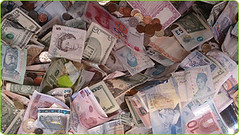
Self-exiled Chinese tycoon gets 30-year US prison term for massive investor fraud
A self-exiled Chinese billionaire once considered among China's wealthiest men was sentenced on Monday to 30 years in a US federal prison for a large-scale financial fraud that cost more than 1,000 people worldwide hundreds of millions of dollars, politico.com reports.
Guo Wengui — also known as Miles Guo and Ho Wan Kwok — was sentenced in a packed Manhattan courtroom by Judge Analisa Torres, who said he had "preyed on those seeking to bring Democracy to China," using their money to fund a lavish personal lifestyle.
Torres ordered Guo to forfeit $889 million in restitution.
Fraud spanning five years
Prosecutors said Guo's scheme ran from 2018 to 2023 and described it as "astonishing," stating it had "destroyed hundreds of lives" and left "a wreckage of victims and families who have been devastated financially, emotionally, and psychologically." They had requested a minimum sentence of 30 years.
Guo was convicted of nine of 12 criminal charges during a seven-week trial. According to prosecutors, he persuaded hundreds of thousands of people to invest more than $1 billion in entities he controlled, including GTV Media Group Inc., the Himalaya Farm Alliance and the Himalaya Exchange. The ill-gotten proceeds, prosecutors alleged in court papers, funded "a lifestyle of extraordinary excess and indulgence, a gilded life of mansions, yachts, race cars, designer clothes and luxury furnishings."
Wei Chen, a victim who testified at trial, told Torres that Guo's fraud "destroyed my life" and that of her family. The judge read out excerpts from letters she had received from other victims, who described losing their life savings, suffering severe anxiety and shame, and experiencing family breakdowns over their investment decisions.
Torres said Guo "takes no responsibility for his actions and instead insists incredibly his conduct caused no loss and harmed no one," adding that he "has called upon supporters to harass and intimidate those who dare to speak out against him."
Health complaints before sentencing
Before he was sentenced, Guo raised complaints about his treatment in detention, telling the court he had been taken to hospital earlier that morning. He disputed a prosecutor's portrayal of him as a malingerer faking illness, saying he had repeatedly vomited before being brought to court.
"When I came here, I said: 'I have a tummy ache, I need to go to the bathroom, I don't feel well,'" Guo said through an interpreter. He briefly addressed the criminal case, saying in reference to the Chinese Communist Party: "The reason I came to the U.S. was to destroy the CCP."
As Guo left the courtroom following sentencing, supporters in the public gallery applauded and shouted toward him.
From Communist Party critic to convicted fraudster
Guo fled China a decade ago and subsequently reinvented himself as a US-based critic of the Chinese Communist Party. He lived in a luxury apartment overlooking Central Park and had joined President Donald Trump's Mar-a-Lago club in Florida. Before his arrest and detention without bail three years ago, he had grown close to conservative political strategist Steve Bannon; the two announced a joint initiative to overthrow the Chinese government in 2020.
Defence lawyers argued that Guo was himself a victim of the Chinese Communist Party's "grand, pervasive, and life threatening" pursuit of him, alleging the party had recruited figures from US business, entertainment and politics to conspire against him. They contended that a lengthy prison term would only validate China's smear campaign and "embolden further efforts to eliminate Chinese dissidents from public life," noting that defendants in comparable cases had received terms of two to four years.
The lawyers also pointed to a court probation officer's letter to the sentencing judge stating that Guo bore scars and disfigurements from physical torture he endured in China and from subsequent surgeries carried out between 1993 and 2022.
According to defence papers, Guo's wealth grew after his family became the largest shareholder in China's largest publicly traded securities company. He became a target of Chinese government officials after exposing them as corrupt, eventually moving to Hong Kong, then London, and finally New York in 2017. Chinese authorities have accused him of rape, kidnapping, bribery and other crimes, allegations Guo has denied.
Prosecutors, however, said in presentence filings that Guo was "entirely unrepentant" and had taken advantage of US asylum laws to flourish in America while defrauding thousands of investors.
Source: Google News MT