Drug war in Ecuador: police in Durán cannot even trust their own colleagues
In Ecuador's Durán city, police captain Jean Carlos Bustamante fights drug gangs while battling corruption within his own ranks. About 70% of cocaine reaching Europe and the US passes through Ecuador.
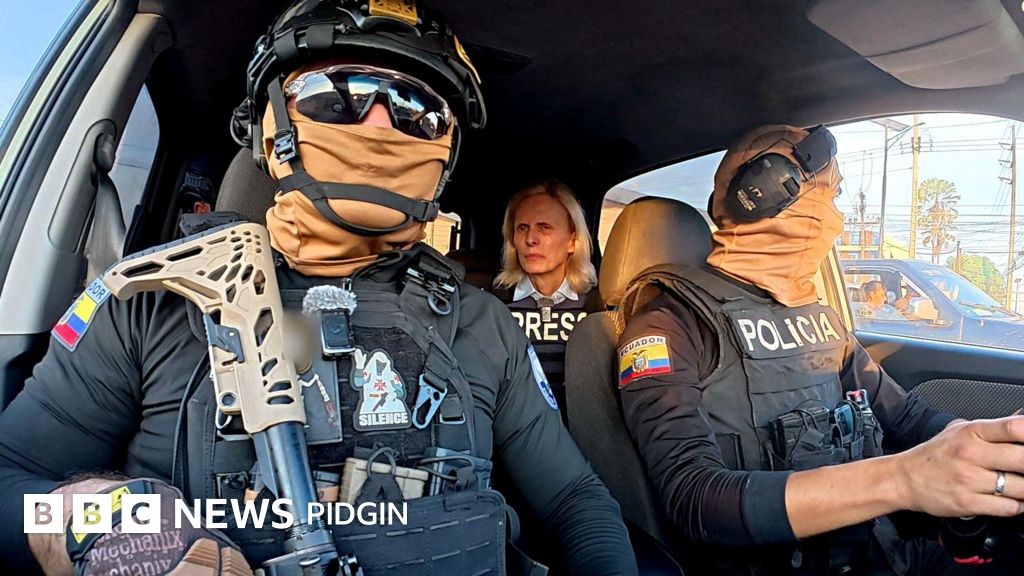
On patrol in Ecuador's deadliest city — where the enemy is inside too
Police Captain Jean Carlos Bustamante knows precisely what he is up against in Durán, Ecuador. According to bbc.com, it is not only the criminal gangs who kill rivals and mutilate their bodies — the threat comes from within as well.
"We have a lot of bad people in our unit, in the state and in politics," Bustamante said. "We have many guys who are corrupt. They collect money from the gangs."
The only officers he trusts are the ones standing beside him — a team he personally selected. At 34, he is the oldest among them, and he moves with the precision of the special forces veteran he once was.
Into the heart of gangland
As the sun sets over Durán, Bustamante leads his unit into a neighbourhood where metal grills seal every window and residents are too frightened to speak. The area is controlled by Los Aguilas — Spanish for The Eagles.
Asked what happens to locals who speak out against the gangs, the captain's answer is brief: "They kill them. That is why they cannot say anything."
The team moves toward an abandoned house believed to be used as a weapons cache — gunmen do not keep firearms at their homes. Officers line up against the wall, press close together, heavily armed, and force the door open with a battering ram.
Inside, they find two handguns — one rusted, one ready to fire — along with ammunition for an assault rifle. Bustamante is measured in his satisfaction. "The first reason is that we are safe," he said. "The second is that two guns have been removed from the gangs."
It is a small gain in a war with no end in sight. The captain readily acknowledges that the gangs possess "far more weapons and far more money than the state." Three close friends who fought alongside him are already dead. Fear, he says, left him years ago — but not the worry it causes his parents.
"My mum always says, 'Be careful, you might die there.' My dad calls all the time asking, 'My son, are you alright? Tell me you are alright.'"
Ecuador at the centre of the global cocaine trade
A line can be drawn — measured in dollars and broken lives — from the back streets of Durán to distribution hotspots in London and other capitals across Europe and North America.
Roughly 70% of the cocaine reaching Europe and the United States originates in Ecuador, according to President Daniel Noboa. The drug flows in from neighbouring Colombia and Peru, the two largest producers in the world. Powerful domestic gangs — with documented links to Mexican cartels and Albanian organised crime groups — facilitate its onward smuggling, exploiting weak border controls, underfunded security forces and a long Pacific coastline.
Within less than a decade, what was once a relatively peaceful South American country has been transformed into one of the world's most violent. Last year, the murder rate reached a record high, with more than 9,200 people killed, according to Ecuador's interior ministry — even as President Noboa has spent two years attempting to tighten security. Critics say the results have been limited. Major crime bosses have been arrested and their organisations fragmented, but new groups keep forming.
A raid, an arrest, and a system that fails to hold
During a second operation that evening, Bustamante monitors back alleys via drone from a prone position. Three figures moving near a playground are identified as micro-traffickers — the lowest rung of the drug supply chain, selling small quantities rather than kilos.
Within minutes, his team has traced the suspects to their door. The battering ram comes out again. Officers move room to room by torchlight, opening wardrobes and lifting mattresses, while a middle-aged woman protests and a young girl begins to cry.
Behind a window upstairs, police locate a hiding place. One young suspect emerges and is arrested; two others are handcuffed in a separate room. All three deny involvement in drug dealing. Nearby, Bustamante finds small paper packets of "H" concealed in a flowerpot — a highly addictive mixture containing small amounts of heroin, sold by neighbourhood dealers for $1.00 (£0.75) per packet.
One of the three suspects is formally charged and faces up to five years in prison if convicted. Prosecutors release the other two. Senior officers say this outcome is routine — and they attribute it to corruption running through the justice system and the prosecutor's office.
"We lock them up and they let them go," said Colonel Santiago Gavilanes, deputy commander of Durán police. "We know that as we carry out raids we can end up arresting them again. Some of those released go on to kill people and leave orphans behind." He said the gangs have the resources to "buy laws, judges and politicians."
The officer who refused a bribe — and was watched
A police officer in a separate district, whose identity bbc.com agreed to withhold for his safety, described being contacted twice by text message offering a substantial bribe — "money that could retire him." He refused both times.
Shortly after, it became apparent that someone — likely a colleague — had informed the gang of his exact location and daily movements.
"You will not know who is watching you," he said.
Signs of progress, but the war is far from over
Back at the playground at the end of another long day in body armour, Bustamante says he has no intention of stopping. "Maybe I am a little tired," he admitted, "but it is my work. I believe we can win this war. We have to do it."
Even as he speaks, one of the area's known gang leaders appears nearby. "We know he controls the dealers," the captain said, "but we have no leads or evidence, so we cannot arrest him."
Police in Durán nonetheless insist their efforts are having measurable effect. They say the murder rate in the city has fallen by half during the first six months of this year. Streets that were once deserted after 19:00 are active again, and the decapitated and dismembered bodies that were once a common sight — according to Colonel Gavilanes — have stopped appearing.
Source: Google News IE — Crime (en)