The "squared scam": targeted twice, one victim loses €145,000
Scammers deliberately target victims of a first financial fraud to defraud them a second time. TF1 Info reveals that this phenomenon has already been the subject of 2,000 reports in 2025.
Targeted twice: the mechanism of double financial fraud
TF1 Info reveals the scale of a rapidly expanding phenomenon: the "squared scam", in which victims of an initial financial fraud are contacted again by new scammers who claim to help them recover their money. The scheme has already been the subject of 2,000 reports since the start of 2025.
A man, who testifies anonymously in a TF1 news report, recounts losing everything in two stages. It all begins when he signs up on an online investment platform and deposits approximately 300 euros. "I signed up on this website and deposited about 300 euros. And that's it, it got started," he recalls.
An alleged adviser, then a fake lawyer
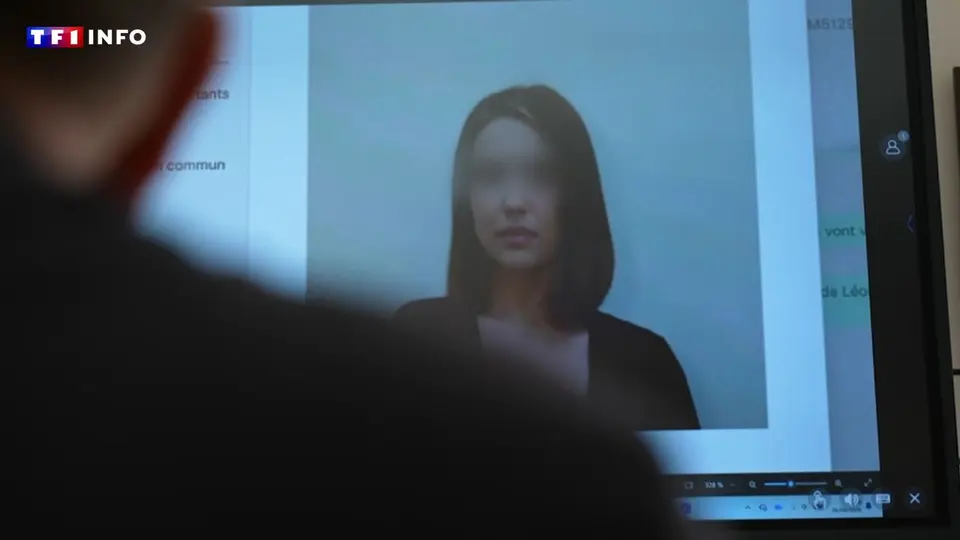
A purported adviser for the platform contacts him quickly. She adds him to a group of investors and encourages him to invest increasingly larger sums. On screen, his displayed gains rise to 1.2 million dollars. "Everything was designed to try to get you to deposit money, to encourage you to get higher returns. And besides, as the gains went up, there was every reason to reinvest," he explains.
When he decides to withdraw his funds, the adviser demands a payment of 60,000 euros to "unlock" the sum. He realizes he has been deceived. But the fraudulent mechanism does not stop there.
A second individual, presenting himself as a lawyer specialising in fund recovery, then contacts him. The man presents an identity document and a lawyer's license certificate. "He tells me: 'We're going to hack the website and get some of the funds back'," the victim clarifies. Tens of thousands of euros in fees are demanded from him. After weeks with no results, he realises he has been defrauded a second time. Total loss: 145,000 euros. "At that point I told myself, this is a catastrophe," he says. A year after the start of legal proceedings, he has still not recovered his money.
Victim files resold between networks
Véronique Rondeau-Abouly, a lawyer specialising in digital law, is receiving increasingly more victims of this type of double scam in her office. She describes methodical targeting: "Victims are not targeted at random. They are generally targeted through files that scammers have passed on to each other, either within the same group or that have been purchased. These are organised gangs."
These networks operate according to a precise division of labour. Web developers design fictitious investment platforms and advertisements on social media. Fake financial advisers then establish trust before fleecing victims. Once the money is lost, other accomplices take over, posing as lawyers, cybersecurity experts, police officers or ethical hackers. Money launderers finally manage the financial flows to make the funds disappear.
At European level, Europol tracks these organisations. General Jean-Philippe Lecouffe, deputy executive director of the agency, highlights their growing sophistication: "It is extremely complicated to trace investigations back to the masterminds. These are extremely powerful, structured networks that recover a lot of money and can organise themselves, often across several countries."
A pensioner trapped for months via text message
A second case illustrates the patience these scammers exercise. A pensioner receives a text message from a stranger who claims to have got the wrong number. The conversation nevertheless begins. "For a reason I cannot explain, I engage with the message and so a conversation gets going. Regular, very pleasant, very cordial. Exchanges about life in France, life in London," he testifies anonymously.
For months, exchanges multiply, almost daily, accompanied by photos of the young woman. With trust established, she encourages him to invest on a platform she recommends to him. He deposits more than 120,000 euros. The double scam then comes into play: to recover his funds, he must pay again. He realises that everything was fraudulent from the start. "I feel guilty about having been so easily deceived. When we keep telling ourselves that we need to be careful about such scams… And then, we let ourselves be swept along by a current," he regrets. The scammers have not been found.
How to protect yourself
The Financial Markets Authority (AMF) estimates that two-thirds of victims of financial scams are recontacted after an initial fraud.
Anne Delannoy, head of supervision of financial offers and alerts at the AMF, recommends systematically verifying whether an investment platform is on the blacklist published by the authority, which regularly lists websites identified as fraudulent. In the event of contact from someone offering to recover lost funds, she advises verifying their identity directly with the organisation they claim to represent: "The best thing is really to verify with the genuine organisation. Call the Financial Markets Authority, call your bank, call the law firm. Check whether this person actually works for them or not."
Source: TF1 Info