Fentanyl trafficker deported from Canada to Lebanon after decade-long legal fight
Mohamad Kassar, convicted in 2018 of trafficking fentanyl into Sudbury, has lost his final court bid to avoid deportation to Lebanon.
Fentanyl conviction ends in deportation order after courts reject health and family arguments
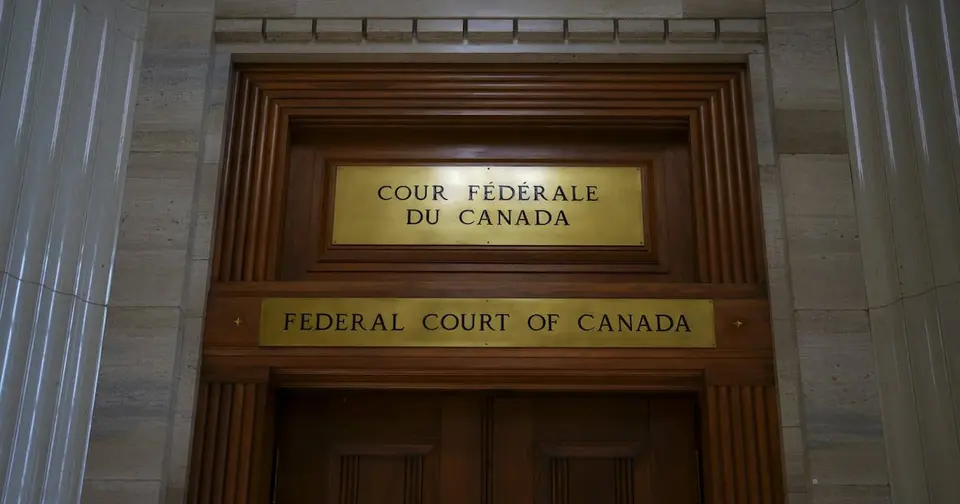
A man convicted of trafficking fentanyl from Ottawa into Sudbury, Ontario has exhausted his legal options to remain in Canada, ctvnews.ca reports. The Federal Court dismissed Mohamad Kassar's final appeal, clearing the way for his removal to Lebanon.
Kassar was convicted in 2018 of transporting fentanyl and hydromorphone pills to Sudbury and received a 45-month prison sentence. He was released on parole in June 2021 and complied with his parole conditions, according to a Federal Court of Canada decision dated Aug. 28.
Kassar had arrived in Canada from Lebanon in 1991 and obtained permanent residency that same year. He had returned to Lebanon twice since his arrival. His permanent residency status was revoked following his drug conviction, and a deportation order was issued in 2019 — though it was not acted upon for several years, the decision noted.
A series of failed applications
In April 2025, Kassar applied to have his permanent residency restored on humanitarian and compassionate grounds. That application was denied. A deportation date of Feb. 13, 2026 was set, and a temporary residency permit applied for in January was also denied in June.
Kassar then sought to defer his removal, citing the best interests of his grandchildren — for whom he said he provided regular care — and his deteriorating health. That request was denied as well, prompting a judicial review and a motion to stay his removal.
A temporary stay was initially granted, partly on the basis of arguments about his health and the availability of medical care in Lebanon. Kassar suffers from chronic pain, chronic obstructive pulmonary disease, major depression, and a suspicious lung lesion. He argued his conditions could worsen rapidly if he lost access to his medication.
The ministry countered that health-based deferrals under Canadian legislation are designed to address short-term impediments to removal, not lifelong medical needs.
Courts: health concerns do not create entitlement to stay
While his temporary residency permit was being assessed, immigration authorities determined that Kassar's past work as a labourer was "readily replaceable within the Canadian labour market." Immigration, Refugees and Citizenship Canada set a higher bar for Kassar to demonstrate a benefit from remaining in Canada, citing his inadmissibility for serious criminality stemming from a single event.
"Medical vulnerability does not negate the risk associated with past conduct, nor does it create an entitlement to remain in Canada," the department's decision stated.
Kassar's claims that he could not access adequate treatment in Lebanon were rejected as "generalized and unsupported by objective, country-specific medical evidence." Authorities concluded that his medical circumstances did not constitute an urgent, compelling need that outweighed the risks posed by his inadmissibility.
Appeal court rejects grandchildren and healthcare arguments
Kassar appealed that ruling. To succeed, he had to demonstrate three elements: that there was a genuine issue to be tried, that he would suffer irreparable harm if his motion was dismissed, and that the balance of convenience favoured him.
The appeals court agreed there was an issue to be tried, but ruled that the claim his grandchildren would suffer irreparable harm fell well short of the legal threshold. The children's parents remained present and capable of providing care — Kassar was not their primary caregiver.
"There is no evidence led to suggest that Mr. Kassar's removal would imply a serious likelihood of jeopardy to his grandchildren's life, security or safety," the court stated.
The court also rejected the argument that Kassar would be unable to access prescription medication or Vitamin D in Lebanon. It cited consistent rulings from both the Federal Court and the Federal Court of Appeal that "concerns about health care in a foreign country do not constitute irreparable harm."
"Mr. Kassar's arguments as to irreparable harm on the basis of remedial injustice arising from his removal are therefore rejected," the court concluded.
With all avenues closed, Kassar faces deportation to Lebanon following a legal fight that stretched more than a decade after his original conviction.
Source: Google News CA — Crime (EN)