Bolivia informed the DEA about Marset 48 hours before his arrest in Santa Cruz
Bolivian authorities notified the DEA on 11 March that they had located Uruguayan drug trafficker Marset in Santa Cruz. His defence alleges irregular use of a GPS device by Brazil.
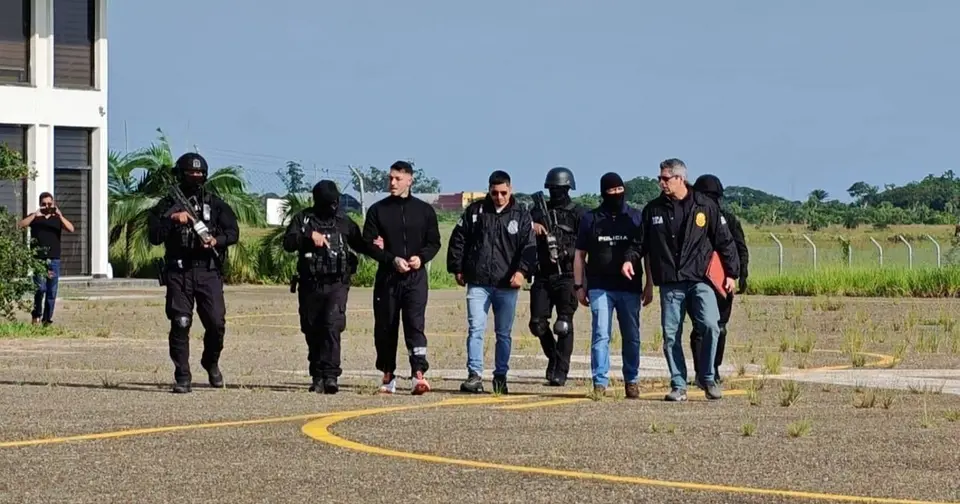
Bolivia communicated Marset's location to the DEA two days before the arrest
On 11 March 2026, Bolivian police authorities communicated to the Drug Enforcement Administration (DEA) that they had succeeded in locating Uruguayan drug trafficker Sebastián Enrique Marset Cabrera in Santa Cruz de la Sierra and that they intended to arrest him. The arrest was carried out less than 48 hours later, during the early hours of 13 March, at a mansion located near the third ring of Avenida Piraí.
The information appears in a judicial document presented by United States prosecutors to the United States District Court for the Eastern District of Virginia, to which El Deber had access. The document establishes a detailed chronology of the hours preceding the detention of one of the fugitives most wanted by the antidrug agency.
According to the response presented by the United States Government to oppose motions filed by Marset's defence, Bolivian authorities informed the DEA that they had obtained, through an intelligence source, data on the presence of the Uruguayan in the Santa Cruz capital. In that same communication, the Bolivians specified that they planned to proceed with the arrest.
The DEA received information, but did not participate in the operation
The United States Prosecution maintains that DEA agents received information about the operation both before and after it was executed, but denies that the agency intervened in the details of the planning or execution.
"The DEA did not participate in the details of the planning or execution of the operation," states the document presented to the court. The prosecutors add that "no DEA personnel were present during the operation and that Marset was detained without incident," initially remaining in Bolivian custody.
The document also indicates that, according to information later received by the agency, no shots were fired during the operation.
The defence alleges use of a GPS placed by Brazil
The revelation appears in the context of a judicial dispute over the circumstances in which Marset was located, detained and transferred to the United States. The defence presents a radically different version.
According to the document presented by the drug trafficker's lawyers, the DEA was behind the operation and the Bolivian police acted as "proxies" of the United States agency in a detention that, according to that version, was violent. The defence also questions the origin of the information that led to finding Marset's whereabouts.
According to that document, in October 2025 the Federal Police of Brazil would have placed a GPS tracking device in the luggage of Susana C., a Colombian citizen and Marset's partner, which would have made it possible to locate him later at the Santa Cruz residence. The woman was found sleeping beside Marset at the mansion on the day of the operation, but was released by the Bolivian Police as there was no investigation against her.
The lawyers question that the available documentation does not explain how the device was installed, whether there was Brazilian judicial authorisation to do so, or what role the DEA played in the exchange of information between the authorities of Brazil and Bolivia regarding the location of the fugitive.
Search of the mansion and transfer to the DEA
According to the prosecutors, during the early hours of 13 March the Bolivian authorities carried out the arrest without the presence of DEA personnel. After the detention, they searched the residence where Marset was located and an adjacent dwelling connected by an underground tunnel. They also inspected another nearby location where part of the fugitive's security equipment was located.
At the properties, 26 electronic devices were found and seized. That same day, the Bolivian authorities transferred Marset along with the seized devices to DEA custody.
The version of the United States Prosecution contrasts directly with that of the defence: whilst the prosecutors place the origin of the information in a Bolivian intelligence source communicated on 11 March, Marset's lawyers point to the GPS placed months earlier by Brazil as the true location mechanism. The court will have to resolve the dispute over the legality of the procedure followed up to the extradition of the Uruguayan.
Source: El Deber