Bolivia militarisation and drug trafficking: government blames cartels for wave of murders
Presidential spokesperson José Luis Gálvez attributes violence in Bolivia to the dismantling of narco networks. The Executive does not rule out declaring a state of siege.
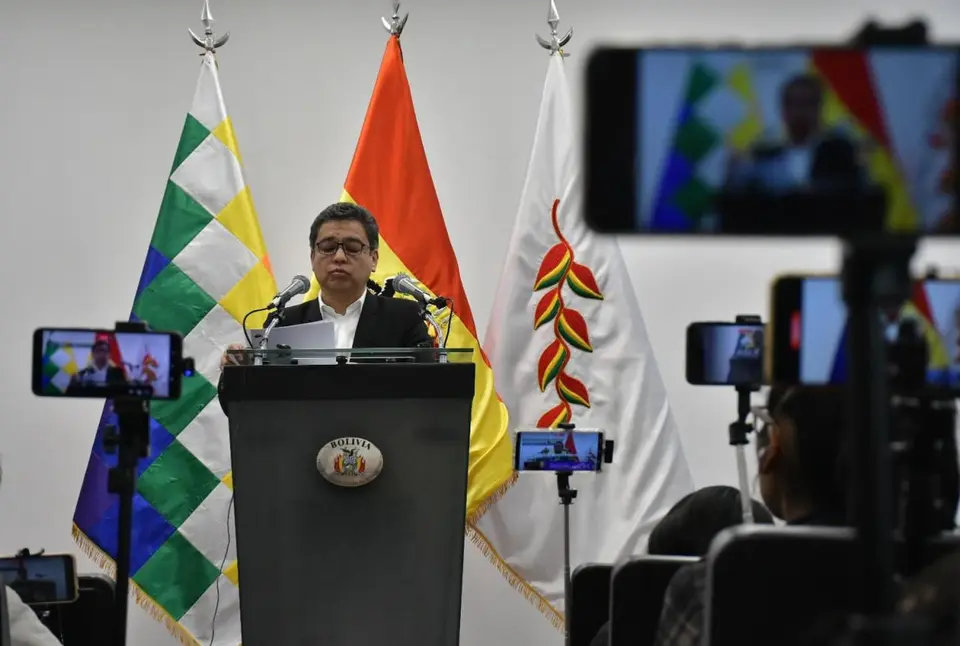
Bolivian government holds drug trafficking responsible for increase in murders
The recent wave of murders shaking Bolivia is a consequence, according to the Executive, of having dismantled international drug trafficking networks. This was declared on Tuesday by presidential spokesperson José Luis Gálvez, as reported by lapatria.bo.
Gálvez argued that Bolivians are "paying the price for a flawed security and anti-drug trafficking policy spanning more than two decades". In his view, previous administrations "tolerated" organised crime by denying the presence of cartels and allowing their leaders to operate comfortably in the country.
The current administration, by contrast, chose to confront these criminal structures directly. The spokesperson highlighted the capture of 18 "big fish", among them Sebastián Marset and a leader of the Primeiro Comando Capital (PCC) with a sentence of 126 years in his country of origin.
For Gálvez, the detention and expulsion of these actors has generated "disorder in organised crime", which led to the current violent incidents. The spokesperson used a medical metaphor to explain the situation: "You have to cleanse the body that is contaminated", according to El Deber.
In parallel, the Government is already implementing a "secure border" programme in coordination with Brazilian authorities, with the aim of containing the flow of criminal activity in border zones.
Faced with the persistent threat of drug trafficking, Gálvez announced that the Executive will resort to "all available means", including international security organisations and agencies, within the constitutional and sovereign frameworks of the country.
The spokesperson also warned that the Government will not hesitate to apply drastic measures in the face of new scenarios of conflict or attempted blockades, recalling the 53 days of paralysis recorded between May and June.
In this context, Gálvez justified Supreme Decree 5707, which seeks to extend the current state of exception for 90 days. Should it be approved by the Plurinational Legislative Assembly (ALP) and if deemed necessary, the Executive is considering declaring a state of siege and militarising the country.
"We cannot afford to be blocked again, to have to beg for food, to have to beg for oxygen", concluded Gálvez, emphasising that constitutional force will be employed to protect the population and guarantee social peace.
Source: Google News BO — Crime