Cigarette Smuggling Finances Organised Crime and Costs Brazil up to R$ 8.5 Billion Annually
Around 32% of cigarettes consumed in Brazil are smuggled, primarily from Paraguay. USP researchers warn that tackling the problem requires financial tracking, not merely seizures.
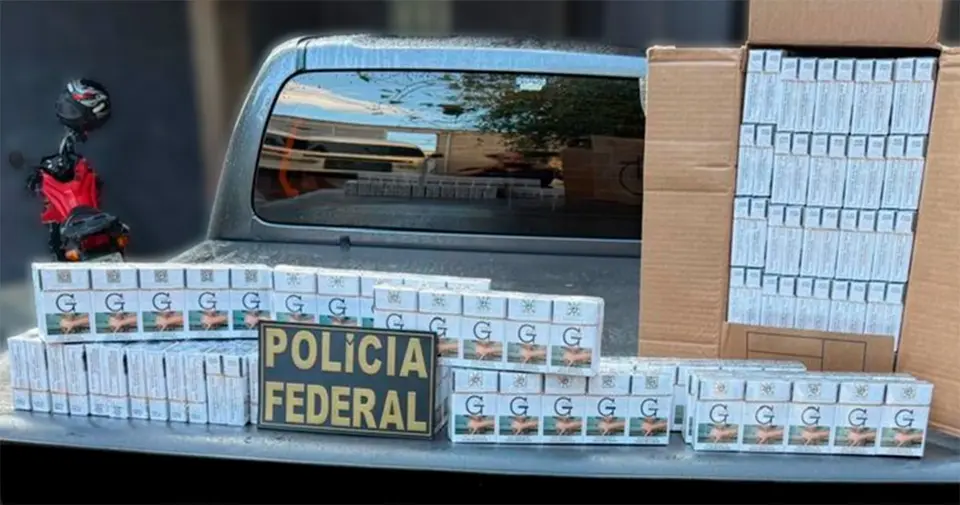
High Taxes in Brazil and Low Taxes in Paraguay Fuel Illegal Cigarette Market
Cigarette smuggling causes an annual fiscal evasion of R$ 7.5 billion to R$ 8.5 billion in Brazil, according to data from the Getúlio Vargas Foundation and other research institutes cited by jornal.usp.br. Over the past decade, accumulated losses have exceeded R$ 90 billion — resources that failed to finance public services such as health and security. Currently, roughly 32% of all cigarettes consumed in the country are illegal, and the illicit market ranks among the primary sources of income for organised crime.
The root of the problem lies in the tax disparity between the two countries. Whilst the tax burden on cigarettes produced in Brazil ranges between 70% and 90%, in Paraguay the average rate hovers around 13%. This difference allows Paraguayan products to reach Brazilian consumers at less than half the price of legalised cigarettes. Entry occurs through dry land and river borders of states such as Mato Grosso do Sul — particularly through Ponta Porã — and Paraná, via Foz do Iguaçu. From these regions, criminal networks distribute shipments along major highways towards major centres in the South, Southeast and Northeast regions.
Beyond importing Paraguayan products, organised crime factions maintain clandestine factories in Brazil where the most popular Paraguayan brands are counterfeited, so as to avoid inspection on border highways.
Smuggling and Trafficking: What is the Legal Difference?
Juan Carlos Buitrago, visiting professor at the Institute of International Relations (IRI) of the University of São Paulo, explains the distinction between the terms. Smuggling consists of the entry or exit of goods without payment of corresponding taxes or in breach of customs regulations — and involves licit products, such as cigarettes, electronics or fuel, simply diverted from legal channels. Trafficking, in turn, refers to the commercialisation of goods whose circulation is prohibited by law, such as drugs, weapons or wildlife.
"In other words, smuggling concerns 'how' the goods circulate, whereas trafficking focuses on 'what' is being commercialised," Buitrago states. "However, in practice, the boundaries between both concepts tend to blur, since the same routes and logistical networks serve both."
Sophisticated Logistical Networks Cross Borders
The profit margin generated by the tax difference is the primary driver of the illegal business. To move the product, criminal organisations resort to elaborate structures. "Smuggling operates through logistical networks that cross terrestrial borders and river routes, and even through more sophisticated structures, which involve multiple shell companies, the use of intermediate destinations and, in some cases, corruption at strategic points," Buitrago clarifies.
The impacts extend beyond lost revenues. The professor lists three concrete effects: unfair competition with the formal industry, which pays taxes and employs workers regularly; public health risks, since smuggled cigarettes do not follow regulatory standards and may contain more harmful substances; and the strengthening of criminal structures, which finance themselves through the activity and use the same routes for other illicit goods.
Money Laundering Completes the Criminal Cycle
The link between smuggling and organised crime deepens in the laundering of money generated by sales. The volume of cash revenue needs to be "cleaned" before circulating in the formal economy. To this end, criminal organisations resort to shell companies, falsified invoices, fictitious commercial transactions — so-called trade-based money laundering — and, frequently, to money changers and informal exchange houses in border regions.
"This laundered money often mixes with proceeds from other illicit activities, such as drug and weapons trafficking, strengthening broader criminal networks," Buitrago says. "That is why combating smuggling requires not only seizure of merchandise, but financial tracking and cooperation with intelligence units, such as COAF."
The Financial Activities Control Council is Brazil's financial intelligence unit, responsible for receiving, examining and identifying suspicious occurrences of money laundering and terrorism financing.
High Taxation May Be Counterproductive
The debate over effective public policies remains open. USP researchers, as reported by jornal.usp.br, contend that tackling the illegal tobacco market requires careful calibration of the tax burden — and not merely health prohibitions or road seizures. The reasoning is straightforward: excessively high taxes expand the price differential with neighbouring countries with low taxation, making smuggling even more profitable and therefore more attractive to organised crime.
The equation is delicate. Reducing taxes may diminish the incentive for smuggling, but it can also increase consumption of a product whose health damages are well documented. Raising taxes, by contrast, increases the price of legalised products and drives consumers towards the illegal market, reducing effective revenue collection and financing the very factions the State attempts to combat. In this scenario, calibration of taxes and financial tracking of distribution networks appear as complementary and essential measures to any control strategy.
Source: Google News BR — Crime