Preventive detention and Interpol alert against former president Correa over bribery case in Ecuador
Ecuador's National Court ordered the preventive detention of Rafael Correa and requested a red alert from Interpol over the bribery scheme "Bribes 2012-2016".
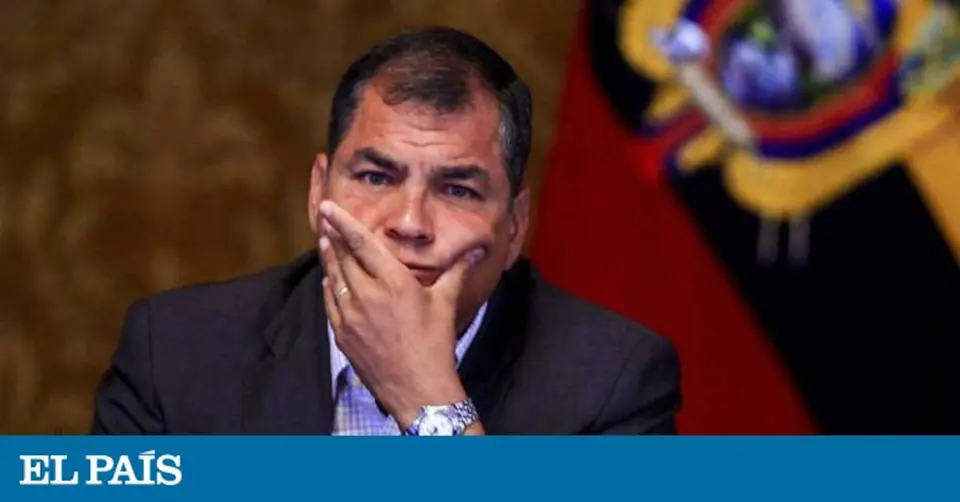
Arrest order against Correa over bribery network in state contracts
Ecuador's National Court issued an arrest warrant for preventive detention of former president Rafael Correa on Thursday and requested an international search and arrest order from Interpol, according to elpais.com. The measure is part of the case known as "Bribes 2012-2016", which investigates the payment of bribes to senior officials of the Alianza PAIS government in exchange for state contracts.
Correa has resided in Belgium since mid-2017 and, according to Ecuadorian authorities, changed his address without notifying his country's judicial system. This is the second preventive detention order issued against the former president: the first was issued in connection with a case involving the kidnapping of an opposition assemblyman in Colombia, a case that remains suspended due to his absence.
Documentary evidence and the "SP" key
Ecuador's Public Ministry bases its accusation on a series of documentary evidence obtained from Correa's presidential adviser, Pamela Martínez, and her assistant, Laura Terán, who were the first to be detained in the case. Among the evidence presented are notebooks, chat messages, emails, invoices and a logbook of campaign contributions and money movements within Alianza PAIS.
The initials "SP", recorded in Martínez's logbook, were initially interpreted as "Señor Presidente" (Mr President). Correa himself helped confirm this interpretation when, in attempting to refute the charges through social media, he posted receipts of contributions to a party solidarity fund that included the legend "For FS from SP". One of those receipts, dated 2014, corroborated according to the Public Ministry that the initials refer directly to Correa.
Terán declared before the courts that "by order of former president Rafael Correa, she received envelopes with money from contributions from various companies and individuals to hand over in turn to other officials, including Alexis Mera; that these orders were issued by former vice-president Jorge Glas, who decided who would receive and who would hand over these amounts".
From "Green Rice" to "Bribes 2012-2016"
The case originated in a journalistic revelation called "Arroz Verde" (Green Rice), which described the distribution of bribes among senior officials by contracting companies, including the Brazilian construction firm Odebrecht and Chinese firms such as Sinohydro—already prosecuted in Ecuador for other irregularities in public contracting. The investigation initially focused on contributions to the 2014 political campaign, but as the fiscal investigation progressed, it was extended to other periods, leading to the change in the name of the case file.
The Public Ministry argues that Correa's former government officials, "abusing their positions, received money in cash and goods from natural persons related to business activities, whether shareholders, representatives or intermediaries, in order to be beneficiaries of state contracts". The crimes being investigated—bribery, trafficking of influence and unlawful association—carry a maximum penalty of up to 15 years in prison.
Twenty-two new implicated and broad network of defendants
In addition to the preventive detention ordered against Correa and four of his former collaborators, judge Daniella Camacho imposed a ban on the alienation of assets exceeding one million dollars for the 22 newly involved in the case. The other 17 implicated parties, among officials and business people, must appear regularly before the courts and are prohibited from leaving the country.
The circle of defendants includes prominent figures from the previous government. Former vice-president Jorge Glas is already serving a six-year sentence for the Odebrecht case and has another proceeding pending for misappropriation of public funds. Former Public Works Minister Walter Solís is a fugitive, also for misappropriation of public funds. Former Tourism Minister Vinicio Alvarado left Ecuador for Venezuela after the investigation began. Also prosecuted are former minister María de los Ángeles Duarte and former legal secretary Alexis Mera, among other high-ranking officials and functionaries.
Correa, founder of the Revolución Ciudadana movement, refuses to appear before Ecuadorian courts and claims to be a victim of political persecution by the government of Lenín Moreno, his successor in the party and in the presidency. In total, the former president faces 12 other cases under investigation before Ecuadorian justice.
The first request for a red notice sent to Interpol from Ecuador—linked to the kidnapping case—was rejected by the international police organisation.
Source: Google News EC — Guayaquil