Museum thefts: Louvre heist triggers wave of copycat attacks
Europol warns of increased break-ins at European museums. Experts see a connection to the major Louvre heist last October.
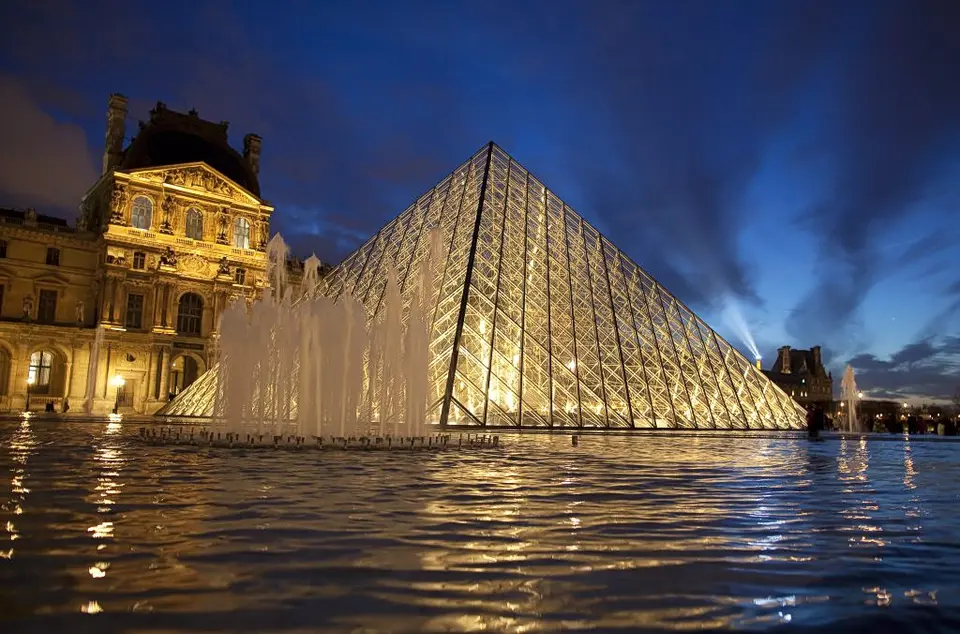
Wave of thefts strikes European museums after Louvre heist
Four paintings by Impressionist Pierre-Auguste Renoir were removed from a French museum this week in a theft that caused sensation but not surprise among experts. According to Ta Nea, the incident is part of an expanding series of museum break-ins that experts directly link to the violent heist at the Louvre last October.
Last month, Europol had already issued a warning about the increasing boldness of attacks on museums across Europe. A few days before the theft of Renoir's works, internationally recognised art detective Arthur Brand stated to the BBC that further high-profile break-ins were expected.
The Louvre heist as turning point
Jewels worth €88 million stolen from the Louvre have not yet been found, almost a year later. The attack shook France and, according to Brand, acted as a trigger for thieves worldwide.
"If you can hit the Louvre, thieves all over the world are watching and thinking: 'Don't we have a local museum with gold and silver objects?'", Brand states.
Within hours of that heist, burglars broke into a smaller museum in France and removed rare coins. A diamond necklace theft in Vienna followed, removal of Bronze Age artefacts in Spain and thefts from two Italian museums, according to BBC reporting.
The Renoir Museum in Cagnes-sur-Mer
The most recent attack concerned the Renoir Museum in Cagnes-sur-Mer. Two of the four paintings were recovered after the perpetrators abandoned them in the museum garden. For the others, authorities continue their investigations. The break-in was completed in five minutes — the perpetrators cut the fence with an electric knife and sawed through the frame supports.
Copycat attacks and changing methods
Both Brand and Ibrahim Bulut, a museum security expert from a Belgian consulting firm, believe that many of the recent break-ins are copycat attacks. "Every museum in the world is now worried", Brand notes. "At every museum there have been meetings with security officials or the police."
The Association for Research into Crimes Against Art (ARCA) points out that recent thefts reflect "continued preference for small, portable, immediately accessible items and for attacks completed in just a few minutes".
ARCA data shows that recorded thefts in French museums surged in 2024 and increased slightly in 2025, although the figures show fluctuations over time.
According to a recent Europol report, both methods and targets are changing: an increase in violence is being recorded and a shift towards high-value items such as precious metals and gemstones. Over the past decade, burglars have moved away from paintings — which are difficult to sell — and turned to more easily traded items such as Chinese porcelain or precious metals that can be melted down without leaving traces.
At the Louvre, the perpetrators used a mechanical lift, cut a window with tools, threatened guards and then smashed the display cases. In other cases, the use of crowbars, axes, crowbars and explosives has been reported.
Why museums remain easy targets
Kumar Sokka, managing director of Acre Security which works with European museums, points out that museums are open public spaces with less rigorous access control compared to banks or jewellery shops. Brand adds that museum directors have traditionally lacked sufficient funding for security — or choose to use it for exhibitions.
Moreover, many museums are housed in old buildings that make it difficult to implement modern security measures. The Denis Diderot Maison des Lumières in Langres, which was broken into hours after the Louvre, is located in two 18th-century mansions. Mayor Théo Caviezel explains that modern security requirements must be combined with the preservation of historical identity and compliance with legislation on cultural heritage.
Even with adequate security, Brand points out, armed burglars can break in, while posting police in every room is unfeasible. In many cases, perpetrators escape before police can respond.
New challenges for security
Increased violence creates additional dilemmas. "An armed incident during opening hours, such as the one we experienced, makes the safety of the public and staff a priority", states Lilli Hollein, director of the Museum of Applied Arts (MAK) in Vienna, which recently suffered a break-in.
Brand also comments on public reaction: some believe that "they are stealing from the rich, who cares?", while others highlight the colonial past of many collections — the French royal jewels stolen from the Louvre contained emeralds, diamonds, sapphires and pearls that are not native to France, according to art historians. "We will see more such incidents", Brand concludes.
Source: Ta Nea