17 Colombian ex-soldiers transferred to the US for assassination of Jovenel Moïse
The US transferred 18 suspects in the murder of President Moïse from Haiti, including 17 Colombian ex-soldiers, to face trial in Florida courts.
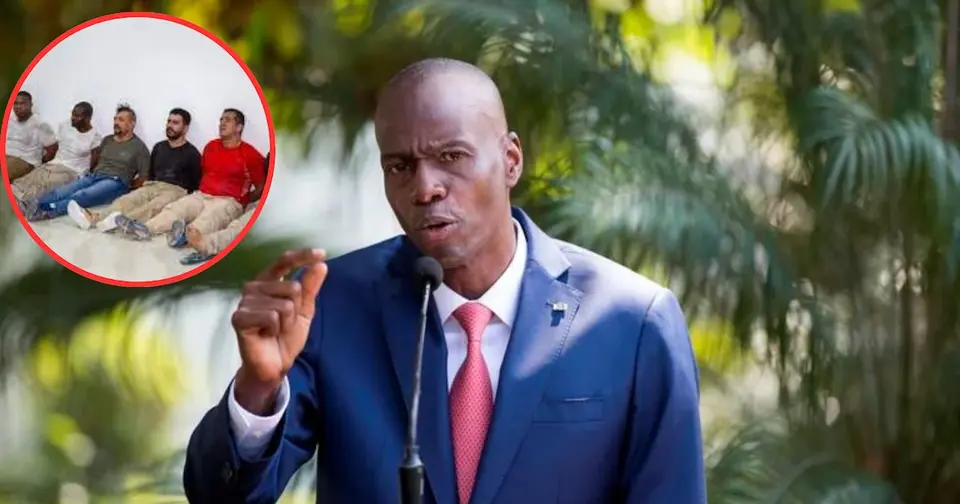
Seventeen Colombian ex-soldiers before federal justice in Florida for assassination of Haitian president
On Sunday 20 September, the United States transferred 18 people accused of participating in the assassination of President Jovenel Moïse in a military aircraft from Haiti's National Penitentiary, an attack carried out in July 2021. The detainees will appear before federal justice in the Southern District of Florida, according to infobae.com.
The group comprises 17 Colombian ex-soldiers and Joseph Félix Badio, a former official of the Haitian Ministry of Justice identified as a central figure in the conspiracy. US authorities did not immediately disclose the identities of all those transferred; it was the Haitian media outlet Juno7 that published the list of members of the contingent.
Federal prosecutor for the Southern District of Florida Jason A. Reding Quiñones confirmed that to date 30 people have been formally charged in the United States for their alleged participation in the crime. "Today marks the next important phase in our pursuit of justice for the assassination of President Jovenel Moïse," he said in a message circulated on social networks.
Reding Quiñones clarified that the investigation is not limited to those who physically entered the presidential residence or to those who carried out the attack. The prosecutor assured that authorities will follow the evidence to identify those who financed, facilitated or supported the conspiracy. "Five years later, we continue bringing suspects before US courts and we are not yet finished," he stated.
Part of the operation was coordinated from South Florida
The investigation established that key segments of the planning of the attack were managed from South Florida, an area where several of the accused resided and from where resources, contacts and logistics would have been channelled. Court documents cited by federal authorities indicate that the operation involved 22 former members of the Colombian Army, as well as Haitian citizens and persons linked to the United States.
Special FBI agent in Miami Brett Skiles stated that recent actions respond to the objective of bringing all those involved to justice. According to his statement, the authors of the plot sought to obtain benefits through illicit financial opportunities and business contracts associated with a potential change of power in Haiti.
Previous convictions and ongoing proceedings
The transfer comes as US justice has already handed down convictions in the case. In May 2026, a federal jury in Miami found four men guilty of crimes related to the conspiracy to murder or kidnap Moïse. Other accused had pleaded guilty in previous proceedings and received sentences of life imprisonment.
The investigation seeks to determine the degree of individual participation of each detainee, as well as the chain of command and the flows of money that financed the plan. Badio, included in the transfer, was identified by Haitian and US investigators as one of the main architects of the plot.
The attack that destabilised Haiti
Jovenel Moïse died during an armed attack on his private residence in Pétion-Ville, Port-au-Prince, at around 1:00 a.m. on 7 July 2021. The president received multiple gunshot wounds; his wife, First Lady Martine Moïse, survived with serious injuries.
Haitian authorities reported from the early hours that the armed group that entered the presidential residence was made up mostly of Colombian citizens. The assassination worsened the institutional and security crisis that the country was already experiencing, and the legal case was divided between local investigations and cases opened in the United States, where federal prosecutors maintain that key aspects of the conspiracy were coordinated from Florida.
Source: Google News CO — Bogotá