Fuel tax fraud costs State €460 million in 2025, EPCOL study reveals
An EPCOL study with Deloitte support estimates tax losses of €460 million in 2025 due to undeclared imported fuel, particularly from Spain.
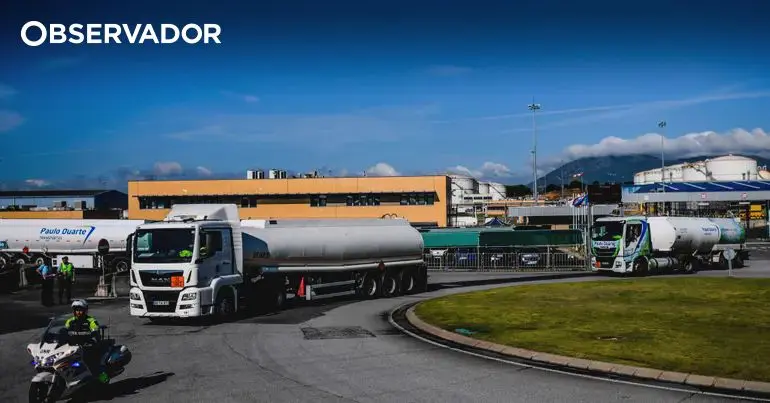
More than 500 million litres undeclared annually fuel fraud in fuel sector
Google News PT — Crime reports on a study commissioned by EPCOL (Portuguese Fuel and Lubricants Companies), with technical support from consultancy Deloitte, which quantifies the scale of tax fraud in Portugal's fuel sector. The figures are striking: more than 17,000 tanker lorries transporting more than 500 million litres undeclared annually, and €460 million in taxes that failed to reach the State coffers in 2025 alone.
The volume of undeclared fuel is equivalent to that transported by one in every four lorries crossing the border from Spain — which the study classifies as "an operationally significant scale with measurable impact on the sector's logistics".
Tax losses rise 71% since 2021
The study covers the period between 2023 and 2025, estimating average losses exceeding one billion euros — specifically €1.121 billion, of which €704 million corresponds to ISP (tax on petroleum products) and €417 million to VAT. The study concludes that the failure to collect these taxes on fuel entering via land borders has risen every year since 2021, with a 45% increase in undeclared volume and a 71% increase in tax revenue lost by the State.
The losses estimated for 2025 — €460 million — correspond to more than 70% of the total value of fuel price support measures applied throughout the year, through the reduction in petroleum tax. According to the Budget Technical Support Unit (UTAO), this fiscal support cost €600 million.
Fiscal tightening in Spain accelerated fraud in Portugal
Tax evasion in this sector intensified when Spain strengthened fiscal control mechanisms in 2024, beginning to require bank and financial guarantees from operators. Although the largest absolute losses are recorded in ISP, it was VAT fraud that grew most in 2025, according to operators contacted by Observador.
EPCOL's secretary-general, António Comprido, acknowledged at the study's presentation on Wednesday that non-compliance represents between 2% and 4% of the market. Comprido identified between 10 and 15 smaller operators — some from Spain and already known to Portuguese authorities — that would be actively seeking legal loopholes in the new legislative package even before its entry into force.
Government approves legislative measures, but parliamentary debate deferred until after holidays
The Portuguese Government was alerted by sector companies and signalled, already last year, its intention to adopt measures to halt these irregularities. Just two weeks ago, proposals for revising the VAT and petroleum products tax codes were approved, but these still must be discussed and approved in Parliament — which is not expected to happen before deputies break for holidays.
António Comprido praised the Government's initiative, considering it the only one to take action since the first warnings issued in 2018, but acknowledged that a window of opportunity exists which non-compliant operators will exploit until the new rules enter into force.
VAT reverse charge and three-million guarantee among main measures
Among the approved changes, the application of the VAT reverse charge mechanism — the so-called reverse charge — stands out as applying throughout the entire fuel supply chain up to the final operator. With this change, the obligation to settle VAT shifts from supplier to purchaser, eliminating the risk of deductions based on VAT that never reaches the State.
Retailers will also be required to present a bank guarantee of three million euros to maintain certification. In the event of non-compliance with legal obligations, this guarantee can be called upon. Operators presenting false declarations or violating tax and regulatory obligations may lose certification and are barred from resuming activity for five years — a prohibition that extends to their respective directors and managers.
Under VAT, the regulation also establishes the mandatory application of monthly declaration arrangements, with the aim of facilitating information cross-referencing and timely detection of fraudulent schemes.
Carousel schemes based on fiscal warehouses
At the root of the fraud are carousel-type schemes, based on the creation of intermediary companies by some operators to purchase fuel in Spain under a fiscal warehouse regime. The transaction is carried out without immediate VAT payment, exploiting a legal possibility that is subsequently used abusively to avoid delivering the tax to the State.
Some sector companies associate the delay in response from authorities — both in Portugal and Spain — with implicit tolerance of these behaviours, arguing that the cheaper fuel resulting ultimately contributes to restraining the final sale price, in a context of strong inflationary pressure on fuel. The study's conclusions were formally communicated to the Government.
Source: Google News PT — Crime (pt)