End of CLAP boxes: a decade of state corruption and organised crime in Venezuela
The silent dismantling of the CLAP programme ends a corruption scheme that linked the Venezuelan State to organised crime for ten years.
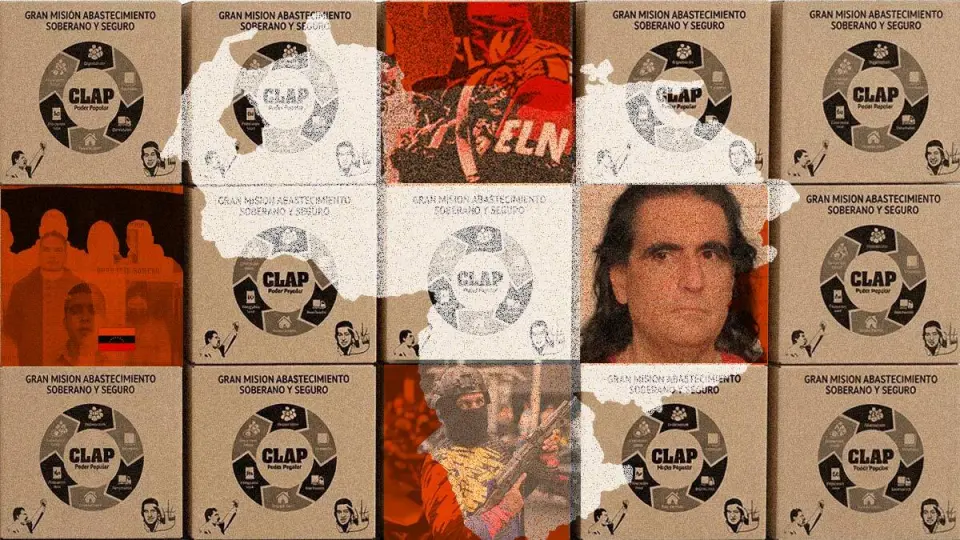
The decline of the CLAP programme closes an era of structural corruption in Venezuela
The boxes distributed under the CLAP subsidised food programme ceased to be distributed in Venezuela at the beginning of 2026, according to lapatilla.com reporting based on InSight Crime investigations. The silent dismantling of the Local Supply and Production Committees brings an end to one of the schemes that best illustrated the intersection between organised crime and the Venezuelan State over the past decade.
The programme was created in 2016 during the presidency of Nicolás Maduro, in response to a severe economic crisis and massive food shortages. In the years that followed, boxes containing basic products—beans, pasta, oil—were distributed periodically throughout the country. According to beneficiaries and suppliers interviewed by InSight Crime, deliveries began arriving with increasing delays from August 2025, until they ceased entirely.
The government did not officially announce the end of the programme. The interim government headed by Delcy Rodríguez has begun implementing alternative food assistance initiatives, including shops offering products at low cost.
Alex Saab and illicit enrichment schemes
Chavista officials and businesspeople with political connections used the programme to enrich themselves and develop money-laundering schemes. The most emblematic figure in this network was Alex Saab, a Colombian businessman identified as a front man for Maduro and accused in the United States of money laundering linked to the CLAP.
Under Saab and his partner Álvaro Enrique Pulido Vargas, the programme purchased food and assembled the packages in countries such as Mexico before importing them to Venezuela, according to the United States Department of the Treasury. Venezuelan state enterprises are said to have bought those boxes at exorbitantly inflated prices, directly benefiting Saab, Pulido and others involved.
The funds allocated for the acquisition of the packages were also used to implement schemes of bribes and illegal commissions throughout the country. According to a series of investigations by the outlet Armando.info, the food was frequently unfit for consumption or contained ingredients different from those declared on the labels.
Guerrillas, gangs and collectives: dividing the spoils
The Maduro government allowed allied criminal groups to participate in the distribution of the boxes, with benefits for both the State and these groups.
The National Liberation Army (ELN), a guerrilla with operations in Colombia and Venezuela, used the programme as a political tool. In 2018, the Venezuelan organisation Fundación Redes reported that the ELN controlled the distribution of boxes in municipalities bordering Colombia and placed labels in the packages with messages in favour of the group.
Gangs such as that of Carlos Capa and the Tren de Aragua also obtained benefits from the programme. According to Transparencia Venezuela, a non-governmental organisation operating from exile, Tren de Aragua controlled at least 66 CLAP distribution points through its Somos al Barrio JK Foundation. Rather than delivering the boxes at the subsidised price, these groups demanded higher payments from beneficiaries.
The collectives—armed civilian groups aligned with the government—used the boxes for both criminal and political purposes. During elections, the distribution infrastructure was deliberately installed next to voting centres in the so-called "red points", where Venezuelans had to renew their Carnet de la Patria in order to access the CLAP. In this way, the government delegated political coercion to third parties.
Limited impact on criminal operations
The disappearance of the CLAP programme affects the groups that exploited it differently. Many of the gangs that distributed the boxes have been dismantled or considerably weakened by the government in recent years.
The ELN, for its part, has diversified sources of income—illegal gold mining, drug trafficking, extortion—and does not depend on income derived from the CLAP to sustain its operations.
The collectives are probably the most affected. Historically dependent on state resources that have become increasingly scarce, the loss of the CLAP could deepen their dependence on extortion and other criminal economies.
The apparent closure of the programme marks the end of a mechanism that for a decade combined food assistance, illicit enrichment, social control and criminal financing under a single institutional structure.
Source: Google News VE — Crime