Trump removes Venezuela from most serious drug-trafficking category citing government cooperation
Trump excluded Venezuela from the list of non-compliant countries in anti-drug efforts, citing the cooperation of interim president Delcy Rodríguez's government. Colombia and Bolivia remain designated.
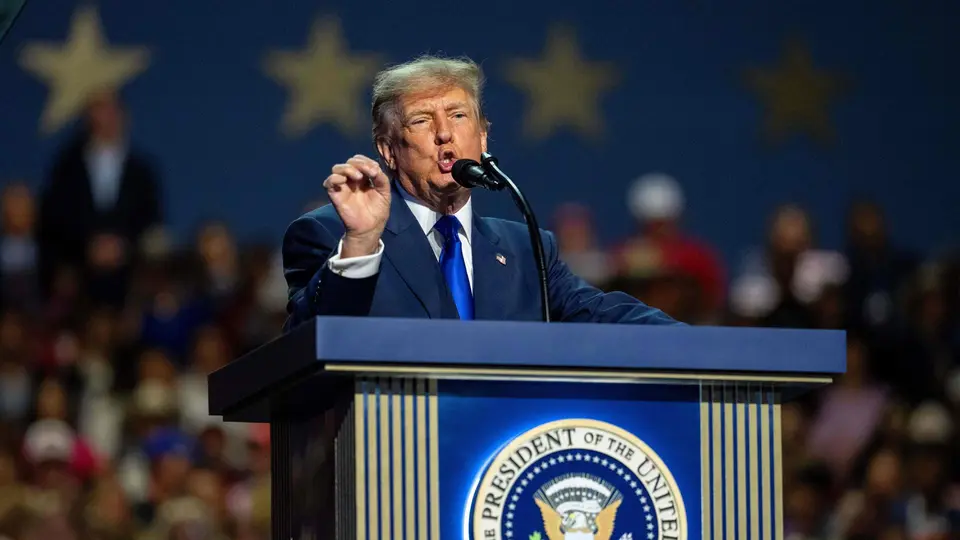
Venezuela removed from most severe category on US anti-narcotics list
Donald Trump has decided to remove Venezuela from the most serious category within the list of major drug transit or producing countries, although the Caribbean nation continues to appear on the broader list. According to reporting by David Alandete, correspondent for cope.es in Washington, the White House ceased to consider that the Venezuelan state had demonstrably failed in meeting its international counter-narcotics obligations.
The decision was formalised through a presidential determination sent to Congress and released by the State Department. In that document, Trump certified: "Given the positive steps taken under interim president Delcy Rodríguez, I have determined that Venezuela should no longer be designated as a country that has demonstrably failed to meet its drug control commitments".
Recognition of interim regime cooperation
The change in status represents a new acknowledgement of the collaboration of interim president Delcy Rodríguez's government, framed within the transition process Venezuela is undergoing following the capture of Nicolás Maduro. US authorities consider that sufficient measures have been adopted to reverse the non-compliant label, despite the country remaining a key territory in international cocaine trafficking routes.
Trump linked the reconsideration directly to the new Venezuelan political situation and blows dealt to criminal organisations. "Thanks to the arrest and removal by my Administration of the former illegitimate dictator and drug trafficker Nicolás Maduro, we are already seeing the results of growing cooperation with the country's interim Government against the cartels," the president asserted, highlighting the death of Tren de Aragua leader Héctor Guerrero Flores, alias 'Niño Guerrero'.
Warning on future progress
Washington's backing comes accompanied by an explicit requirement. Trump stated: "I expect to see continued and measurable progress by the interim Government in dismantling narco-terrorist groups and in disrupting drug trafficking through Venezuela towards the US".
Exiting the list of non-compliant countries avoids suspension of certain foreign aid and eliminates US opposition to financing in multilateral organisations. The change complements other advances in the bilateral relationship, such as the recent oil agreement between both countries. For years, Washington kept Caracas under that strict category due to corruption, judicial weakness and tolerance towards Colombian armed groups.
Colombia and Bolivia remain on the list of non-compliant countries
The most marked contrast in the region is played out by Colombia, which continues to figure among countries that have demonstrably failed in anti-drug efforts. Trump attributed that assessment to record levels of coca cultivation and production recorded under Gustavo Petro's administration. Nevertheless, the president offered the new Colombian president, Abelardo de la Espriella, the possibility of reversing the designation, and protected military assistance to the country by considering it vital to United States interests.
Bolivia also remains on the list of non-compliant countries, although Washington praised the election of Rodrigo Paz and the police reactivation that facilitated the extradition of drug trafficker Sebastián Marset. The White House argued that the new Bolivian executive has not had sufficient time to reduce inherited cultivation and that corruption continues to facilitate illicit trafficking.
Mexico, Peru and 20 other countries on the broader list
The extensive list of 23 transit and producing countries includes Mexico, Peru, Ecuador, India, Nicaragua, Panama and Guatemala, with that inclusion not automatically implying sanctions. In Mexico's case, Trump acknowledged seizures and dismantling of laboratories carried out by Claudia Sheinbaum, but demanded more concrete actions against cartels. Canada was required to combat synthetic drug trafficking.
China concentrated much of the warnings by appearing as the world's largest producer of chemical precursors used in the manufacture of fentanyl and methamphetamine. Although the US administration valued the licences imposed following conversations with Xi Jinping, it insisted on the need to establish additional controls to stem illicit shipments towards North America.
Source: Google News VE — Crime