Trump removes Venezuela from list of drug-trafficking non-compliant countries following Delcy Rodríguez cooperation
The US excludes Venezuela from the category of countries that have "demonstrably failed" in the fight against drugs. Trump links the change to Maduro's arrest and the interim regime's management.
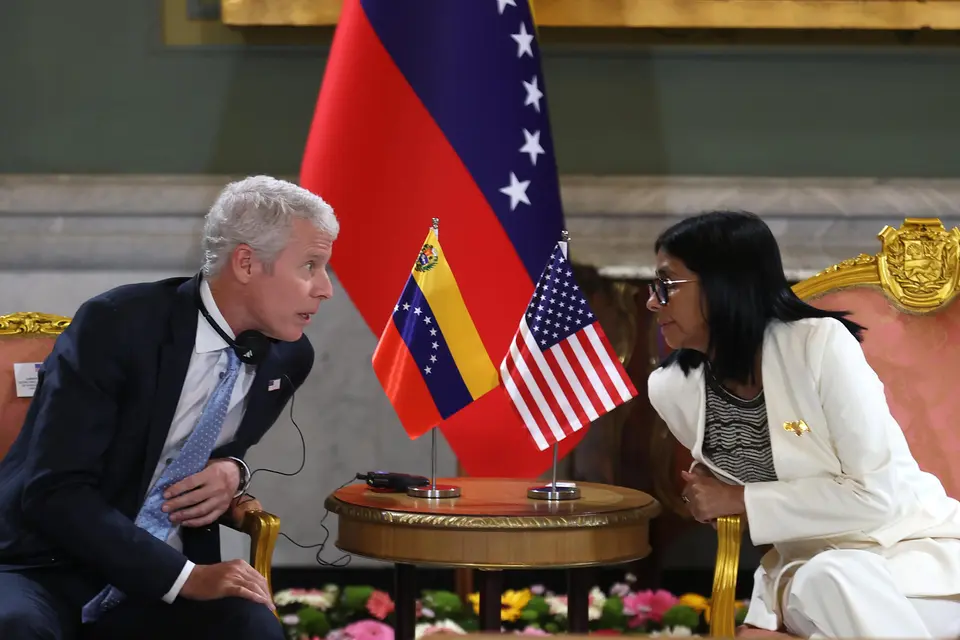
Venezuela removed from US's most serious drug-trafficking list following agreement with interim government
Donald Trump has removed Venezuela from the category of countries that have "demonstrably failed" in fulfilling their international obligations against drug trafficking, according to a presidential determination sent to Congress on Tuesday and released on Wednesday by the State Department, reports albertonews.com.
The US president maintains Venezuela on the general list of the world's 23 principal drug transit or producing countries—which also includes Mexico, Colombia, China, Peru, Ecuador, Bolivia, India, Nicaragua, Panama and Guatemala—but excludes it from that second classification, the most serious in terms of sanctions.
"Given the positive steps taken under interim president Delcy Rodríguez, I have determined that Venezuela should no longer be designated as a country that has demonstrably failed in fulfilling its drug control commitments," Trump states in the statement.
The decision represents a new acknowledgement from Washington of the cooperation of Rodríguez's interim regime following the capture of Nicolás Maduro. The White House links it expressly to that political change. "In Venezuela, thanks to the arrest and removal by my Administration of the former illegitimate dictator and drug trafficker Nicolás Maduro, we are already seeing the results of growing cooperation with the country's interim Government against drug cartels," Trump asserts. The president cites among those results the death of Tren de Aragua leader Héctor Guerrero Flores, known as 'Niño Guerrero'.
The backing comes accompanied by a direct warning to Rodríguez. "I expect to see continued and measurable progress from the interim Government in dismantling narcoterrorist groups and in disrupting drug trafficking through Venezuela to the US," Trump adds.
Remaining on the general list does not in itself constitute a sanction. The determination itself clarifies that inclusion also responds to geographical, commercial and economic factors that facilitate the production or transit of narcotics, even when the authorities cooperate with Washington. The second classification, by contrast, can result in restrictions or suspension of US aid and White House opposition to financing from multilateral bodies, unless the president grants an exception on grounds of national interest.
The US has for over a decade pointed to Venezuela as a significant transit point for cocaine towards North America, Europe and West Africa. As far back as 2010, Washington attributed part of the problem to corruption, weakness of the judicial system and the tolerated presence of Colombian armed groups in Venezuelan territory.
For fiscal year 2027, Trump considers that Afghanistan, Bolivia, Burma and Colombia have indeed "demonstrably failed" over the past twelve months. The most marked contrast is precisely that of Colombia, which remains in that category despite the change of government. Trump attributes the classification fundamentally to the results of the executive of Gustavo Petro—who has already left office—and offers the new president, Abelardo de la Espriella, the possibility of reversing it next year if progress is made in coca eradication and combating drug trafficking organisations. US aid to Bogotá is protected through an exception on the grounds that it is "vital for US national interests".
Bolivia receives similar treatment. Trump praises the election of Rodrigo Paz and the recovery of police cooperation, including the extradition in March of drug trafficker Sebastián Marset. However, he maintains the country among the non-compliant because the new Government has not had sufficient time to reduce inherited coca crops and because Washington estimates that corruption continues to facilitate trafficking.
The determination also puts pressure on Mexico and Canada. Trump acknowledges Claudia Sheinbaum's increase in seizures, the dismantling of clandestine laboratories and the deployment of additional forces, but demands further action against cartels and against corrupt officials. He calls on Ottawa to dismantle clandestine laboratories and combat criminal networks that introduce drugs into the US market.
Source: Google News VE — Crime