Colin Norris murder convictions questioned after BBC finds possible insulin mix-up
A BBC podcast has uncovered new evidence casting doubt on the 2008 murder convictions of nurse Colin Norris, who has spent 18 years in prison.
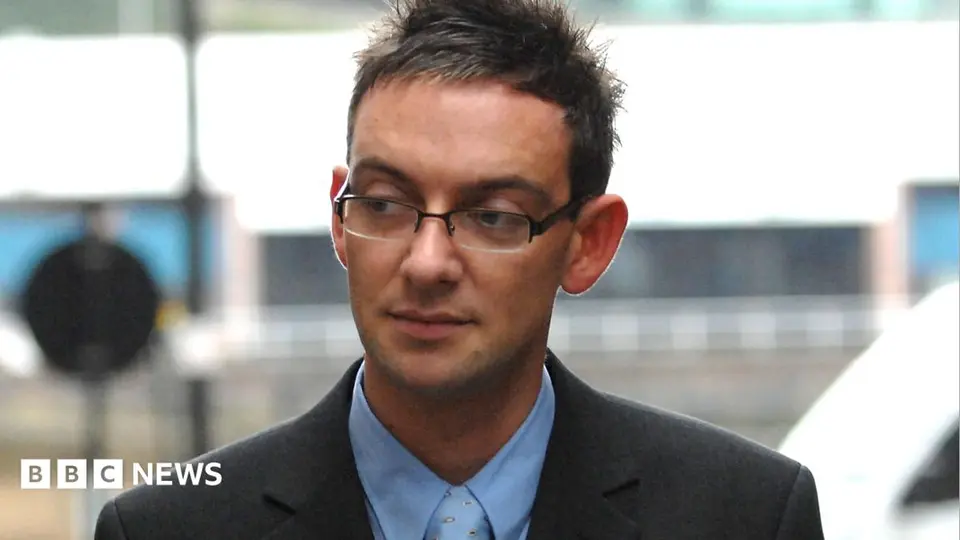
New evidence raises doubts over Colin Norris murder convictions
A BBC podcast investigation has unearthed a potential medical mix-up scenario that could undermine the convictions of Colin Norris, the nurse found guilty in 2008 of murdering four elderly patients at two Leeds hospitals. Norris, who is now known as Colin Campbell, has spent 18 years in prison and faces a minimum 30-year tariff before he is eligible for parole.
According to bbc.co.uk, the podcast series Disclosure Investigates: Killer on the Ward reviewed medical records, re-examined police interview transcripts and heard about new scientific discoveries — revealing a scenario in which the murders may never have taken place at all.
The case that put Norris behind bars
The events began in 2002 when Norris, then a 26-year-old nurse originally from Glasgow, discovered 86-year-old Ethel Hall in a hypoglycaemic coma as she recovered from a broken hip at a Leeds hospital. Blood tests appeared conclusive: she had a massive amount of insulin in her blood. She died 21 days later, prompting a murder investigation.
Police trawled retrospectively through all deaths on Norris's wards and identified three further cases of unexplained severe hypoglycaemic deaths, along with one patient who had survived. No blood tests had been taken from the other patients at the time of their deaths, but prosecution experts told the court that their medical charts showed persistent and severe low blood sugar readings — a pattern they described as so rare in non-diabetics that it could only be explained by deliberate poisoning.
After a five-month trial and a deadlocked jury, Norris was convicted by a majority of 11 to 1. Ethel's son Stuart Hall said after the verdict: "I don't think he should come out again. He's got the knowledge to commit murder but do it discreetly."
Twenty years of doubt
Two years after losing his first appeal in 2009, new scientific evidence emerged challenging one of the key assumptions underpinning the prosecution. Researchers argued that hypoglycaemia in the frail and elderly is not as vanishingly rare as had previously been assumed, suggesting the jury may have been misinformed. That evidence was submitted for a second appeal, which took a further 14 years to be heard.
During last year's appeal, experts for Norris argued that the symptoms seen in several of the patients could occur naturally in elderly, frail people. The Crown's experts maintained the deaths were medically distinct. They argued the patients' blood sugar readings were "refractory" — meaning they kept falling despite glucose treatment — whereas naturally occurring hypoglycaemia can be corrected with something as simple as a sugary drink. That distinction, the Crown said, pointed to deliberate insulin poisoning. The Court of Appeal rejected Norris's challenge against his convictions.
Now, however, Ethel's daughter-in-law Helen Hall has expressed fresh uncertainty. "The evidence, it's just not sitting right to me," she told the BBC podcast. Her doubt reflects a broader re-examination triggered by the BBC's latest findings.
A diabetic patient and a question of syringes
The central question has always been what happened to Ethel Hall. Doctors who attended her initially suspected she had accidentally been given insulin meant for another patient. They examined whether anyone in the neighbouring beds was due to receive insulin in the hours before she was found, and found no match. The mix-up theory was dismissed.
The BBC investigation found, however, that there had in fact been a diabetic patient elsewhere on the ward who was being given insulin in preparation for an operation at around the time doctors were treating Ethel.
Ethel was found in a coma at 05:00, and her first glucose injection was administered at 06:15 by the ward doctor, who had asked Norris to prepare the syringe. A review of witness statements and medical notes by the BBC shows that immediately afterwards, Norris was simultaneously preparing a 50ml syringe of dextrose for injection via a cannula and a 500ml bag of dextrose for a drip.
At the same time, in the same treatment room, another nurse was arranging insulin mixed with saline in a 50ml syringe for the diabetic patient elsewhere on the ward. That nurse, who had gone to a different ward to obtain the insulin, asked Norris to check the syringe dosage and apologised for not having the ampoule from which the insulin had been drawn.
The question the podcast poses is whether the syringes were accidentally switched — a scenario the BBC investigation initially discounted, though the article notes the inquiry into the possibility was not complete at the point of publication.
Comparison with the Letby inquiry
The podcast series was released a week after a public inquiry reported on the case of former neonatal nurse Lucy Letby, who was convicted of murdering seven babies and attempting to murder seven others at a hospital in Chester. While the circumstances differ significantly, supporters of Norris argue that both cases hinge on disputed interpretations of medical evidence and the reliability of expert testimony in criminal courts.
Norris's mother, June, has said she will not stop seeking justice for her son.
The Disclosure Investigates: Killer on the Ward podcast is available on BBC Sounds.
Source: Google News UK — Crime (en)