Killer nurse Colin Norris convictions questioned amid new insulin mix-up evidence
A new BBC podcast raises fresh doubts about the 2008 murder convictions of nurse Colin Norris, citing medical records and a possible syringe mix-up.
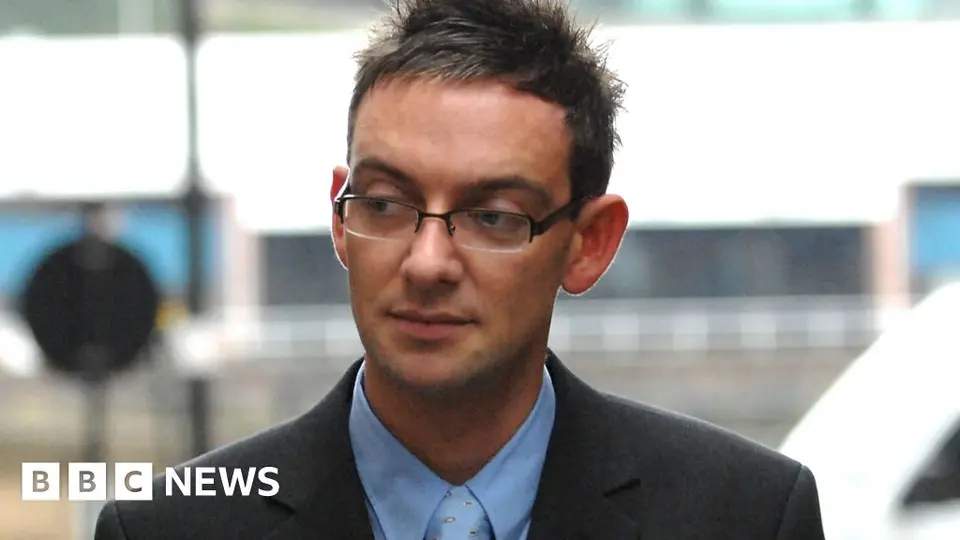
New evidence casts doubt on Colin Norris murder convictions
A BBC investigation has uncovered evidence suggesting that the murders for which nurse Colin Norris was convicted in 2008 may never have taken place, bbc.com reports.
Norris, now known as Colin Campbell, was found guilty of killing four elderly patients at a Leeds hospital by injecting them with insulin, and of attempting to murder a fifth. He was sentenced with a minimum term of 30 years before parole eligibility. The Court of Appeal rejected his most recent challenge against those convictions last year.
Now, a new BBC podcast series — Disclosure Investigates: Killer on the Ward — has reviewed medical records, re-examined police interviews and considered new scientific findings. The investigation centres on a scenario in which none of the deaths may have constituted murder.
The case began in 2002, when Norris, then 26 and originally from Glasgow, found 86-year-old patient Ethel Hall in a hypoglycaemic coma as she recovered from a broken hip. Blood tests showed a massive amount of insulin in her blood. She died 21 days later. A nurse on shift that night told police that Norris had predicted Hall might not survive until morning. He quickly became the prime suspect.
Police then trawled retrospectively through all deaths on Norris's wards, identifying three further cases of severe, unexplained hypoglycaemic deaths and one patient who had survived. No blood samples had been taken from those cases at the time of death, but prosecution experts argued at trial that medical charts showed persistent and severe low blood sugar readings — and that, given how rarely this occurs in non-diabetics, it could only be explained by deliberate insulin poisoning.
Defence experts countered that four of the five patients had died of natural causes. After a five-month trial and a deadlocked jury, Norris was convicted by a majority of 11 to 1.
Ethel Hall's son Stuart Hall said after the verdict: "I don't think he should come out again. He's got the knowledge to commit murder but do it discreetly." Now, however, some members of the family are less certain. "The evidence, it's just not sitting right to me," daughter-in-law Helen Hall told the podcast.
Two years after Norris lost his first appeal in 2009, new scientific evidence emerged challenging a key assumption underpinning the prosecution's case: that hypoglycaemia in frail and elderly patients is exceptionally rare. The new evidence suggested the jury had been misinformed on this point. A second appeal was submitted on that basis, but took a further 14 years to be heard.
During last year's appeal, experts for Norris argued that the symptoms seen in several patients could occur naturally in elderly, frail individuals. Crown experts maintained that the blood sugar readings were refractory — meaning they repeatedly returned to dangerously low levels despite glucose treatment — and that this pattern could only be explained by deliberate insulin poisoning, since naturally-occurring hypoglycaemia can typically be corrected with something as simple as a sugary drink.
The fundamental question remains what happened to Ethel Hall specifically. Doctors who first attended her initially suspected she had been accidentally given insulin intended for another patient. That theory was dismissed at the time because no patient in the neighbouring beds was recorded as due to receive insulin during the relevant window.
The BBC investigation has now found, however, that there was in fact a diabetic patient elsewhere on the ward who was being given insulin in preparation for an operation around the time doctors were attempting to treat Hall.
Hall had been found in a coma at 05:00. Her first glucose injection was administered at 06:15 by the ward doctor, who had asked Norris to prepare the syringe. A review of witness statements and medical notes carried out as part of the BBC investigation shows that immediately afterwards, Norris was preparing a further 50ml syringe of dextrose for a cannula and a 500ml bag of dextrose for a drip.
At the same time, in the same treatment room, another nurse was arranging insulin mixed with saline in a 50ml syringe for the diabetic patient. That nurse, who had obtained the insulin from another ward, asked Norris to check the syringe dosage and apologised for not having the original ampoule to hand. The possibility that the two syringes were accidentally switched was raised.
The BBC initially discounted that scenario, on the assumption that medical staff would have been alerted if the diabetic patient had received dextrose instead of insulin. But endocrinologist Professor Joel Zonszein, an expert in diabetes, said the quantity involved would not have caused a severe reaction. "The answer is very different from somebody getting insulin," he said. "Insulin is much more aggressive. Giving too much sugar does not cause a coma and it will take more than 24 hours until the person goes into a coma."
The podcast arrives one week after a public inquiry reported on the case of former neonatal nurse Lucy Letby, convicted of murdering seven babies and attempting to murder seven others at a hospital in Chester. While the circumstances differ significantly, supporters of Norris argue that his case similarly hinges on disputed interpretations of medical evidence.
Norris has maintained his innocence throughout. His convictions have not been overturned.
Source: Google News IE — Crime (en)