Pat Finucane Inquiry opens in Belfast, examining state collusion in 1989 murder
The public inquiry into the killing of Belfast solicitor Pat Finucane is examining whether security forces used loyalist paramilitaries as a proxy to murder him. Nearly 300 instances of security force assistance to loyalists were recorded in the two years before his death.
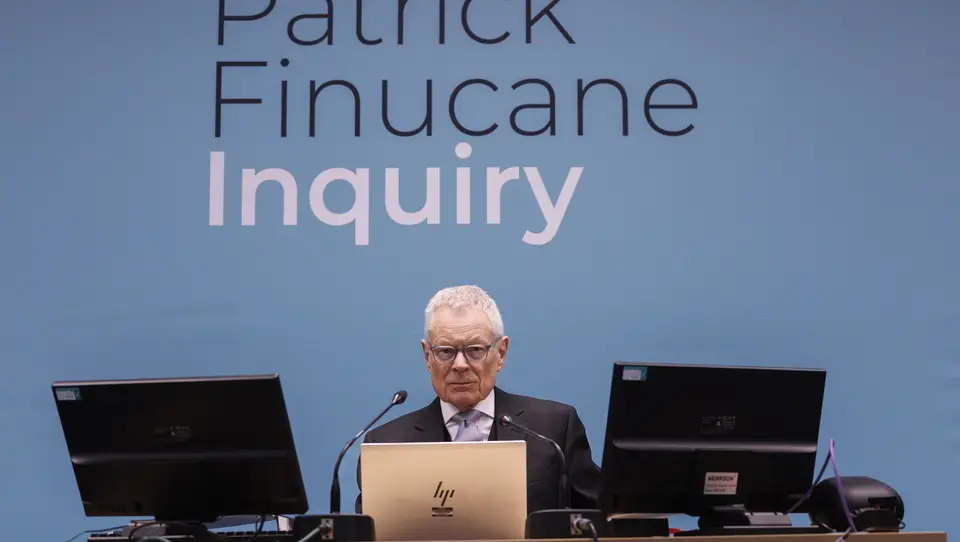
Pat Finucane Inquiry: security forces may have used UDA as proxy to kill solicitor, counsel says
The public inquiry into the 1989 murder of Belfast solicitor Pat Finucane opened on Tuesday with counsel to the inquiry, Matthew Hill, outlining a "disturbing explanation" — that elements within the security forces deliberately used the Ulster Defence Association (UDA) as a proxy to kill a lawyer who had "incurred the enmity of the state", irishexaminer.com reports.
Finucane, 39, was shot dead at his family home in north Belfast by the UDA. A series of previous probes had already found that the killing involved collusion with the state.
Nearly 300 instances of assistance recorded
Mr Hill told inquiry chairman Gary Hickinbottom, sitting at the Bradford Court Hearing Centre in Belfast, that a 2003 report by Desmond de Silva QC had identified 270 instances of security forces providing assistance to loyalist paramilitaries between 1987 and September 1989 — averaging around two per week.
De Silva himself concluded those figures were "likely to represent only a small sample of a wider problem", given the limitations of his sources.
That same de Silva review prompted then prime minister David Cameron to apologise in 2012 to the Finucane family for what he described as "shocking levels of collusion". Mr Hill on Tuesday called Cameron's words an "inescapable conclusion".
Operation Kenova and unpublished materials
Mr Hill stated that opening statements would refer only to open materials, but acknowledged there is "a large volume of unpublished materials" that will be examined before chairman Hickinbottom reaches any conclusion.
He also referenced Operation Kenova, a probe that examined the activities of a former army agent known as Stakeknife, who was active in the 1980s. Mr Hill said Kenova "may well have uncovered material relevant to Patrick Finucane" that had not been assessed in earlier reviews.
Propaganda initiative and intelligence-sharing
Counsel outlined how elements within the security forces had provided the UDA with information and intelligence, and described a "propaganda initiative" which the de Silva report found was intended "to unnerve and expose Republican players". That initiative was found to be "not particularly focused or controlled, and came to include not just paramilitaries but prominent figures in the broader nationalist and republican communities".
The inquiry will assess whether those interactions directly influenced or directed the killing of Finucane, or whether they were part of a broader, less targeted pattern of collusion.
RUC officers and the scene of the crime
Mr Hill also referred to evidence that suspected paramilitaries arrested in connection with the murder were congratulated by RUC officers, though it was noted that this "should not have been done in such a fashion, ie in front of Finucane's wife and children".
"It seems, sir, that that was too much, even for those who coldly applauded murder," Mr Hill said.
Scope of the inquiry
Mr Hill acknowledged that some aspects of the account around Finucane's death may be "vigorously rejected" by other participants in the inquiry, including the British Government and the PSNI.
He noted the challenges the inquiry faces: "Witnesses have died, memories have dimmed and evidence has been lost or destroyed." He added, however, that this does not make the task impossible or unfair.
"The position of the UK government in the 1980s was that the security forces were seeking to uphold democracy and the rule of law against terrorist violence. It is legitimate to apply that standard of the rule of law to its own actions," Mr Hill said.
The inquiry will also examine the rationale and motivations of those within the UDA who planned and carried out the murder.
Decades of campaigning
The Finucane family has campaigned for decades for a full public inquiry into the extent of security force involvement in the killing. Mr Hill framed the inquiry's purpose in direct terms: "This is done not to excuse the inexcusable — the murder of a man in front of his family — but to help you understand not just how it happened, but why it happened."
"We do not serve the public and we do not do justice to Patrick Finucane by doing anything less," he concluded.
Source: Google News IE — Crime (en)