Prison pharmacist jailed 10 years for smuggling £1m drugs into HMP Lindholme
Mental health nursing assistant Amy Hatfield flooded HMP Lindholme with drugs for her inmate boyfriend. Sixteen people sentenced in the UK's largest ever prison drug-smuggling conspiracy.
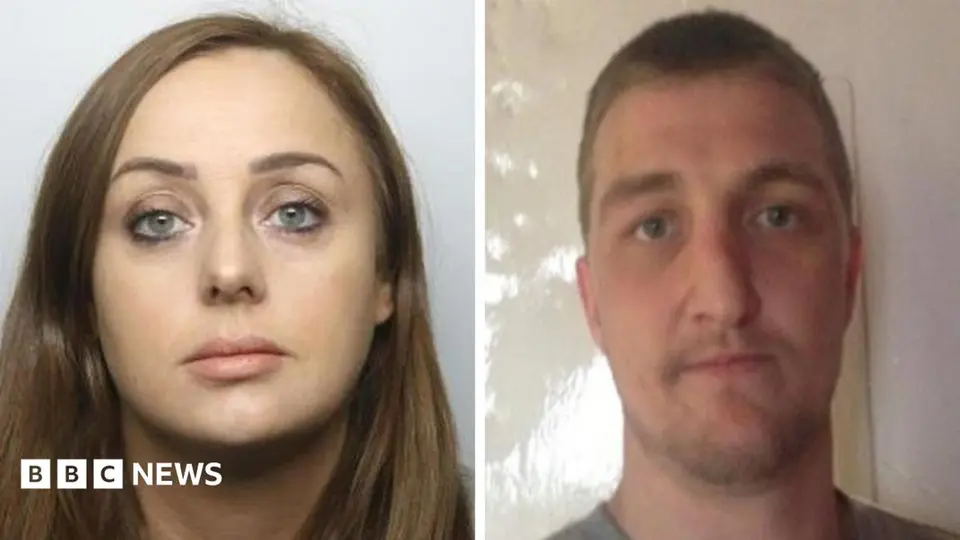
Mental health worker at centre of UK's biggest prison drug ring jailed for over a decade
A mental health nursing assistant who smuggled drugs worth an estimated prison value of £1m into a South Yorkshire jail has been sentenced to ten years and two months in prison, bbc.co.uk reports.
Amy Hatfield, 38, of Hawthorne Street, Barnsley, used her position at HMP Lindholme to "flood" the jail with contraband — including heroin, MDMA, spice, ketamine, cannabis, knives and mobile phones — on behalf of her inmate boyfriend, Joseph Whittingham.
Sixteen people were sentenced at Sheffield Crown Court on Friday for their roles in what prosecutors described as the most complex prison drug-smuggling conspiracy ever uncovered in the UK.
Recruited by a lover behind bars
Hatfield began working at Lindholme in September 2018. Drug use at the prison spiked almost immediately, the court heard, and fell again only after her arrest in October 2019.
Anti-corruption detectives placed her under surveillance following a tip-off that she had begun a sexual relationship with Whittingham, 35, from Bradford, while he was serving a custodial sentence. Officers stopped her entering the prison carrying MDMA, cannabis, Ribena bottles filled with liquid spice, tobacco, anabolic steroids, mobile phones and chargers.
Judge Kirstie Watson described the affair — in which the pair met for sex inside the prison and exchanged explicit photographs on hidden mobile phones — as a "significant breach of trust and abuse of position". She told Hatfield: "When he first expressed feelings for you, instead of reporting it to your supervisors as you were trained to do, you embraced it."
The judge said Whittingham had been able to "exploit" Hatfield because she was "infatuated" with him and hoped they would build a life together after his release. She was paid £1,000 per delivery and arranged bogus mental health appointments to hand over packages to prisoners.
Deaths, comas and degrading footage
The consequences inside the prison were severe. Toxicology tests found that spice recovered from Hatfield matched a batch that killed inmate Kyle Batsford, who had been bullied into testing the drug in September 2019.
A second inmate was left in a coma for ten days and permanently lost the use of his legs after being pressured by fellow prisoner Jordan Needham, 31, into serving as a "guinea pig" for a new batch of the drug.
Mobile phone footage obtained by police showed two young inmates under the influence of spice — naked, with makeshift leashes around their necks — being encouraged to fight. Judge Watson told the court that drug-dealing in prison was "an instrument of exploitation, oppression and power" that "undermined discipline and good order" and put inmates' health at risk.
A network reaching outside the walls
Inmates could order almost any drug they wanted through what the court called a "sophisticated" and highly organised operation, run from inside the prison by Whittingham and five co-conspirators: Needham, Kieran Murphy, 26, Aneeze Williamson, 30, William Francis, 56, and convicted murderer Anthony Campbell, 38.
Each used contacts outside the prison to arrange drug shipments and collect payments. Whittingham recruited his wife Lucy and father Paul to act as "bankers" for the conspiracy. He boasted to other inmates of the money that would await him on release.
Campbell, who is serving a life sentence for the fatal shooting of a 16-year-old boy in Liverpool in 2004, received deliveries through prison visitors arranged by his mother, Deborah Stoddard, 56. Judge Watson said Campbell's "well-run operation" had gone undetected for three years and across two previous prisons before he was transferred to Lindholme. Even when Campbell was placed in segregation, the supply of drugs continued — such was the sophistication of the arrangement, the judge said.
Needham and his partner Courtney Ward, 26, were said by prosecutors to have "exploited almost every possible avenue" to bring contraband into the prison, including the use of fake confidential legal mail and an attempt to intercept another inmate's hospital appointment. Ward and Needham had also discussed paying Hatfield to smuggle drugs into the prison "every day", the court heard.
Sentences handed down
Whittingham, described as one of the leaders of the network, was jailed for 11 years and four months. His access to drugs through Hatfield gave him "power in prison and significant financial gain", Judge Watson said.
Campbell received a further 11 years, to begin when he would otherwise have become eligible for parole on his existing life sentence. Stoddard was sentenced to nine and a half years.
Hatfield was jailed for ten years and two months. As she was sentenced, Judge Watson told her: "It must have been clear to you the impact the increased use of drugs was having on the prison population and the increased workload and stress on your colleagues."
The full scale of the conspiracy only became apparent in the months following Hatfield's arrest, as South Yorkshire Police unravelled what they described as the largest and most complex prison smuggling network ever seen in the UK.
Source: Google News UK — Crime (en)