Charlie Kirk murder suspect Tyler Robinson bound over for trial in Utah
A Utah judge found probable cause Tuesday to try Tyler Robinson on seven charges, including aggravated murder, in the Sept. 2025 shooting death of Turning Point USA founder Charlie Kirk.
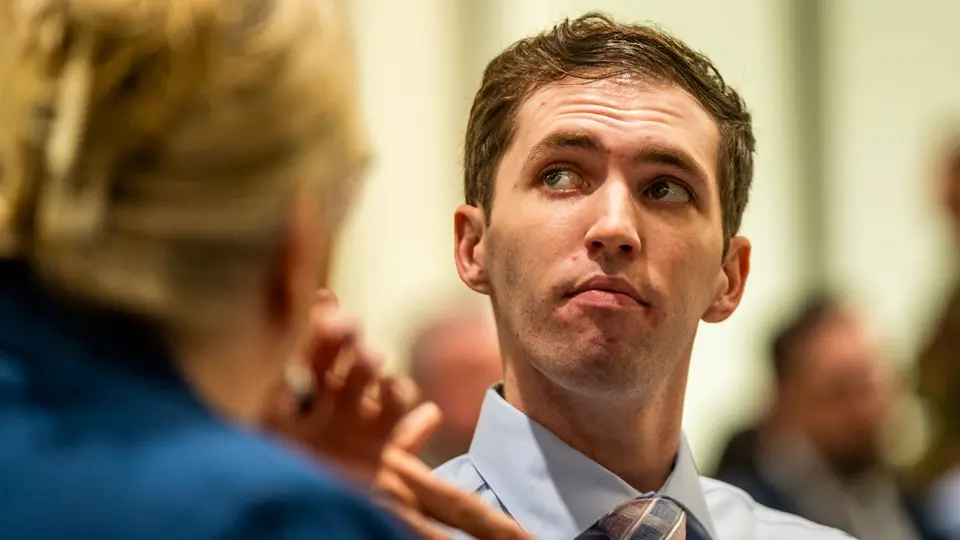
Utah judge sends Charlie Kirk shooting case to trial, death penalty on the table
A Fourth District Court judge ruled Tuesday that there is sufficient evidence to bring Tyler Robinson to trial on all seven charges connected to the fatal shooting of conservative commentator and Turning Point USA founder Charlie Kirk, Courthouse News Service reports. Judge Tony Graf Jr. also found that an aggravating factor exists — that Robinson knowingly endangered at least one other person — making the aggravated murder charge eligible for the death penalty.
Robinson, 23, pleaded not guilty to all charges immediately after Graf announced his ruling.
The decision followed a weeklong preliminary hearing held in July and a full day of closing arguments Tuesday from attorneys on both sides.
Video, DNA and a confession to a roommate
Kirk was fatally shot on Sept. 10, 2025, during a rally at Utah Valley University. Deputy Utah County Attorney Ryan McBride told the court that video footage places Robinson on the campus the day of the shooting. Genetic evidence further links him to the case: Robinson's DNA was recovered from what authorities have identified as the murder weapon.
McBride also cited Robinson's own words. According to the prosecutor, Robinson admitted the shooting to his roommate and romantic partner, Lance Twiggs, over text message, and made similar admissions to friends on the online platform Discord.
"'You weren't the one who did it, right?'" McBride quoted Twiggs as asking.
"'I am. Sorry,'" McBride said Robinson replied.
Prosecutors also pointed to circumstantial evidence, noting that Kirk had publicly opposed homosexuality and transgender identity. At the time of the shooting, Robinson was dating a man who was considering gender transition, McBride said.
Authorities additionally recovered shell casings bearing etchings such as "Hey, fascist, catch," along with similar ammunition and an etched casing found at Robinson's home.
"After the images of the shooter had been published, the defendant turned himself in," McBride said.
"Ballistic roulette" — the aggravating factor argument
To elevate the charge to aggravated murder — and thus trigger death penalty eligibility — prosecutors argued Robinson knowingly created a great risk of death to others at the rally.
McBride described the scene: Robinson fired a rifle from a rooftop approximately 400 feet from Kirk, with roughly 3,000 people attending the outdoor event. A shot one degree off its mark, the prosecutor said, would have sent the bullet seven feet from its intended target. Chief Deputy County Attorney Chad Grunander expanded on the risk, telling the court that a quarter-inch flinch in the shooter's aim would have displaced the bullet by three and a half feet, while a half-inch flinch would have produced McBride's seven-foot example.
Because thousands of attendees were moving throughout the event, Grunander argued, Robinson created an inherent zone of danger by discharging the weapon. A flinch, a gust of wind, or a ricochet off nearby structures could all have resulted in additional casualties.
"The defendant, frankly, your honor, was gambling with innocent lives," Grunander said. "He was playing, in effect, a game of ballistic roulette."
Defense: speculation, not inference
Defense attorney Staci Visser pushed back on the state's aggravating factor theory, arguing prosecutors failed to prove Robinson knowingly put others in danger. She contended that the word "knowingly" cannot be applied as broadly as the state sought.
In other cases that have established similar aggravating findings, Visser said, multiple shots were fired and explicit threats were made. Robinson is accused of firing a single shot at Kirk. She maintained there is no evidence anyone else was directly threatened.
"These are not inferences," Visser said. "This is speculation."
A second defense attorney, Richard Novak, separately argued that a witness tampering charge against Robinson should be struck. That charge stems from allegations Robinson told Twiggs to stay silent about the shooting. Novak characterized Robinson's instruction to his roommate — to obtain a lawyer and not speak — as an altruistic act rather than an attempt to obstruct justice.
Grunander countered that at the preliminary hearing stage, reasonable inferences must be drawn in favor of the state, and that it is reasonable to infer Robinson was aware of the danger he created.
"The state would take this case to trial tomorrow if we could," Grunander said.
Graf ultimately sided with the prosecution on all counts, binding Robinson over on each of the seven charges, including the aggravated murder count that now carries a potential death sentence.
"The state's evidence of identity is substantial," the judge said.
Source: Courthouse News Service