DHS watchdog: 'Alligator Alcatraz' detainees locked in phone-booth-sized cages
A DHS inspector general report found detainees at Florida's immigration jail were confined in metal cages under 18 sq ft — violating ICE's own standards.
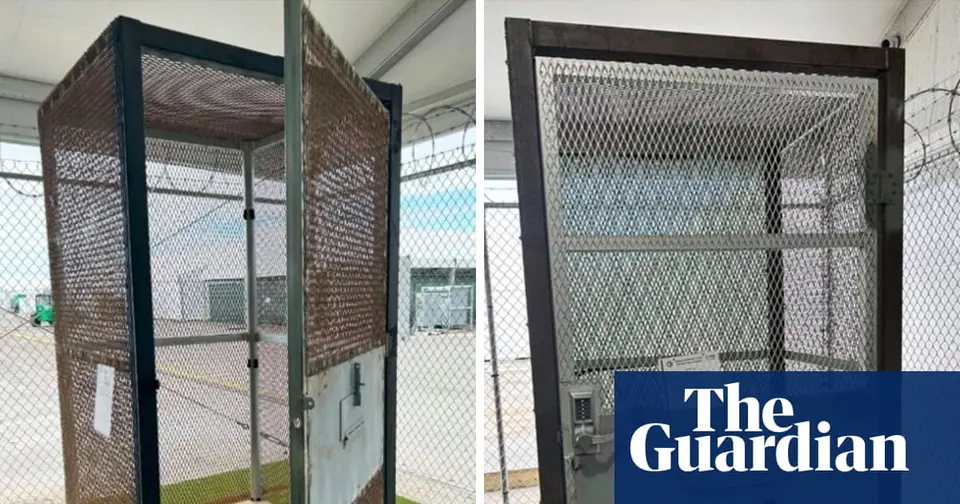
DHS watchdog condemns phone-booth cages at Florida immigration jail
Detainees at Florida's "Alligator Alcatraz" federal immigration facility were repeatedly locked in outdoor metal cages no larger than a phone booth, according to a government watchdog report published by the Department of Homeland Security's (DHS) office of the inspector general. The report concluded the practice "does not align with standards for humane treatment."
theguardian.com, which in December was the first outlet to report an Amnesty International dossier detailing alleged abuses at the camp, notes that the new findings offer rare official criticism of the Trump administration from within one of its own agencies. The report also provides the first formal confirmation that guards used the cages in direct violation of Immigration and Customs Enforcement (ICE) rules.
Inspectors carried out an unannounced visit to the facility — which they designated the Florida Soft-Sided Facility (FSSF) — in January 2026. The report found that between July 2025 and January 2026, guards placed detainees in the metal enclosures on 79 documented occasions, for periods of up to two hours at a time. Each cage offered approximately 18 square feet of floor space — less than half the 37 square feet minimum required under ICE's own national detention standards for single-person spaces.
"Use of these small metal enclosures for any reason is unprecedented among ICE facilities inspected by OIG," the report stated. "Confining individuals in small metal enclosures for any reason presents significant risks to detainee health and wellbeing."
Staff at the facility maintained that the cages served as "calming areas" to help detainees "deescalate and have time alone," and claimed that some detainees requested to use them. Inspectors, however, found at least one recorded instance in which a cage was used as a disciplinary measure against a detainee who "failed to comply with a lawful command." The report also noted that the enclosures were fitted with locking mechanisms.
The cages had previously been flagged by Democratic US senators Jon Ossoff of Georgia and Dick Durbin of Illinois, who raised concerns in March about what detainees referred to internally as "The Box."
When Amnesty International first documented the cages in December, a spokesperson for Florida Governor Ron DeSantis dismissed the findings as "fabrications" and labelled the Amnesty report "a politically motivated attack." On Monday, DeSantis's office declined to address why it had denied the use of the cages. Instead, his communications manager, Alex Lanfranconi, argued that "the leftwing media wants to focus on a confinement area" and asserted the cages "adhere to all federal standards for criminal confinement." His statement added: "We'd make it even smaller if we could."
Amy Fischer, Amnesty International USA's director for refugee and migrant rights, responded: "The findings confirm what we documented months ago: the horrific treatment of people detained at Alligator Alcatraz was real, not a hoax, as Trump administration officials were on the record saying. This report should serve as a reminder that the public must never simply take the government's word when officials deny that human rights violations are occurring."
Beyond the cages, inspectors documented a range of additional failings. The report found that the facility did not provide detainees with sufficient living space, with crowded conditions in housing units where people spent the majority of their time. Inspectors cited risks to both physical and mental health. Further shortcomings included inadequate recreation time, inoperable telephones that prevented detainees from contacting lawyers or family members, and poor food hygiene in kitchen areas.
"FSSF did not provide detainees with sufficient living space, creating cramped conditions for detainees who spent most of their time in their housing units, which may harm detainees' physical and mental health," the report stated.
Krish O'Mara Vignarajah, president and chief executive of immigration advocacy group Global Refuge, said: "There is no euphemism that can sanitize caging human beings. Calling a metal box a 'calming area' is an affront to the English language and to human dignity alike. The stark reality is that human beings, many of whom came to this country seeking protection, were crammed into spaces unfit to accommodate them, denied adequate medical care, food and basic hygiene. That is not immigration enforcement. It is cruelty."
Alligator Alcatraz, located in the remote Florida Everglades, closed in June after approximately one year of operation. During that time, DeSantis publicly boasted of detaining and deporting more than 21,000 immigrants. Officials attributed the closure to the risk of housing detainees in tents during hurricane season. Critics pointed to the facility's cost — $1.2 million in taxpayer funds per day — as a growing political liability, alongside lawsuits over the camp's environmental impact on the Florida wetlands and the treatment of detainees, which several Democratic lawmakers characterised as tantamount to "torture."
Source: Google News MT