San Francisco fraud suspect Luke Brugnara to go pro se in pandemic loan trial
Luke Brugnara, 62, indicted on nine wire fraud counts, will represent himself despite judge's repeated warnings. He faces up to 20 years per count.
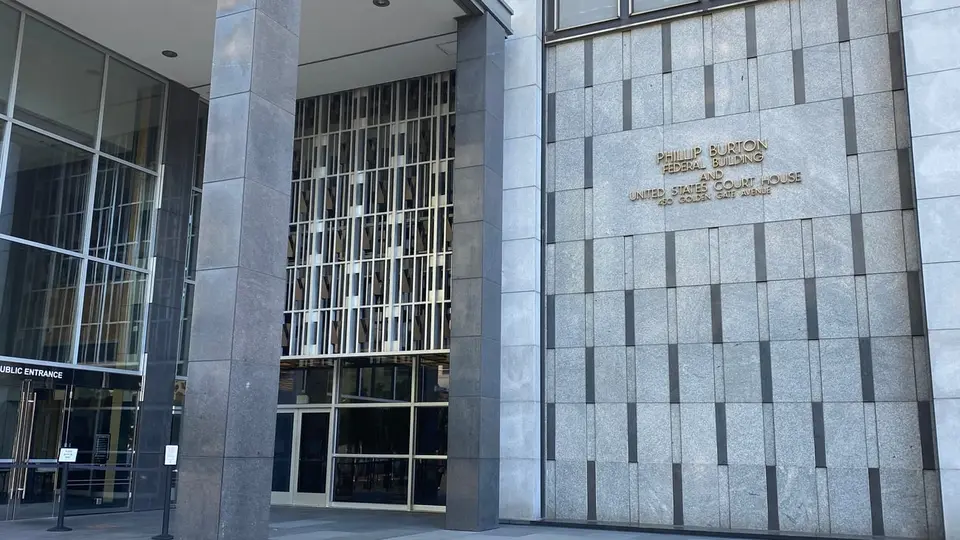
San Francisco investor opts to represent himself in pandemic-era loan fraud case
Luke Brugnara, 62, a former San Francisco real estate investor with a prior federal conviction, will represent himself at trial on charges that he submitted fraudulent loan applications for pandemic-era relief programs, Courthouse News Service reports. Senior U.S. District Judge Maxine M. Chesney granted his motion to proceed pro se while making clear she considered it a serious mistake.
"I am required to advise you, and I will, that you will do better with a trained lawyer representing you. It is generally unwise for anybody to represent themselves," Chesney told Brugnara in court. "I really urge you not to represent yourself."
She added: "If you are committed to it and think it is worth the risk, I think the law requires me to allow you to do it."
Indictment and potential sentence
Brugnara was indicted in May 2024 on nine counts of wire fraud and three counts of money laundering. Prosecutors allege he submitted fraudulent applications for federal relief programs in 2021 on behalf of his firm, Brugnara Corporation, and received more than $400,000 in federal assistance.
If convicted on all counts, he could face up to 20 years in prison per wire fraud count and 10 years per money laundering count.
Chesney pressed Brugnara directly on whether he understood those stakes. "Just so you understand, there is a risk, as confident as you are about the merits of the case, there is a risk of being convicted and going to prison. Do you understand that, even though you think it is remote?" the Bill Clinton appointee asked.
Prior courtroom record
Brugnara pointed to his 2015 trial — in which he was accused of defrauding an art dealer of $11 million in fine art — as evidence of his courtroom experience. He told Chesney he had handled the fundamentals of court procedure himself before and was prepared to do so again.
That trial did not go smoothly. Over more than two weeks, Brugnara repeatedly badgered witnesses, engaged in verbal exchanges with then-Senior U.S. District Judge William Alsup and federal prosecutors, and was held in contempt multiple times for attempting to introduce evidence that had been ruled inadmissible.
The jury nonetheless convicted him on two counts of wire fraud, one count of mail fraud, one count of making false declarations to the court, and additional counts of escape and contempt. He was sentenced to seven years in prison.
On appeal, his court-appointed attorney argued that Alsup should have halted the pro se arrangement given Brugnara's inability to control his conduct in court. The appeals court rejected that argument, writing that "a defendant cannot be denied his right to self-representation just because he may defend himself poorly or inadequately."
Chesney's conditions
With that history in mind, Chesney warned Brugnara she would not permit a repeat performance. "If you do not follow the rules of conduct, which apply in court as much as any other polite encounter, if you cannot comport yourself in a professional fashion, I will change the ruling and again find you will need to be represented by counsel," she said.
Brugnara told the court he disagreed with his former attorney's position that the 2015 pro se arrangement should have been terminated, saying he had been "put in a cage." He acknowledged that representing himself in the current case was not wise, but said it was his only viable option for securing an earlier trial date. His former attorney, Matthew Dirkes of Illovsky Gates & Calia, and at least one other attorney he contacted would not be available to take the case to trial for at least another couple of months.
"I am sitting in torturous conditions. Only because of the conditions I am in, I must. I don't know if I can last two weeks," Brugnara told the court.
Conspiracy claims and courtroom conduct
When Chesney asked whether he had been coerced into waiving his right to counsel, Brugnara accused Assistant U.S. Attorney Aseem Padukone of orchestrating a conspiracy against him, pointing to a February motion to revoke his bail as evidence.
"If it is a fair fight, he loses. The only way he can win is if he handicaps me," Brugnara said. He later added that, following an acquittal, Padukone "will never get any respect in the legal profession, and his boss will be fired by Trump."
After the court granted his motion, a prolonged exchange followed over trial logistics. Brugnara, who remains in custody, will not have the phone and laptop access typically available to defense attorneys. He asked for a trial date within a week, citing health concerns and what he described as his "diminishing" cognitive ability.
At various points during the hearing, Brugnara pivoted to requesting a bench trial — which the government declined — and argued that a later trial date combined with a separate jury selection process would be "unduly prejudiced" against him.
"As a pro se litigant, it would be impossible to give me a fair trial from jail," Brugnara said, directing his remarks toward Padukone. "You are going to intentionally hamstring me to give this guy over here a leg up over me."
Chesney repeatedly admonished Brugnara for his behavior during the hearing and threatened to reverse her ruling, though she did not follow through.
Source: Courthouse News Service