Texas Judge Refuses to Force Abbott to Extradite ICE Agent Charged in Minneapolis Shooting
A federal judge ruled he lacks jurisdiction to compel Texas Gov. Abbott to extradite ICE agent Christian Castro, accused of shooting a Venezuelan man in Minneapolis.
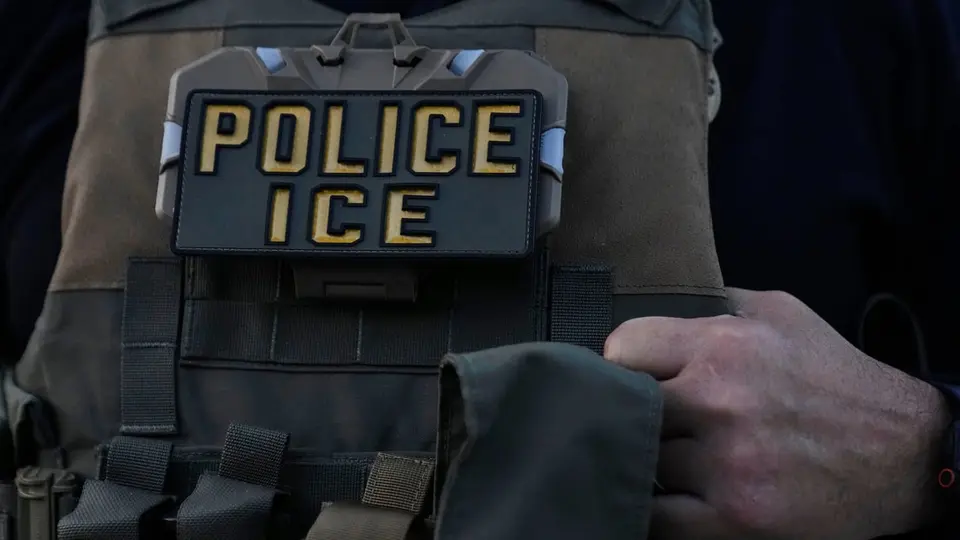
Texas Court Rejects Minnesota's Bid to Extradite ICE Agent in Minneapolis Shooting Case
A federal judge in Texas has denied Minnesota's request to compel Governor Greg Abbott to authorize the extradition of an ICE agent charged in connection with the shooting of a Venezuelan man in Minneapolis, Courthouse News Service reported Wednesday.
U.S. District Judge Fernando Rodriguez Jr. ruled that the court lacks jurisdiction to issue the order because Abbott has not formally denied Minnesota's extradition request — only delayed acting on it.
"The Court accepts that Governor Abbott has considered this particular extradition request for an atypically long duration," Rodriguez wrote. "Nevertheless, Minnesota identifies no statutory or constitutional provision requiring Governor Abbott to complete his investigation and decide whether to sign the rendition warrant within a particular time period."
The ICE officer at the center of the case, Christian Castro, is accused of firing his service weapon through the front door of an occupied home during an immigration operation in north Minneapolis in January. Prosecutors say the shot struck Julio Cesar Sosa-Celis, a Venezuelan immigrant, in the leg. Authorities further allege Castro falsely reported that Sosa-Celis and another man had attacked an ICE officer with a broom handle and snow shovel before the shooting. Surveillance footage later contradicted those accounts, and federal prosecutors subsequently dropped charges that had been filed against the two men.
In May, Minnesota prosecutors charged Castro with four counts of second-degree assault and one count of falsely reporting a crime. He was arrested in Harlingen, Texas. Days later, Minnesota Governor Tim Walz sent Abbott a formal extradition request.
Abbott waited more than two months before responding — and even then did not approve or deny the request. On July 31, he directed the Texas secretary of state to investigate the matter and report back on "whether he ought to be surrendered." Abbott cited "serious doubts that the prerequisites for extradition have been met," arguing that Castro may have been ordered back to Texas by the federal government rather than having fled voluntarily, and therefore might not qualify as a fugitive subject to mandatory extradition.
Rodriguez expressed skepticism about that legal argument. He wrote that he "has doubts that caselaw supports the construction of 'fugitive' that Texas is considering," noting that under U.S. Supreme Court precedent, the analysis focuses not on the accused's reason for leaving the state but simply on whether he left.
Rodriguez also declined to order Cameron County Sheriff Manuel Trevino to keep Castro detained past Thursday, when Texas law's 90-day limit on pre-extradition detention expires. Minnesota had argued Castro could flee to Mexico once released. The judge found no grounds for a temporary restraining order requiring Trevino to disregard the statutory deadline.
"No party challenges the validity of those statutory provisions, and Minnesota does not allege that Sheriff Trevino has acted wrongfully to date," Rodriguez wrote.
Abbott's press secretary, Andrew Mahaleris, praised the ruling in a statement to Courthouse News Service.
"The court was right to reject Governor Walz's absurd claim," Mahaleris said. "The Constitution requires deliberate consideration of extradition requests and tasks Governor Abbott to 'decide, upon such evidence as he may deem satisfactory' whether 'the person demanded is a fugitive.' Today's order rebuffs Minnesota's efforts to conscript federal courts into commandeering the authority of Governor Abbott's office."
Minnesota Attorney General Keith Ellison offered a sharply different assessment, accusing Abbott of "turning Texas into a sanctuary state for violent criminals."
"This case should concern officials and citizens of every state," Ellison said. "If a governor can delay extraditions and cherry-pick cases according to their political tastes, then no state will be able to hold fugitive criminals accountable."
Ellison added that Castro would not escape accountability regardless of Wednesday's ruling. "Christian Castro will not escape justice in Minnesota," he said.
Walz and Ellison had both accused Abbott of violating the U.S. Constitution's extradition clause, the federal Extradition Act, and Texas' Uniform Criminal Extradition Act by withholding action on the request for nearly three months. Rodriguez found no direct evidence that Abbott had intentionally sought to delay the process and concluded that the threat of indefinite delay "does not currently exist."
Source: Courthouse News Service